


Traditional Corner Storage Cabinet
These traditional corner storage cabinet examples turn neglected room angles into display space using centuries of timber craftsmanship.
Traditional Corner Storage Cabinet
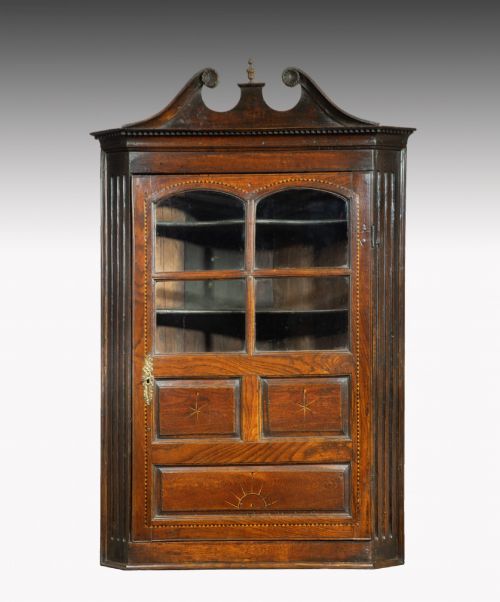
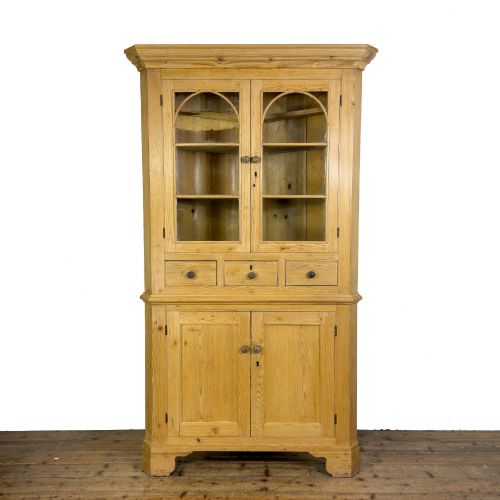
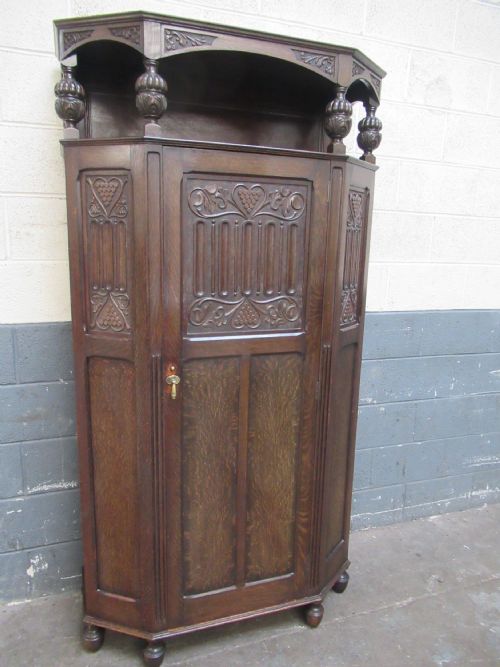
A traditional corner storage cabinet serves to utilise awkward junctions in rooms while providing fitted storage. Most options appearing here date from the Georgian and Victorian periods, constructed primarily in oak, mahogany, and pine.
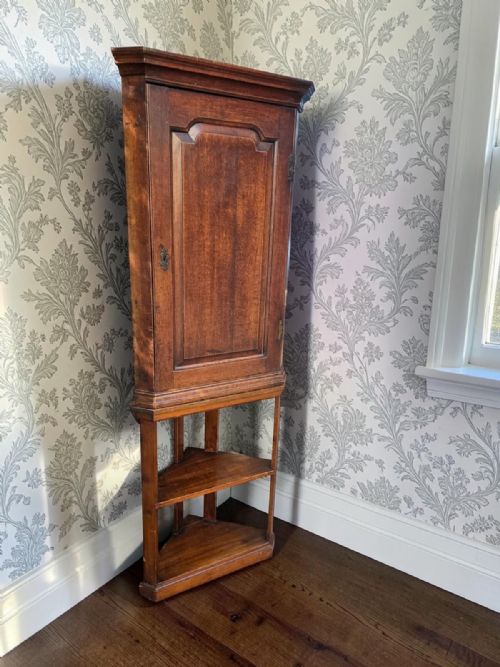
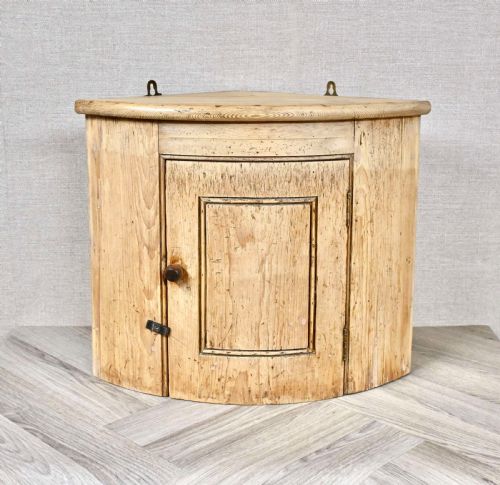
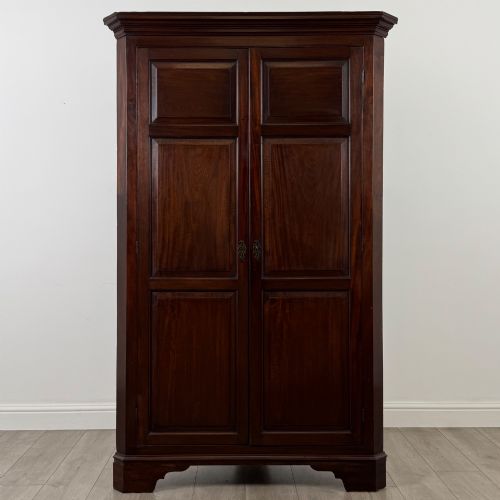
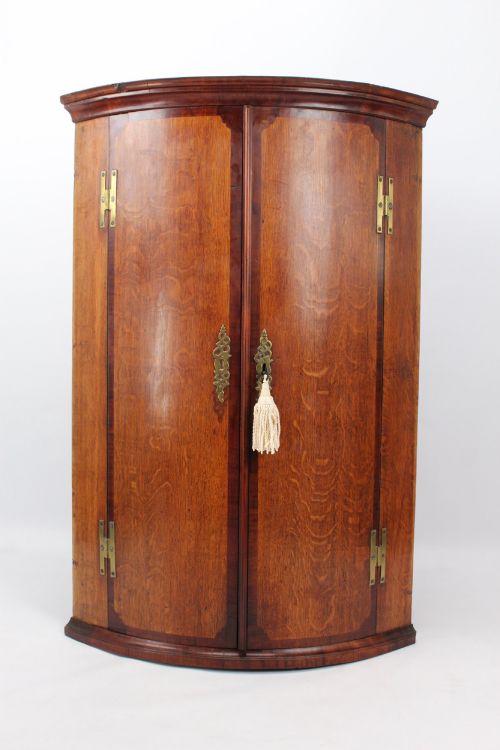
Buyers encounter hanging wall models alongside floor standing iterations. Many examples feature bow fronts, panelled doors, or stands, and some incorporate internal shaped shelves or small drawers.
The selection ranges from rustic country pine pieces to formal mahogany designs with fine detailing. Origins span English workshops alongside examples influenced by French provincial and Welsh cabinet making traditions.
How they were made
Cabinet makers constructed these pieces using solid timbers such as oak, mahogany, and pine, frequently pairing them with brass hinges and iron hardware. Construction methods relied on traditional joinery to build rigid angular carcases capable of supporting heavy internal contents.
Surfaces received various treatments, from polished mahogany veneers to stripped pine finishes and painted coatings. Selected pieces incorporated carved ornamentation, inlaid satinwood details, and shaped wooden shelving.
Listings span multiple centuries from the 18th century through the 1930s, featuring oak, mahogany, pine, and elm woods across Georgian and Victorian styles.
What varies in quality
Differences in quality stem from the selection of primary timbers and the precision of the underlying joinery. Superior examples demonstrate careful timber matching on panelled doors and refined execution of bow fronts or fine carvings.
The sophistication of internal fittings also dictates the grade of a piece, separating utilitarian pine cupboards from high status Georgian mahogany cabinets with sophisticated architectural mouldings.
The Traditional Corner Storage Cabinet Glossary
- Bow front
- A convex curved cabinet front that projects outward from the corners. This curved form requires advanced woodworking skill to shape solid timbers accurately.
- Corner cupboard
- A storage unit specifically built with a triangular cross section to fit flush into the corner of a room. These fixtures maximise space utilisation in smaller chambers.
- Panelled door
- A door constructed with a central floating panel fitted within a sturdy frame. This technique accommodates natural wood movement as humidity changes.
- Stand
- A raised supporting base or table structure upon which certain tall cupboards sit. Stands elevate the main storage compartment off the floor.
- Satinwood
- A durable yellowish wood utilised for fine decorative inlays and banding. Its luminous grain provides sharp visual contrast against darker primary timbers like mahogany.
Traditional Corner Storage Cabinet: Frequently Asked Questions
Where do you place a traditional corner storage cabinet?
These cabinets fit directly into the internal 90 degree angles of a room, transforming dead corners into functional storage space. They work effectively in dining rooms, hallways, and living areas.
Floor standing models occupy wall space from the floor upward, while wall hanging versions mount directly onto masonry or stud walls at desired heights.
How do you distinguish Georgian from Victorian pieces?
Georgian pieces typically exhibit restrained classical proportions, fine mahogany veneers, and subtle architectural mouldings. They date from the 18th and early 19th centuries.
Victorian examples frequently utilise oak or pine, often displaying heavier rustic construction, carved details, or stripped wood finishes characteristic of the later 19th century.
Were these always meant for display?
Many early corner cupboards housed precious porcelain, glassware, or silverware behind glass or panelled doors. The upper sections functioned primarily to showcase valued household possessions.
Lower sections or integrated drawers offered concealed storage for linens, documents, or household provisions out of sight.