

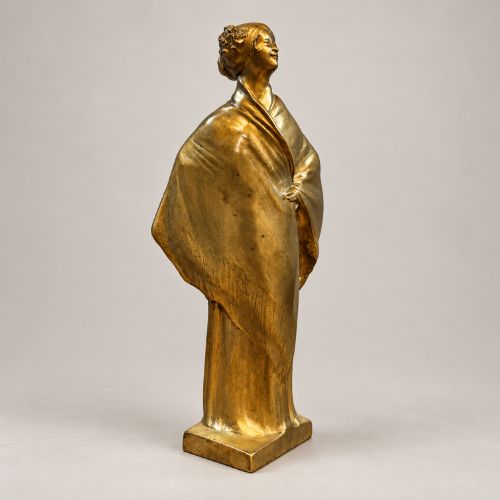
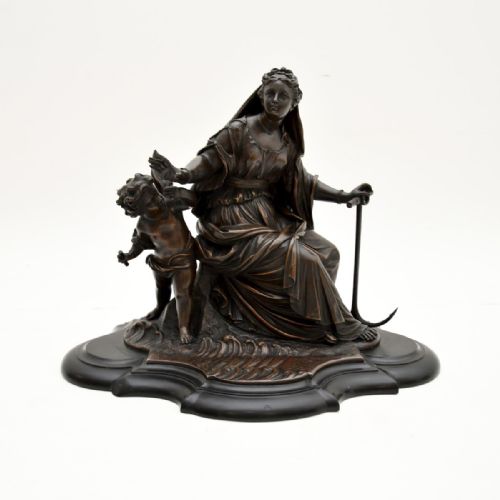
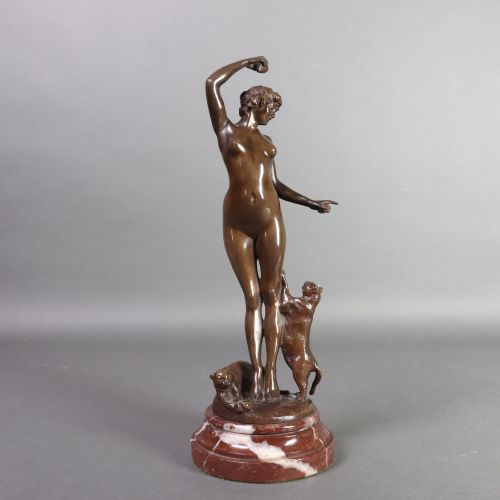
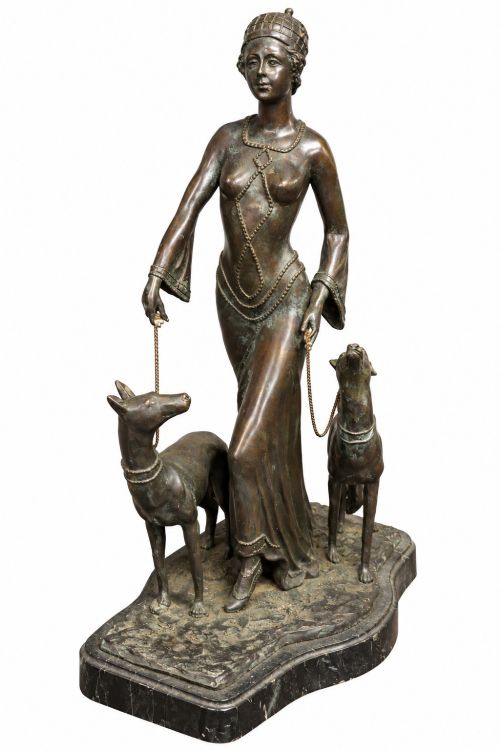


Female Figural Bronze Statue
A female figural bronze statue brings the human form into interior space, taking the shape of dancers, musicians, and allegorical figures.
Female Figural Bronze Statue
When you search for a female figural bronze statue, you encounter works spanning the nineteenth century through the Art Deco period. These pieces take the form of standalone sculptures, table lamps, torcheres, and mantel clocks that incorporate human figures into functional objects.
Nineteenth-century examples often lean towards classical allegories, mythological subjects, and romantic studies by French sculptors. By contrast, twentieth-century pieces shift into Art Deco interpretations of dancers, athletes, and stylised female forms.
Many of these statues integrate materials beyond metal, mounting figures on marble or onyx bases or combining bronze with carved ivory or glass shades. They serve as both decorative artworks and functional lighting fixtures within domestic interiors.
How they were made
Foundries typically employed the lost-wax casting method to capture the fine detail of drapery, hair, and facial expressions in bronze. This process allowed sculptors to translate clay or wax models into durable metal casts.
Alternative materials like spelter appear frequently in later twentieth-century works, offering a lighter and more affordable metallic composition that took patination and paint well. These base metals were frequently paired with stone plinths made from marble, onyx, or alabaster.
Patination techniques varied from deep brown and green chemical finishes on bronze to gilt applications and painted surfaces on spelter. Bases were cut and polished to support the weight of the metal figures and any associated lighting hardware.
Female Figural Bronze Statue Retail Price Guide 2026
Typical asking prices for female figural bronze statue among the pieces listed under this phrase on Sellingantiques today, from the lower quarter to the upper quarter. They describe what is for sale here now, not the wider market.
Listings feature works spanning the nineteenth century through the 1930s, encompassing both French Neoclassical bronzes and Art Deco spelter figures.
What varies in quality
The precision of the casting and the crispness of the chiselling separate standard production pieces from fine sculptural works. Skilled founders hand-chased each bronze after casting to sharpen details and remove surface imperfections.
The choice of base materials and the integration of auxiliary elements such as glass shades or carved marble affect the overall integrity of the piece. High-grade works feature substantial stone plinths and securely fitted components that align with the sculptural design.
Georges Gori·Gustave Dussart·Carrier-Belleuse·Hector Lemaire·F. De Luca·Humphrey Hopper·Ernst Barrias·Emmanuel Villanis·Jean-Jules Cambos·C Neuhaus·Bruno Zach·Albert Carrier-Belleuse·Henri Honore Ple·A. Gaudez
The Female Figural Bronze Statue Glossary
- Spelter
- A zinc-based alloy often used as a cost-effective alternative to bronze in decorative figures and lamps, particularly during the Art Deco period. It accepts various metallic finishes and patinas to simulate bronze.
- Torchere
- A tall standing lamp or decorative column designed to hold a light source or support a figural sculpture. These pieces often serve as prominent architectural elements within a room.
- Patina
- The surface coloration and texture developed naturally over time or applied chemically by the foundry. It protects the metal and enhances the definition of the sculptural contours.
- Lost-wax casting
- A traditional method of metal casting where a wax model is melted out of a ceramic mould and replaced with molten bronze. This technique permits intricate undercuts and delicate surface details.
- Chasing
- The process of hand-finishing a raw metal casting using small punches and hammers to refine textures and clean up seams. This stage distinguishes studio-quality bronzes from unrefined factory casts.
Female Figural Bronze Statue: Frequently Asked Questions
What is a female figural bronze statue?
These pieces are sculptural works depicting women, created as standalone art or integrated into objects like lamps and clocks. They span several decades of design from the nineteenth century into the Art Deco era.
Artists used the female form to represent allegorical concepts, modern dancers, and mythological subjects. Foundries cast them in bronze or spelter, often mounting them on stone bases.
How do I tell bronze from spelter?
Bronze is heavier, colder to the touch, and develops a stable patina over time without flaking. Spelter is a softer zinc alloy that may show bubbling or grey metal beneath worn paint.
Examining the underside or areas of wear usually reveals the base metal. Spelter figures often date from the later Art Deco period rather than the nineteenth century.
Where should I place a torchere lamp?
Torcheres work best in corners or flanking doorways where their height can illuminate vertical space. They provide ambient upward lighting while functioning as sculptural focal points.
Ensure the floor is stable enough to support heavy marble or metal bases. Keep them away from high-traffic pathways to protect delicate glass or metal elements.
How do I care for antique bronze?
Dust the surface regularly with a soft, dry cloth to prevent dirt accumulation in the recessed details. Avoid using commercial metal polishes, which can strip the original patina.
Keep the pieces away from direct sunlight and damp environments to protect patinas and stone bases. Wax can be applied sparingly if the metal begins to look dry.