

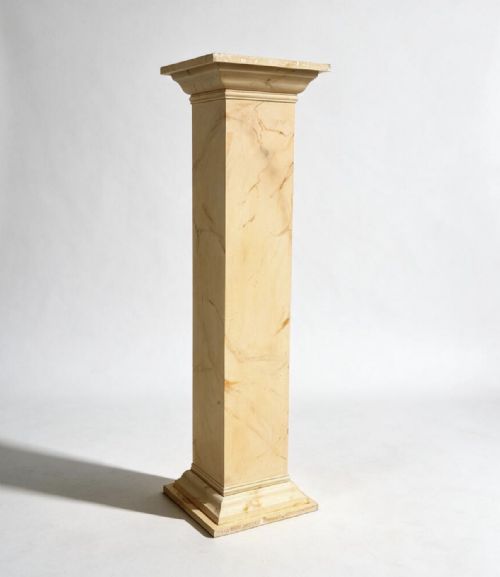


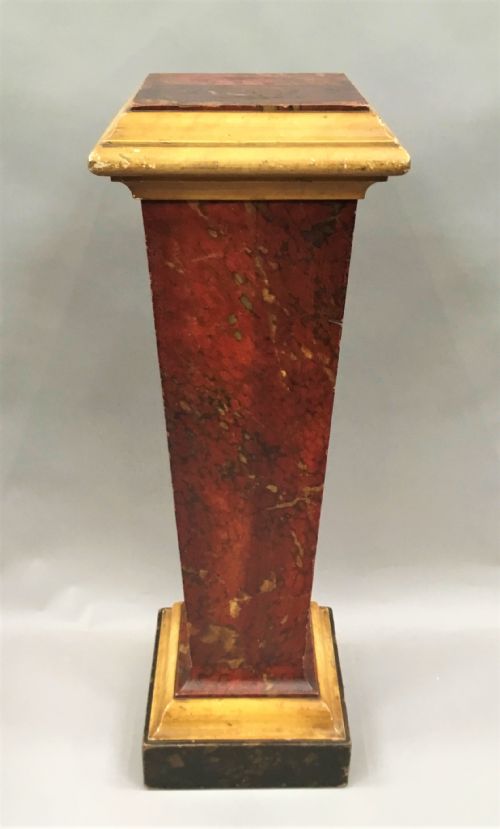


Faux Marble Plinth
These faux marble plinth examples bring classical display weight to a room, using painted or compounded illusion to lift a bust or urn.
Faux Marble Plinth
When you search for a faux marble plinth, you are looking at sturdy display columns, pedestals, and bases designed to elevate sculpture, urns, and decorative objects. The pieces on this page span the 19th Century, Victorian period, Regency, and early decades of the 20th century, offering robust architectural presence without the prohibitive weight of solid stone.
You will most commonly meet tall circular and square pedestals alongside column forms finished to mimic stone. These items originate from British and continental workshops spanning the Regency era through to the 1930s.
The forms serve primarily to raise decorative urns and portrait busts to eye level. They draw heavily on Neoclassical, Victorian Neo-Classical, and Grand Regency styles to create a stately interior focal point.
How they were made
Maker workshops built the core structures using timber or plaster before applying decorative surfaces. Painted wood and painted timber examples rely on pigment layers brushed and polished to imitate natural stone grain.
Faux Marble Plinth Retail Price Guide 2026
Typical asking prices for faux marble plinth among the pieces listed under this phrase on Sellingantiques today, from the lower quarter to the upper quarter. They describe what is for sale here now, not the wider market.
Some decorators used plaster and paint so convincingly that only a sharp knock reveals the wooden core underneath.
What varies in quality
The sophistication of the surface illusion dictates the upper tier of the range. Scagliola construction with deep mineral veining and hand-polished lustre sits above simpler painted wooden surfaces that rely on flat brushwork.
Proportion and architectural fidelity separate superior examples from basic utilitarian stands. The best columns retain original painted or scagliola finishes with convincing colour variation, rather than later repainting that flattens the stone effect.
The Faux Marble Plinth Glossary
- Scagliola
- A composite material made from pigmented plaster, glue, and stone fragments, shaped and polished to imitate true marble. It provides a heavy, convincing stone finish without the extreme weight of quarried rock.
- Socle
- A short plain plinth or pedestal base supporting a column or statue. It grounds the vertical element firmly on the floor.
- Verde Antico
- A dark green serpentine marble often simulated in decorative painting. Makers imitate its characteristic white veining to evoke ancient Roman stonework.
- Pedestal
- An architectural support used to elevate a bust, urn, or figure. These pieces range from simple square columns to elaborate classical revival pillars.
- Neoclassical
- A style drawing inspiration from the classical art and architecture of ancient Greece and Rome. It dominates the decorative vocabulary of these columns and plinths.
Faux Marble Plinth: Frequently Asked Questions
What is scagliola?
Scagliola is a composite material made from pigmented plaster, glue, and marble dust, developed to imitate true stone.
Craftsmen polished the mixture to achieve a tactile depth that looks and feels remarkably like quarried marble.
How do I clean a painted finish?
Painted and scagliola surfaces require gentle dusting with a soft, dry cloth to protect the decorative pigment.
Water and chemical cleaning agents can damage the historical paint layers and alter the sheen.
Are these columns solid stone?
These pieces are generally constructed from timber, plaster, or scagliola rather than heavy quarried rock.
This construction method made them lighter to transport and position within domestic rooms.
How do I date a pedestal?
Dating relies on stylistic cues like Neoclassical proportions or Victorian ornamentation combined with material analysis.
Construction methods, such as the type of wood framing beneath plaster, also point to specific historical decades.