
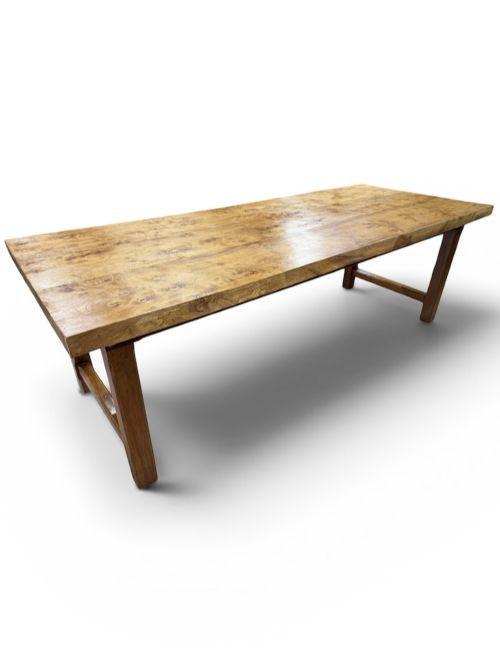
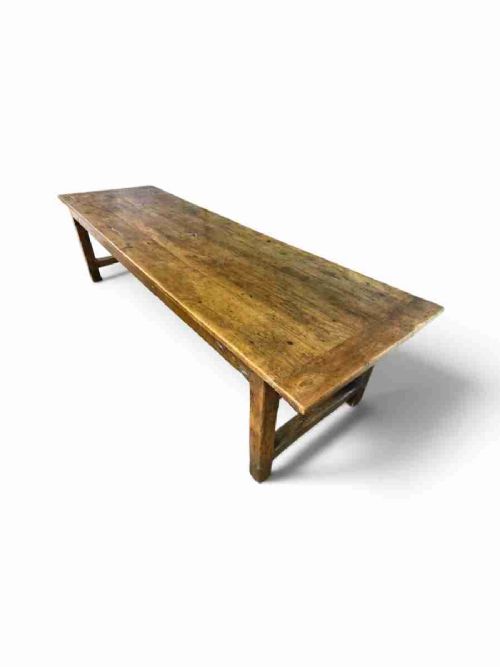
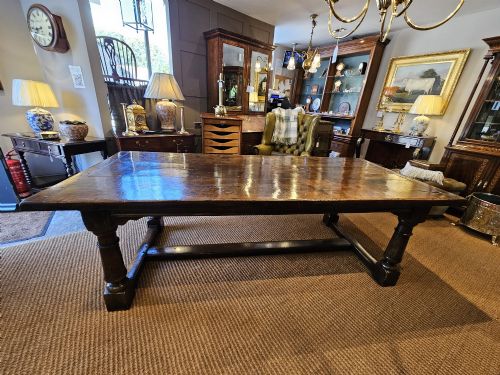
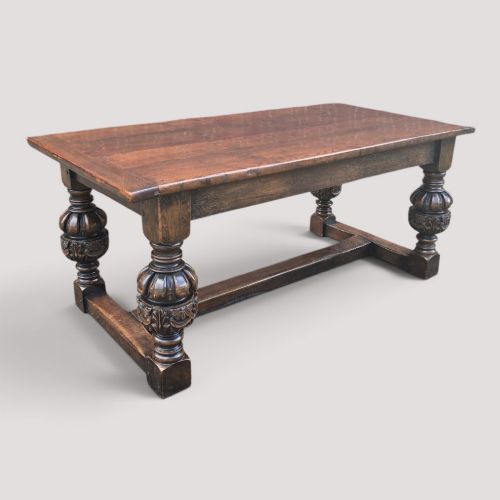
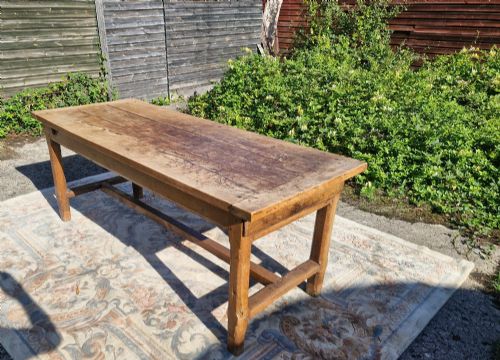
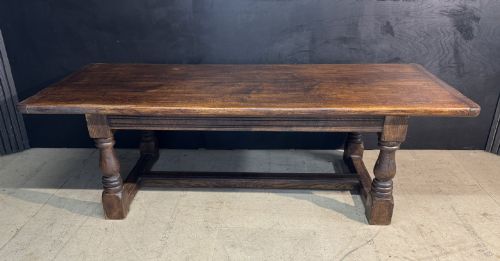
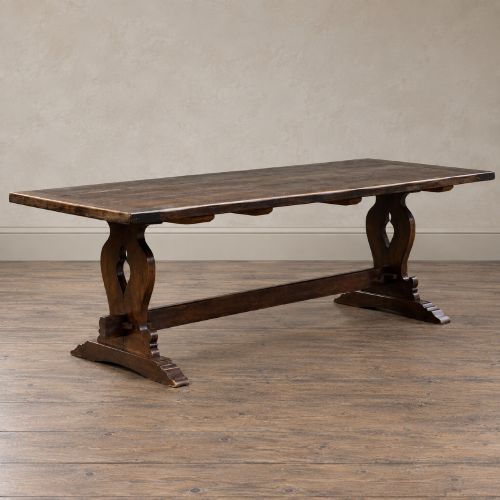
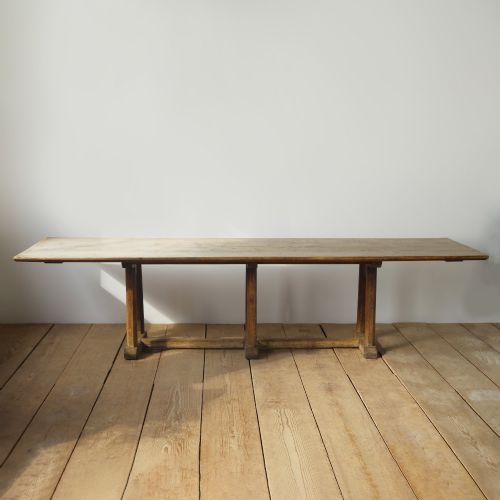
Farmhouse Trestle Dining Table
When you want a farmhouse trestle dining table, you are looking for a sturdy surface built for daily communal use.
Farmhouse Trestle Dining Table
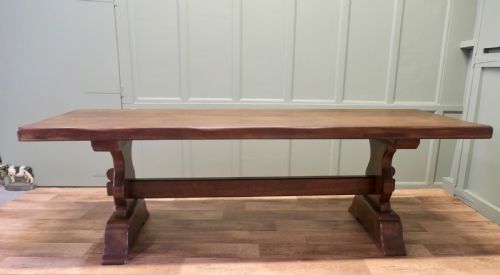
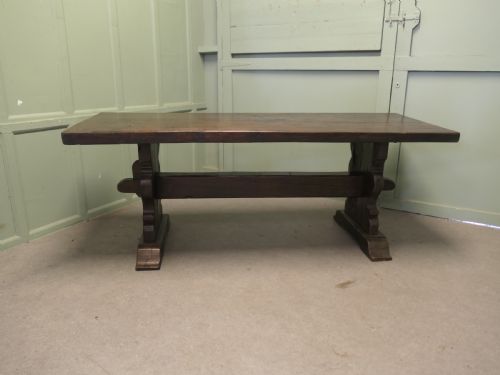
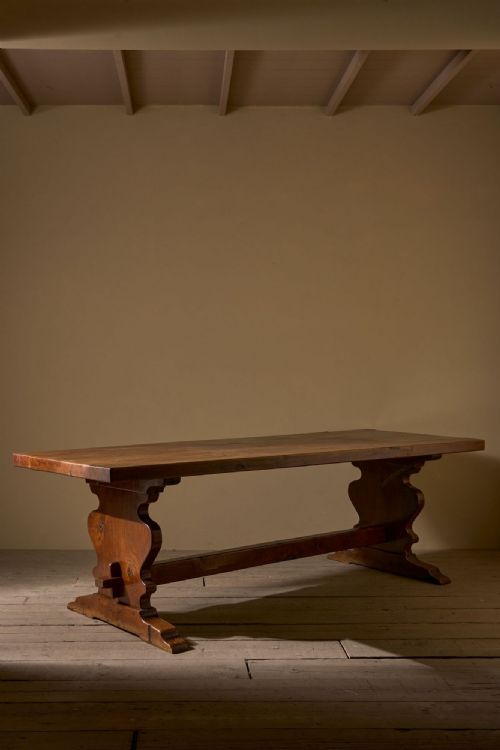
A farmhouse trestle dining table brings together utilitarian timber forms and generous proportions designed to seat groups comfortably. Buyers encounter examples originating from French provincial regions as well as English workshops.
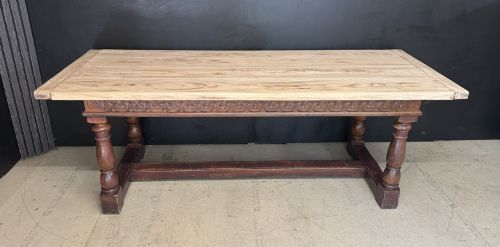
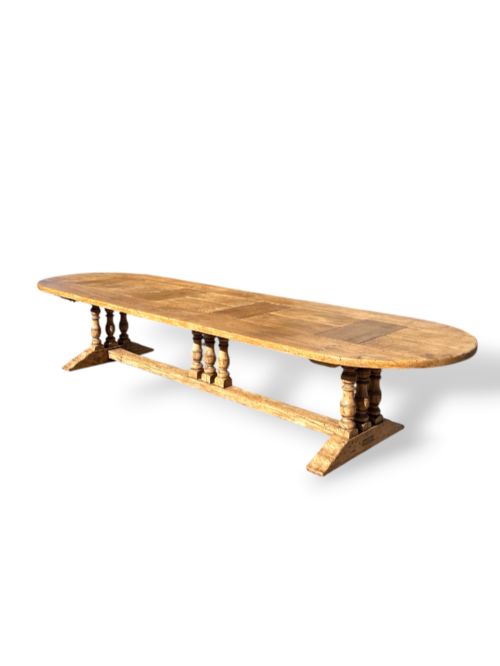
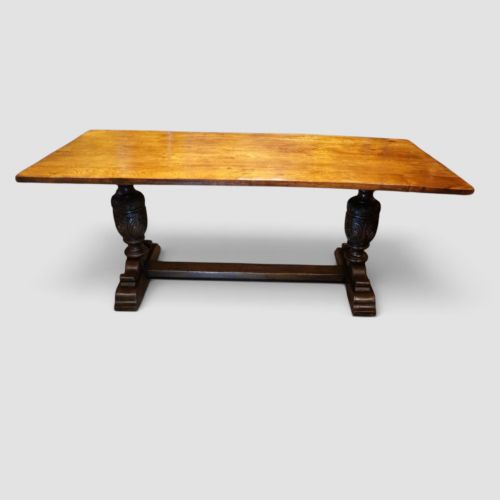
The selection ranges from robust 18th century oak pieces to later interpretations from the Victorian era and the 20th century. Forms span standard kitchen tables to long refectory styles and variants with end trestle supports.
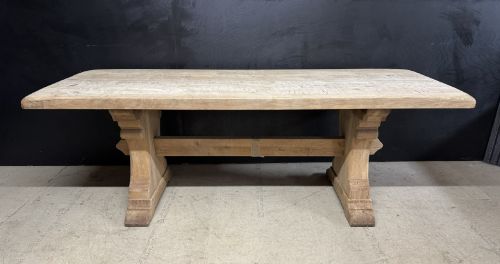
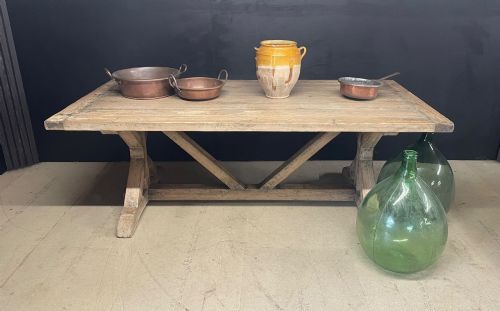
Rustic country styles and bleached finishes dominate the selection, showing heavy planks and patinated surfaces. These items reflect traditional domestic use across various European and British rural settings.
Materials and construction
Makers relied primarily on solid timbers such as oak, pine, elm, and cherrywood, chosen for durability and availability. Planks were joined to form thick tops, occasionally utilising two-board or multi-board configurations.
Underframes typically employ trestle ends, heavy legs, or stretcher bases to support substantial weight without wobble. Joinery relies on traditional pegged mortise and tenon methods rather than modern metal fasteners.
Materials recorded in current listings include oak, pine, elm, cherrywood, and softwood alongside general timber descriptions.
Variations in quality
Quality rests upon the selection of timber and the integrity of the underlying structure. Denser hardwoods like oak command greater regard than softer woods like pine, though condition and proportion matter equally.
Surface patina and original timber depth separate superior items from lesser examples. Tables retaining honest wear, minimal structural alterations, and balanced proportions represent the upper end of the range.
The Farmhouse Trestle Dining Table Glossary
- Trestle
- A support consisting of a horizontal beam fixed to two splayed legs, used instead of four vertical legs to hold up a table top. This design allows maximum legroom along the length of the seating area.
- Refectory
- A long dining table traditionally found in communal dining halls and monasteries. These forms heavily influence the sturdy rectangular tables seen in rural domestic settings.
- Patina
- The surface sheen and colour developed by timber over decades or centuries of use, cleaning, and exposure to light. Collectors value an undisturbed patina as proof of age and authenticity.
- Plank top
- A table top constructed from several long boards laid side by side. Two-board tops are particularly sought after for their width and stability.
Farmhouse Trestle Dining Table: Frequently Asked Questions
How do I clean a wooden farmhouse table?
Wipe surfaces gently using a slightly damp cloth without harsh chemical detergents. Regular dusting keeps the timber free from grit that might scratch the old finish.
Avoid soaking the wood or placing hot dishes directly onto the untreated surface. Applying occasional natural wax helps preserve the aged appearance of the timber.
Can I use these tables outdoors?
These antiques are designed strictly for indoor domestic environments. Exposure to changing outdoor weather conditions can warp the thick timber and ruin the old surface finish.
Keep the tables away from direct radiators or damp areas inside the home. Sudden humidity shifts cause old wood to expand and contract excessively.
How do I identify an 18th century table?
Look for hand-cut joinery marks, peg construction, and heavy timber boards showing deep patination. 18th century examples often display irregular hand-planed surfaces rather than uniform machine processing.
Examine the underside and joints for signs of age-appropriate wear and tool marks. Comparing the construction methods to known period pieces helps confirm the date.