


X Frame Trestle Table
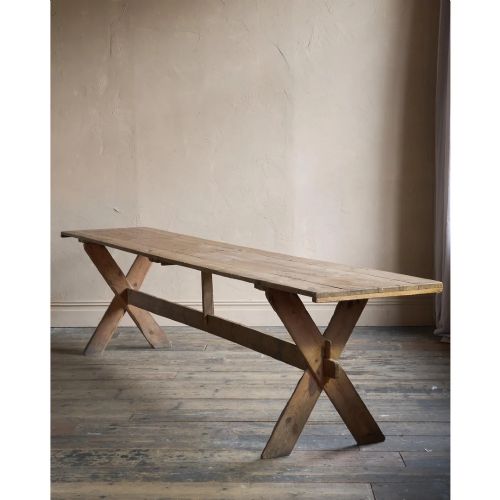
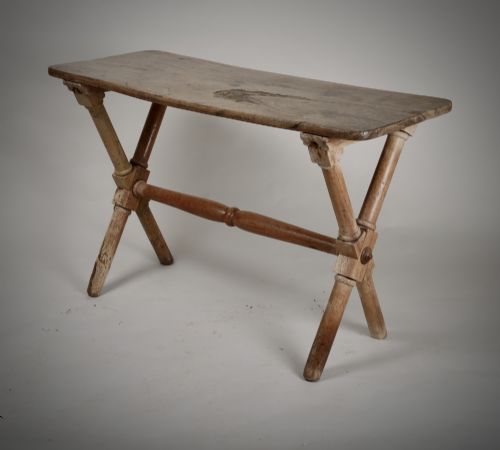
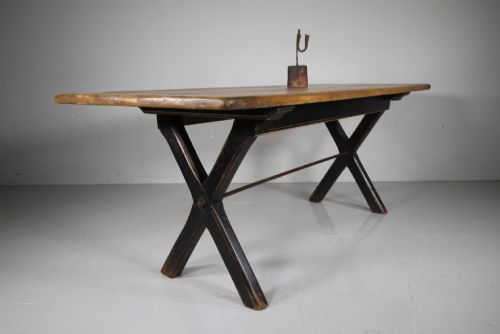
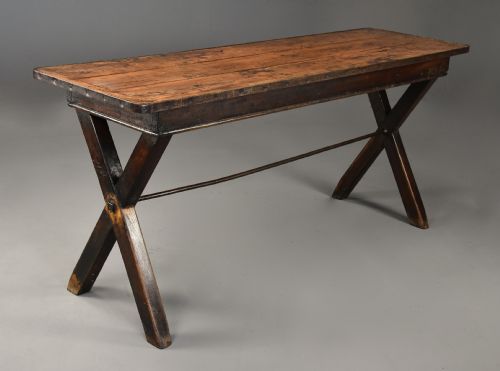
An x frame trestle table brings sturdy architectural lines and generous legroom to a room, built around a characteristic crossing support.
X Frame Trestle Table
When you search for an x frame trestle table, you encounter robust dining tables, tavern tables, and occasional furniture built with intersecting wooden or iron supports. These pieces emerge primarily from the nineteenth century and the mid-twentieth century, drawing on English, French, and Scandinavian country traditions.
You are most likely to meet pine, oak, and elm examples on this page, often featuring thick plank tops with cleated ends. The cross base design provides exceptional structural stability while allowing diners to sit comfortably without corner legs obstructing their knees.
The format spans utilitarian kitchen tables, scrubbed tavern boards, and architectural writing desks. Some retain their original painted finishes, while others show weathered timber surfaces shaped by decades of heavy domestic or commercial use.
How they were made
Cabinetmakers and joiners constructed these tables using solid domestic timbers such as pine, oak, elm, sycamore, and mahogany. Planks formed the tabletops, frequently secured with cleated ends to prevent warping, and rested upon braced or bolted cross frames.
Iron and brass featured in structural bases and fittings, particularly on industrial or ecclesiastical variants. Surface treatments included natural wax, clear polish, or lead-based red paint applied directly to the timber framing.
Several tables show traces of historic tavern life, where spilled ale and decades of tankard slams created an honest, indestructible working surface.
What varies in quality
The distinction between standard utility items and finer examples lies in the selection of timber and the integrity of the original construction. Thick multi-plank tops with tight joints and well-proportioned cross frames represent superior craftsmanship.
Surface preservation significantly influences character, as tables retaining authentic patinated finishes or original red paint command greater appreciation than those stripped down to raw wood. The tightness of the joinery at the intersection of the x frame determines the structural longevity.
The X Frame Trestle Table Glossary
- Cleated ends
- Wooden battens fixed across the short ends of a plank tabletop to keep the timber flat and stable. This traditional method allows the wood to expand and contract naturally with seasonal humidity.
- Refectory table
- A long, narrow dining table historically used in monasteries and large halls. They are characterised by sturdy underframes designed to support substantial seating capacities.
- Tavern table
- A compact, heavy-duty table built for commercial drinking and dining establishments. They typically feature thick timber tops and robust frames suited to rigorous daily use.
- Potboard
- A lower shelf fitted beneath a table surface, historically utilised for storing pots, pans, and kitchen utensils. This addition provides extra structural rigidity to the legs.
- Patina
- The deep surface sheen and mellow colour developed on timber through decades of handling, cleaning, and ageing. It serves as a visual indicator of genuine antiquity.
X Frame Trestle Table: Frequently Asked Questions
Are x frame trestle tables stable on uneven floors?
The geometry of crossing legs distributes weight evenly across two distinct contact points on each end. This design adapts well to uneven flagstone or timber floors found in older properties.
Heavier models benefit from their own mass, remaining steady during daily use without excessive rocking.
How do I clean a vintage painted pine table?
Wipe the surface gently with a slightly damp cloth using mild, non-abrasive soap. Avoid harsh chemical cleaners that can strip or soften historic paint layers.
Dry the timber immediately afterwards to prevent moisture penetration into the underlying wood.
Can I use an antique tavern table for daily dining?
These tables were originally built for commercial or domestic service and designed for heavy daily use. Their robust construction makes them well-suited for modern family dining.
Using heat-resistant mats protects aged timber and historic wax finishes from marking.
What is the difference between a trestle table and a refectory table?
A trestle table relies on two or more support frames connected by a central stretcher beam to hold up the top. A refectory table typically employs four fixed legs set in from the corners, often linked by low stretchers.
Both forms offer unobstructed legroom along the length of the tabletop.