


Farmhouse Kitchen Dresser
A farmhouse kitchen dresser brings working utility and timber warmth to a room, offering generous storage for daily wares.
Farmhouse Kitchen Dresser
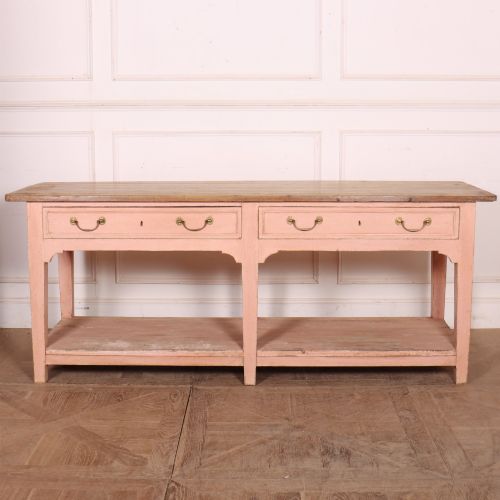
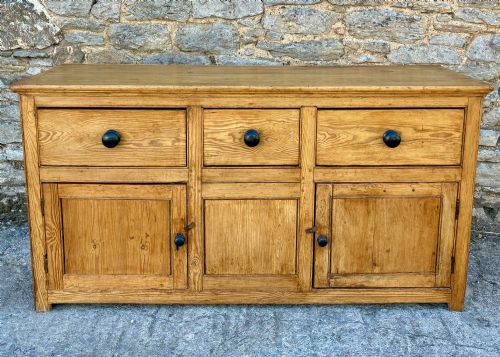
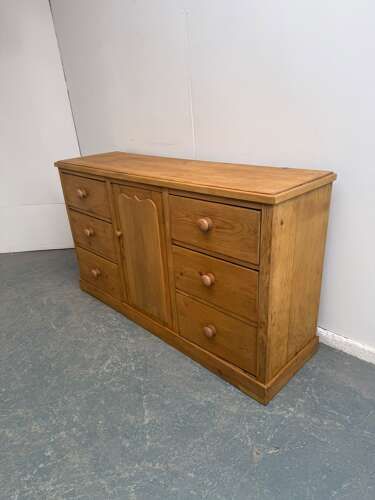
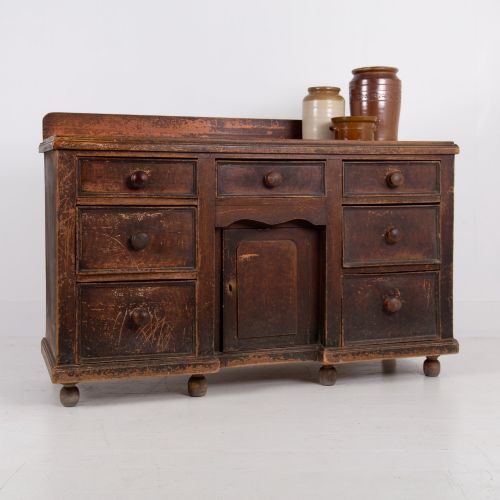
A farmhouse kitchen dresser serves as the central storage and display anchor for domestic spaces, combining cupboards, drawers, and open shelving. When you browse for a farmhouse kitchen dresser, you encounter pieces spanning from the eighteenth century through the Victorian era and into the early twentieth century. Most examples found here originate from English, Scottish, and continental European workshops, reflecting regional vernacular traditions.
The format generally divides into a lower base section, often fitted with drawers and cupboards, and frequently an upper plate rack or glazed cabinet. Many surviving specimens appear simply as dresser bases or potboards without the upper shelving superstructure. Pine and oak dominate the construction, appearing either in stripped bare timber or retaining historic painted finishes.
How they were made
Cabinetmakers built these practical units using solid timbers like pine and oak, relying on durable joinery suited to heavy domestic use. Boards were joined with traditional methods to withstand daily wear in busy kitchens and pantries.
Surfaces often show layers of original paint, historic wax, or stripped pine finishes that expose the grain of the wood. Hardware typically includes brass handles, wooden knobs, and occasionally leaded stained glass in glazed upper doors.
Some nineteenth-century country pieces retain traces of flour and pastry dough baked deep into the pine grain by generations of kitchen work.
What varies in quality
Construction scale and timber selection separate standard utilitarian furniture from monumental country house pieces. Heavier proportions, integrated potboards, and untouched original paint finishes elevate a piece's standing among collectors.
The integrity of the structural frame, the retention of original brass or wooden hardware, and the honesty of the surface patina dictate the character of each cabinet. Pieces exhibiting regional vernacular traits or folk art carving carry distinct artistic merit.
The Farmhouse Kitchen Dresser Glossary
- Potboard
- An open lower shelf beneath a dresser base traditionally used for storing heavy pots and pans. This platform sits just above the floor on feet or an extended plinth.
- Dresser base
- The lower portion of a kitchen dresser featuring cupboards and drawers without any upper shelving superstructure. These versatile pieces function independently as sideboards or servers.
- Vernacular
- Architecture and furniture built by local craftsmen to fulfill specific regional and practical needs rather than following academic architectural styles. These items use locally available materials such as pine or oak.
- Folk art
- Decorative work produced within a traditional community culture, often featuring hand-carved details or painted motifs. Alpine and country examples display distinct regional character.
- Waxed finish
- A protective surface treatment applied to timber to nourish the wood and produce a soft sheen over time. This finish highlights the natural grain of pine and oak.
Farmhouse Kitchen Dresser: Frequently Asked Questions
How do I style a dresser base?
A dresser base functions well as a sideboard in a dining room or a serving counter in a kitchen. Its flat top surface accommodates lamps, bowls, and everyday serving items.
The drawers and cupboards below offer practical concealed storage for table linen, cutlery, and kitchenware.
Are these dressers one piece or two?
Kitchen dressers often comprise two separate sections: a heavy lower base and a removable upper plate rack or glazed cabinet. Many surviving examples now exist solely as independent bases.
One-piece units integrate the top and bottom structures permanently, requiring careful measurement of ceiling heights and doorways before placement.
How do I care for antique pine?
Antique pine benefits from occasional gentle waxing to maintain the condition of the wood and protect the surface from moisture. Avoid placing timber furniture in direct sunlight or near heat sources.
Regular dusting with a soft dry cloth preserves the historic patina without harming the original finish or paint.