

Farmhouse Dining Chairs
Farmhouse dining chairs bring practical vernacular seating into modern rooms, formed from robust native timbers like elm and ash.
Farmhouse Dining Chairs
When searching for farmhouse dining chairs, buyers encounter sturdy country seating originating primarily from the nineteenth and early twentieth centuries. These pieces were designed for everyday domestic utility in kitchens and farmhouses rather than formal dining rooms.
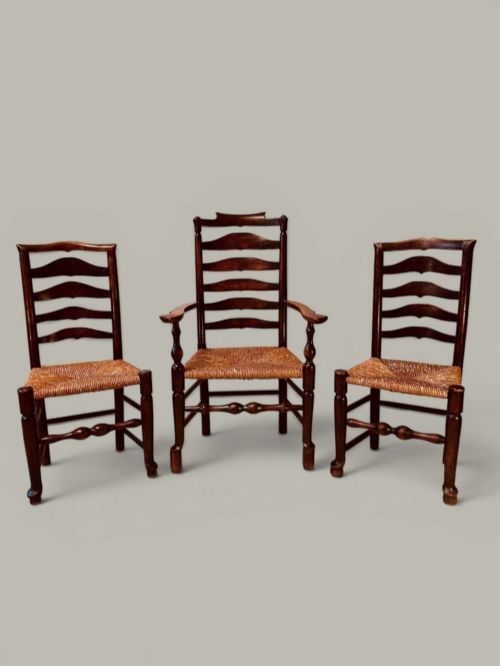
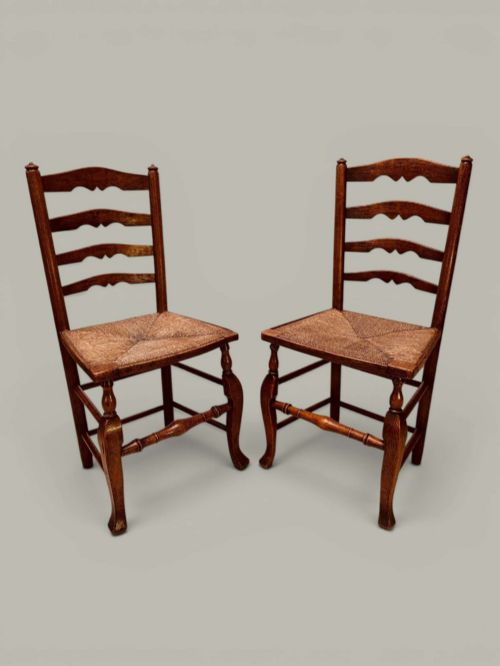
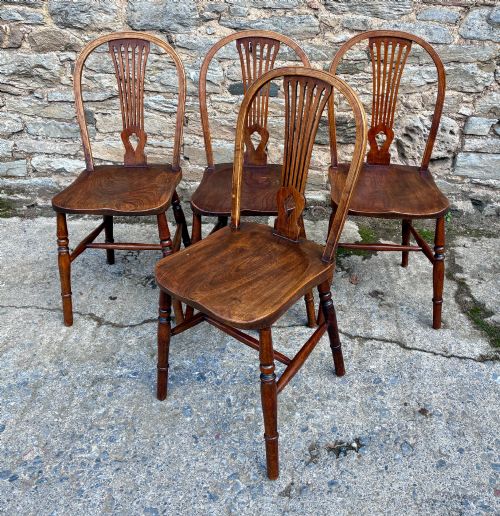
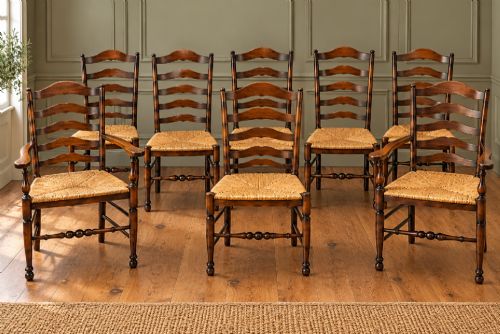
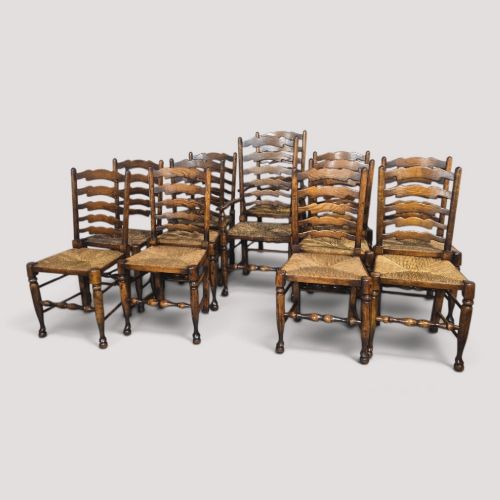
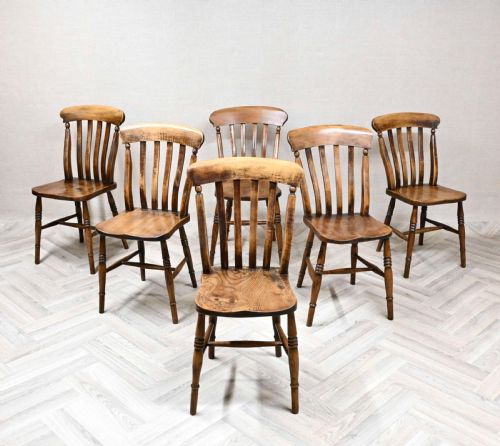
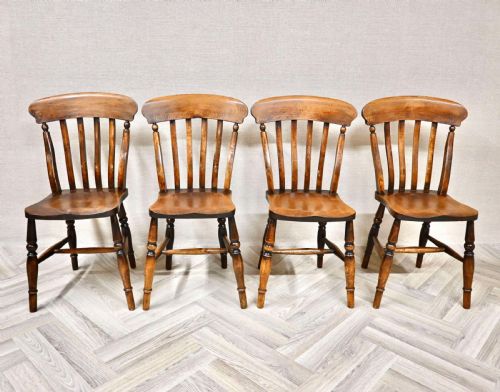
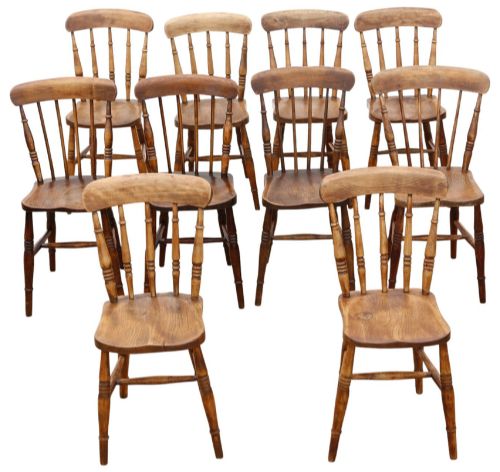
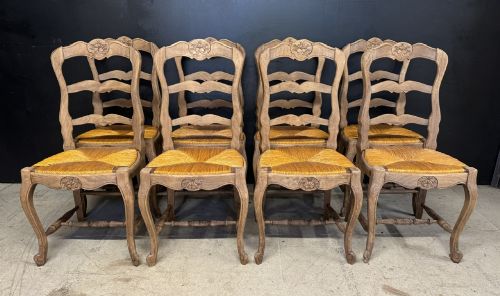
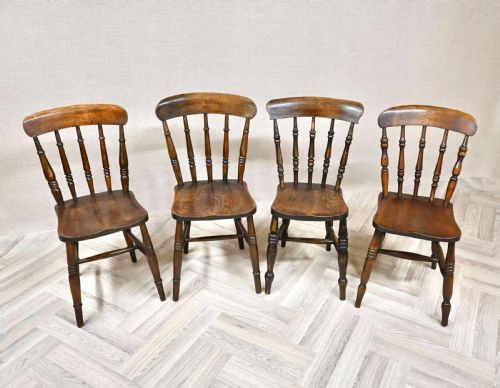
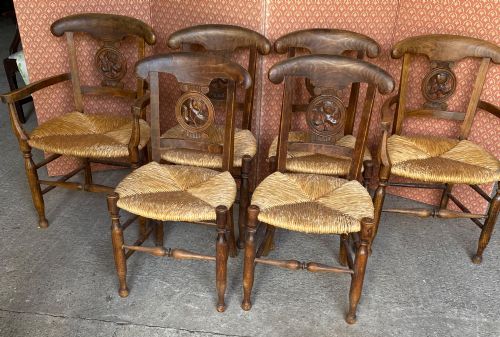
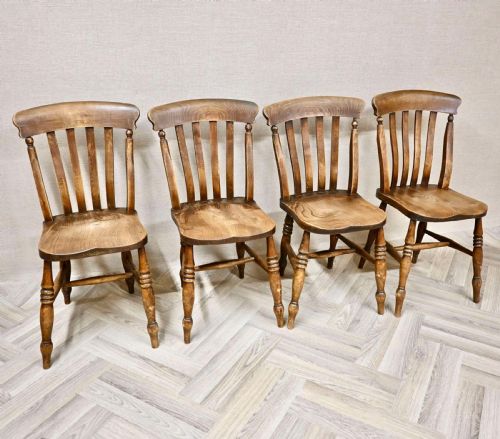
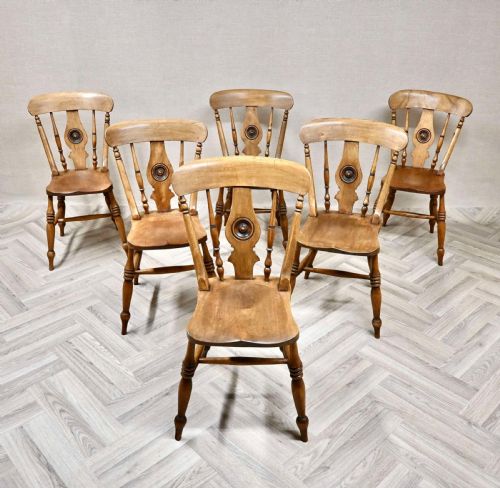
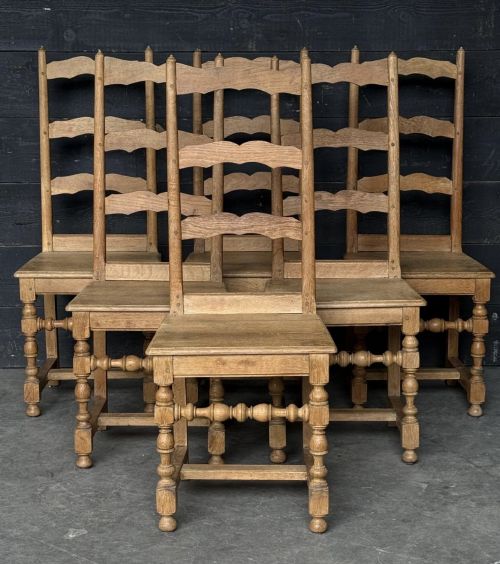
The versions most frequently met on this page are Windsor chairs with distinctive wooden hoops, stick backs, and lath backs, alongside ladder backs with rush or wooden seats. Sets ranging from pairs up to ten or twelve pieces appear frequently alongside individual armchairs and carvers.
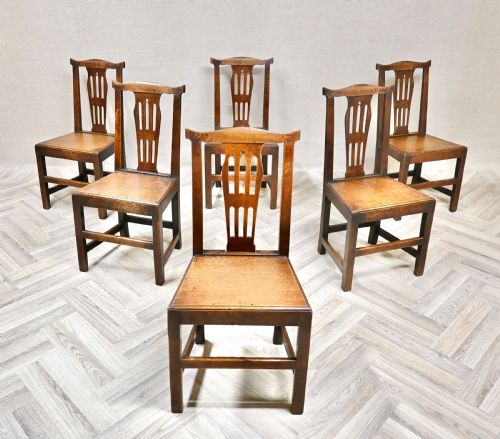
Origins span English, Welsh, and French rural traditions, utilising regional turnery methods and local timber supplies. Forms include fiddle backs, spindle backs, and Gothic lace backs shaped by provincial makers.
How they were made
Construction relies heavily on traditional combinations of native hardwoods such as elm for solid, figured seats, paired with bent ash or beech for spindles, hoops, and steam-bent components. Oak and pine also feature prominently in ladder backs and provincial frames, joined using pegged mortise and tenon joints.
Turnery was central to production, with legs and stretchers shaped on bodgers' poles and foot-lathes before being wedged into bored seats. Double stretchers frequently reinforced the undercarriage to withstand heavy daily use in busy kitchens.
Farmhouse Dining Chairs Retail Price Guide 2026
Typical asking prices for farmhouse dining chairs among the pieces listed under this phrase on Sellingantiques today, from the lower quarter to the upper quarter. They describe what is for sale here now, not the wider market.
Listings feature eighteenth, nineteenth, and early twentieth-century periods, showcasing oak, elm, ash, beech, pine, and rush materials.
What varies in quality
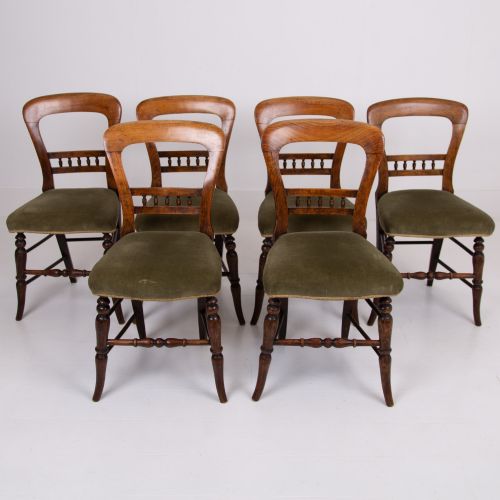
Quality rests significantly on the selection of timber and the integrity of the original construction, particularly the figure of the elm seat and the matching of turned members across a set. Harlequin sets demonstrate how chairs collected together over time compare to uniform sets made by a single workshop.
Patina and surface preservation separate honest, untouched examples from those stripped or heavily restored. The refinement of the steam-bending on hoops and the slenderness of spindles reveal the competence of the original maker.
Worksop
The Farmhouse Dining Chairs Glossary
- Windsor chair
- A chair built with a solid wooden seat into which the legs and back spindles are directly inserted. This design creates a robust, vernacular form characteristic of English country seating.
- Harlequin set
- A collection of dining chairs that match in general style, period, and material but were gathered together rather than created as a single original batch. These sets often show subtle variations in turnery and proportions.
- Lath back
- A Windsor chair variation featuring a flat, vertical wooden splat or lath down the centre of the backrest. This component often curves to support the spine.
- Spindle back
- A chair back constructed from a series of thin, turned wooden uprights fitted between a top rail and the seat. It provides lightweight yet sturdy support.
- Stretcher
- A horizontal wooden brace connecting the legs of a chair to provide structural stability. Double stretchers offer additional reinforcement.
- Patina
- The surface sheen and mellowing developed by wood over decades of handling, cleaning, and exposure to light. It serves as an indicator of age and honest use.
Farmhouse Dining Chairs: Frequently Asked Questions
How do I spot a Windsor chair?
A Windsor chair is identified by its solid wooden seat that acts as the central anchor for both the legs below and the back components above. The back typically consists of steam-bent hoops and turned spindles rather than a solid upholstered frame.
These chairs developed from regional vernacular traditions, resulting in distinctive regional variations in England and Wales. Look for saddle-shaped elm seats and visible wedged joints where the legs pass through the seat base.
What is a harlequin set?
A harlequin set is a group of dining chairs that share a similar period, material, and overarching style but were not originally manufactured together as a single batch. These collections allow buyers to acquire larger seating groups that match in character without being identical.
Close inspection reveals subtle differences in turnery, slat shapes, or seat dimensions between individual chairs. This variation is a standard feature of antique country furniture gathered over generations.
Which woods were used?
Country chairmakers utilised native timbers that were locally abundant and suited to specific structural demands. Elm was predominantly chosen for solid, carved seats because its interlocking grain resisted splitting.
Ash and beech provided strong, flexible material for steam-bent hoops, arms, and slender turned spindles. Oak and pine also appear frequently in ladder backs and regional provincial seating.
How do I care for rush seats?
Rush seats require a stable indoor environment protected from excessive moisture and extreme dryness, which can cause natural fibre to become brittle. Regular dusting with a soft brush prevents dirt from settling into the twists of the rush.
Avoiding direct sunlight and placing protective pads beneath cushions helps preserve the tensile strength of the woven material over time. Treat the surrounding wooden frame with appropriate traditional wax rather than modern silicon polishes.
Are ladder back chairs comfortable?
Ladder back chairs offer upright support suited for dining and kitchen tasks, with horizontal slats designed to align with the back. Many historical examples were paired with loose squab cushions or rush seating to improve comfort during extended use.
Their upright posture encourages good seating habits, making them practical for daily dining arrangements. The ergonomic curve of the rungs varies depending on the regional workshop and period.