
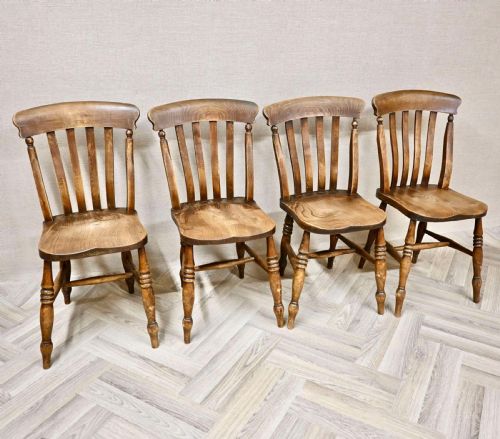
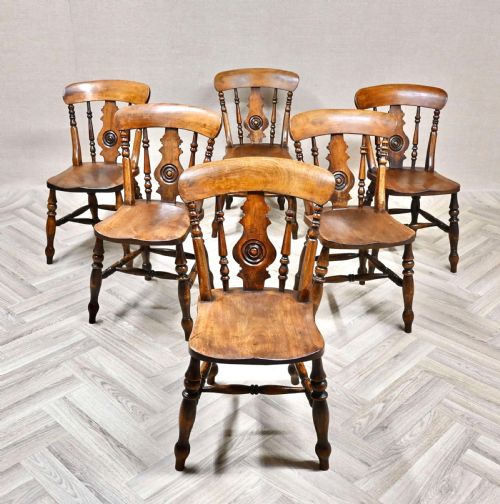
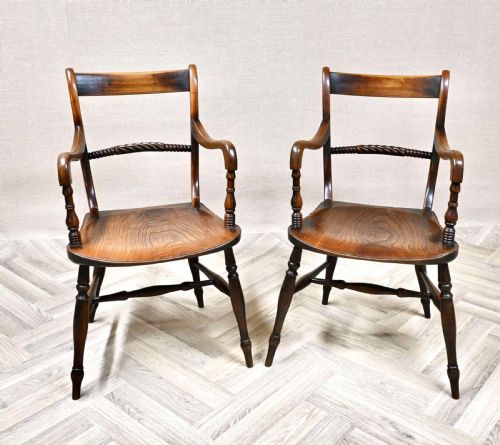
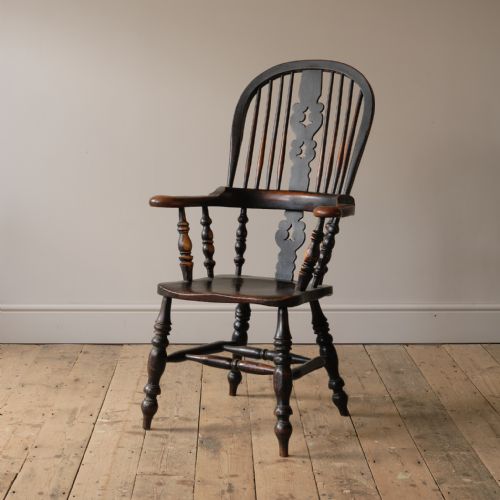
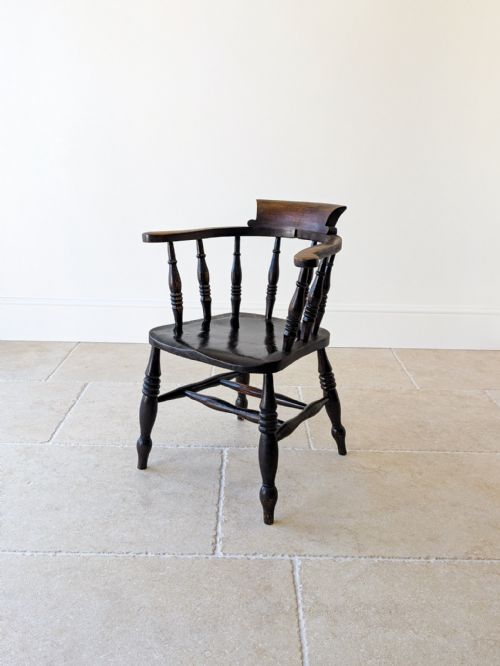
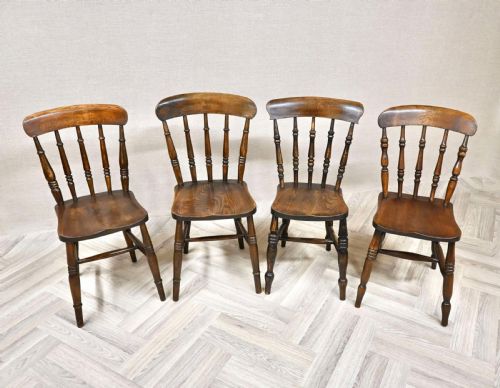
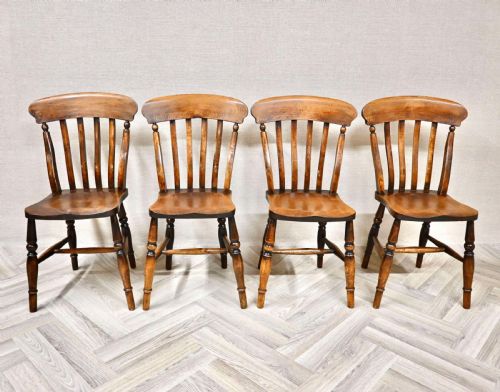
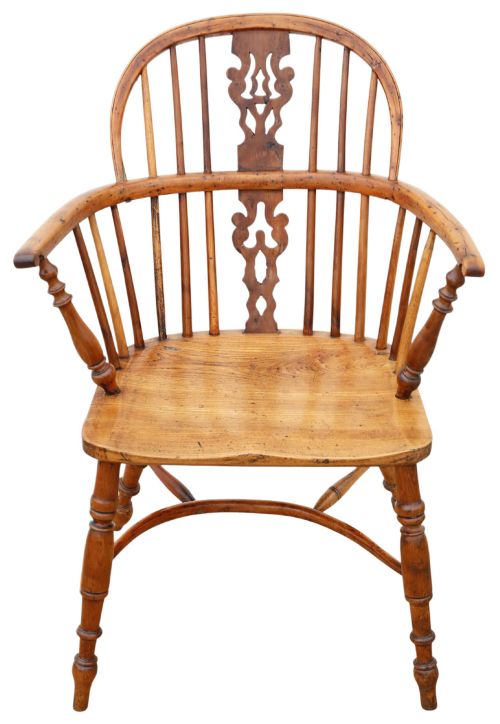


Wooden Windsor Chair
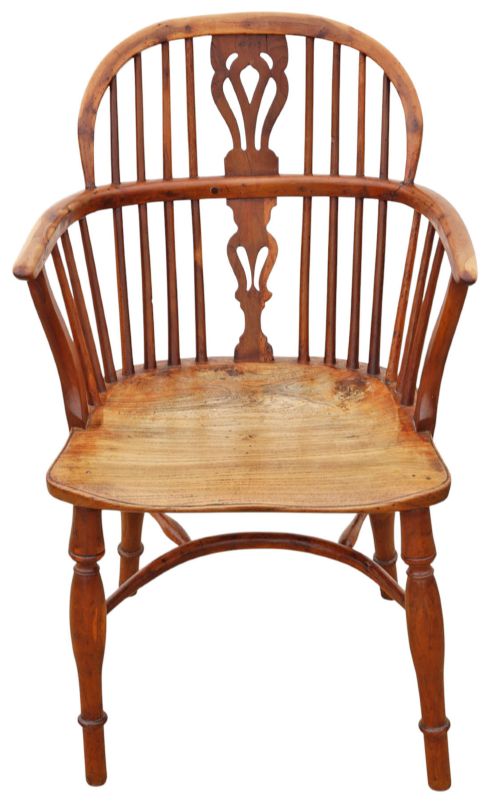
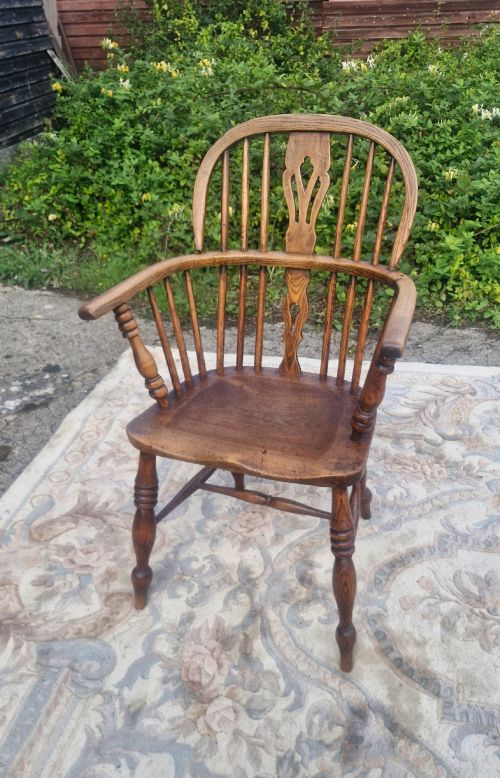
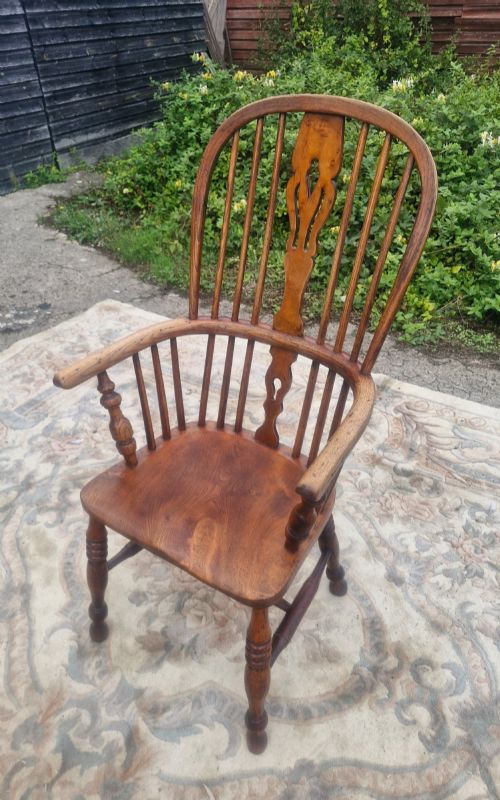
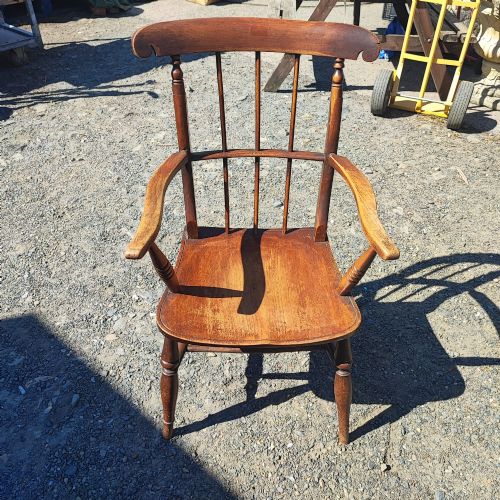
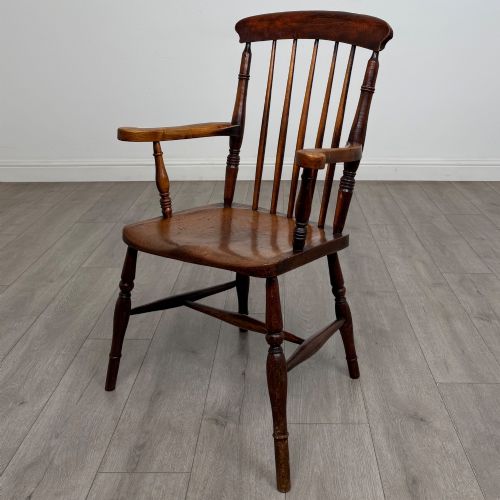
A wooden windsor chair is a sturdy vernacular seat built with a solid timber saddle seat into which legs and spindles are wedged.
Wooden Windsor Chair
When searching for a wooden windsor chair, you encounter seating originating primarily from the Georgian, Victorian, and Edwardian eras, spanning kitchen armchairs, low and high backs, and children's versions.
The selections on this page demonstrate English country vernacular traditions, with many pieces originating from regional workshops as kitchen dining chairs, desk chairs, and captain's chairs.
Armchairs and carvers predominate, frequently found as single pieces, pairs, or matched sets intended for everyday domestic use.
How they were made
Construction relies on a combination of native timbers, predominantly utilising a solid elm seat combined with ash, beech, oak, or yew for the steam-bent hoops, backs, and turned legs.
Maker techniques involve wedging turned spindles and uprights directly into bored holes in the thick wooden seat plank, creating a rigid and durable frame without traditional upholstery.
Listings feature elm seats paired with ash, beech, and yew across Georgian, Victorian, and Edwardian periods.
What varies in quality
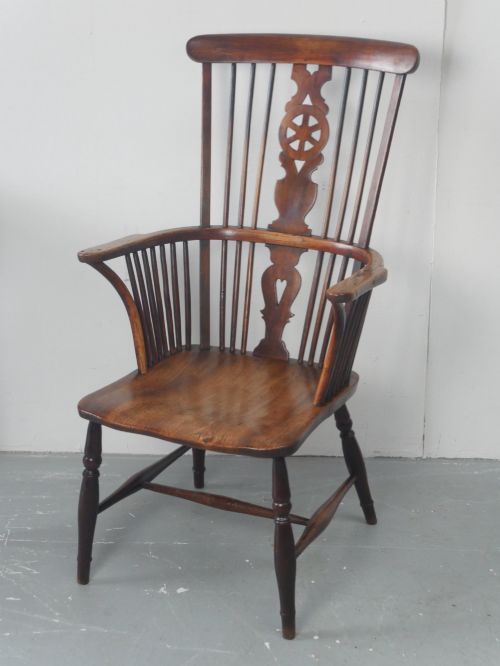
Quality depends upon the choice of timber and the complexity of the back design, with figured yew wood and comb-back or wheel-back variations demonstrating higher craftsmanship than simpler stick-back utility forms.
The grace of the turnings on the legs and the ergonomic shaping of the solid elm saddle seat distinguish standard vernacular kitchen seating from finer regional armchairs.
J SPENCER
The Wooden Windsor Chair Glossary
- Wheelback
- A chair back featuring a pierced splat carved or shaped in the outline of a spoked cart wheel. This decorative motif gained popularity in nineteenth-century dining and kitchen seating.
- Comb-back
- A chair design where the central spindles extend upward to support a horizontal top rail, resembling the teeth of a comb. This form represents an earlier and structurally distinct tradition.
- Smoker's bow
- A low-backed armchair with a continuous curved armrail supported by turned spindles, often associated with tavern or captain's chair forms.
- Vernacular
- Objects designed and built by local tradesmen to satisfy practical domestic needs rather than following strict high-style architectural blueprints. These pieces rely on regional timber availability.
- Carver
- An armchair, particularly one designed to sit at the head of a dining table or to match a set of smaller side chairs.
Wooden Windsor Chair: Frequently Asked Questions
What is a wooden windsor chair?
A wooden windsor chair is a traditional seating form characterised by a solid wooden saddle seat into which the legs, back spindles, and arm bow are fitted directly.
Unlike upholstered furniture, its structural strength relies entirely on exposed turned timber components and rigid joinery.
How were they used historically?
These chairs served primarily as practical seating in domestic kitchens, farmhouses, and writing desks.
Sturdily built for daily service, they functioned as dining seats, reading chairs, and occasional armchairs around the hearth.
How do I date a windsor chair?
Dating relies on observing changes in timber choice, turning styles, and back construction from the Georgian period through the Victorian era.
Earlier examples often feature comb-backs and yew wood, while later Victorian and Edwardian versions utilise beech, elm, and wheel-back motifs.
Are they comfortable for daily seating?
The solid wood saddle seats are ergonomically hollowed out to fit the human body, providing surprising support without cushions.
Adding a loose pad makes them suitable for long periods at a desk or dining table.