
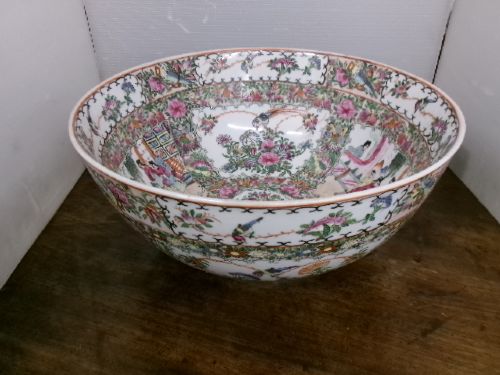
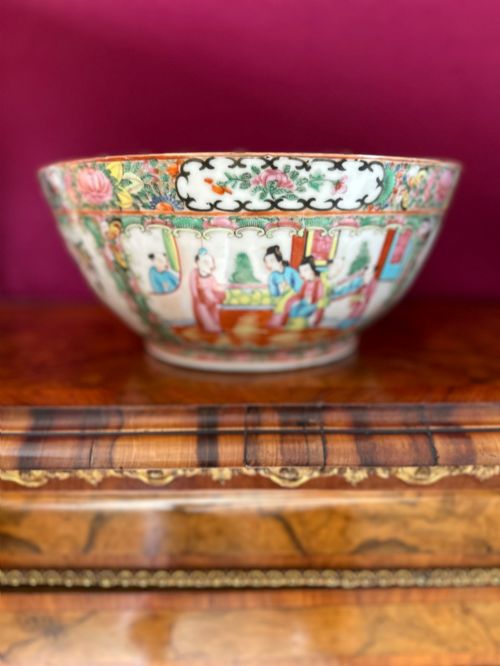
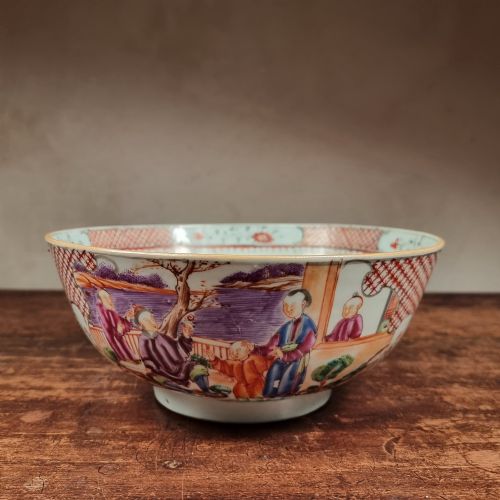
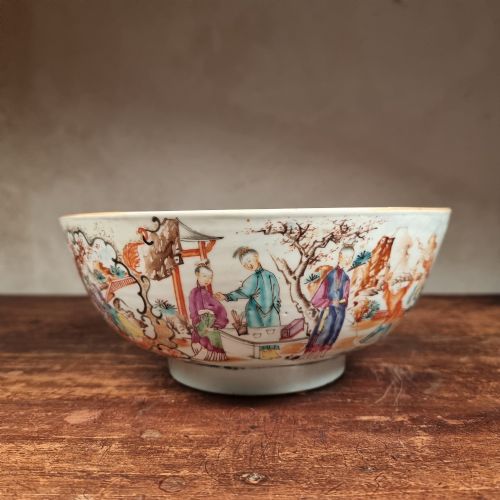



Famille Rose Punch Bowl
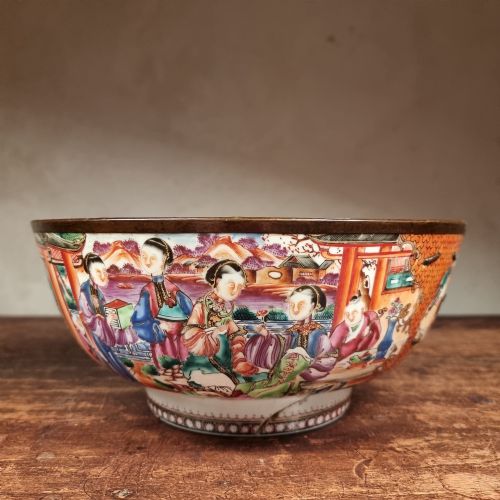
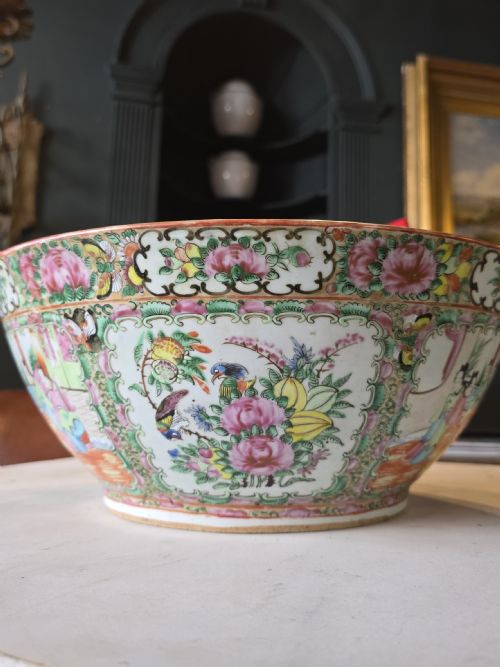
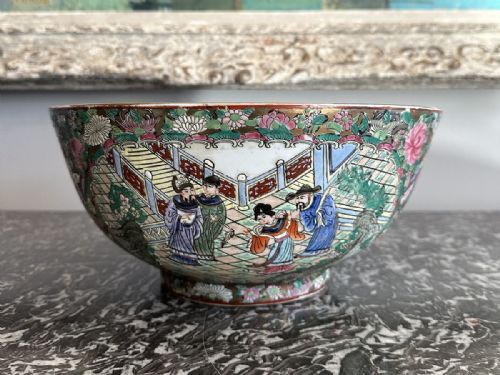
A famille rose punch bowl brings vibrant painted enamel work and generous proportions to a room, serving as a striking decorative centrepiece.
Famille Rose Punch Bowl
When you search for a famille rose punch bowl, you are looking at large ceramic vessels intended for serving punch and displaying intricate pictorial decoration. These items primarily date from the nineteenth century, with examples extending into the eighteenth century and through to the early twentieth century.
The versions you are most likely to meet on this page include Chinese export porcelain, Cantonese famille rose, and rose medallion pieces. They take the form of substantial decorative bowls and centrepiece bowls, often featuring hand-painted motifs.
How they were made
These pieces are constructed from porcelain and ceramic materials, shaped into large bowls designed to hold generous volumes. Artisans applied overglaze enamel paint by hand to create the characteristic colourful scenes.
Makers finished the pieces with gilding, gold leaf, and occasionally brass mounts to enhance the decorative presentation. Cobalt blue motifs also appear alongside the enamel palette.
Famille Rose Punch Bowl Retail Price Guide 2026
Typical asking prices for famille rose punch bowl among the pieces listed under this phrase on Sellingantiques today, from the lower quarter to the upper quarter. They describe what is for sale here now, not the wider market.
Some nineteenth-century bowls wear brass mounts like proper Victorian overcoats, refusing to go out without a bit of extra hardware.
What varies in quality
Quality rests upon the fineness of the hand-painted brushwork and the complexity of the figural or floral scenes. Pieces that retain crisp details and vibrant enamels stand apart from simpler iterations.
The presence of supplementary decorative elements, such as ormolu mounts or gilt highlights, alters the character and visual weight of the vessel. Size also distinguishes the range, with larger diameters offering greater presence.
The Famille Rose Punch Bowl Glossary
- Famille rose
- A palette of opaque enamels introduced in Chinese porcelain during the Qing dynasty, distinguished by its dominant pink or rose colour.
- Canton
- A style of Chinese export porcelain decorated in vibrant colours, often featuring panels of figures, birds, and flowers.
- Rose medallion
- A specific decorative scheme featuring repeating panels filled with figures and flowers, arranged around a central medallion.
- Overglaze enamel
- Enamel decoration applied over the fired glaze and fixed with a second, lower-temperature firing.
- Ormolu
- Gilded bronze used for mounts and stands, fitted to the exterior of certain porcelain bowls.
Famille Rose Punch Bowl: Frequently Asked Questions
What is a famille rose punch bowl?
A famille rose punch bowl is a large ceramic or porcelain vessel decorated with opaque enamels, predominantly featuring pink tones alongside other vibrant colours. These pieces were made for export and decorative use.
They often display intricate scenes of figures, birds, and floral motifs, reflecting traditional Chinese export and Cantonese styles from the eighteenth and nineteenth centuries.
How were punch bowls used originally?
These large bowls were designed to mix and serve communal punches during gatherings and social events. Their generous proportions allowed for substantial volumes of liquid.
Over time, many of these vessels transitioned from active dining service to decorative display objects placed on tables, sideboards, and stands.
How do I style a large bowl at home?
A large punch bowl works well as a focal point on a dining table, sideboard, or dedicated stand. Its colourful enamel decoration provides a strong visual anchor in a room.
Because these vessels are substantial in diameter, ensure they rest on stable surfaces with adequate clearance to showcase the painted exterior panels fully.
How do I tell nineteenth-century pieces apart?
Nineteenth-century pieces often exhibit distinct Cantonese or rose medallion patterns, utilising hand-painted enamel and sometimes incorporating gilt highlights or brass and ormolu mounts. Dating relies on stylistic conventions and material characteristics recorded in the listings.
Earlier eighteenth-century examples and later nineteenth to twentieth-century revivals show subtle shifts in the density of the enamels and the precision of the hand-painted motifs.