



Famille Rose Porcelain Jar
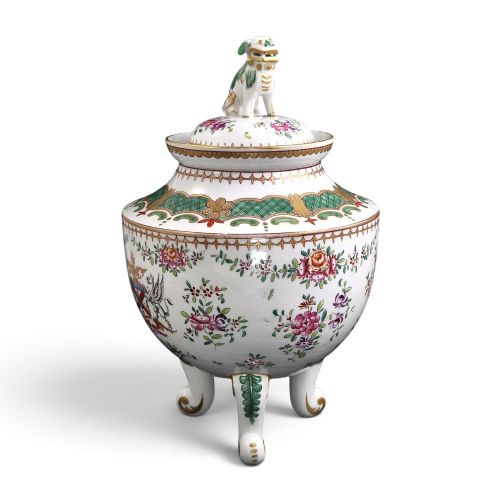
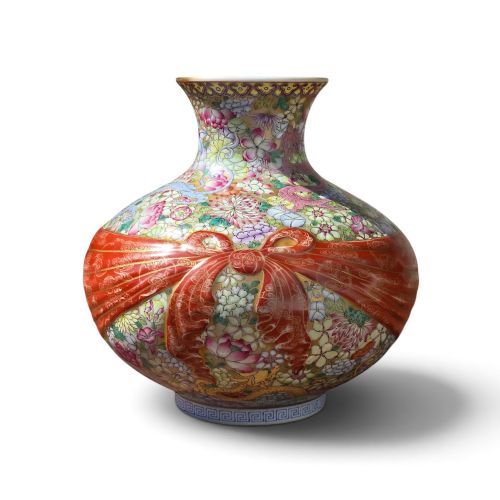
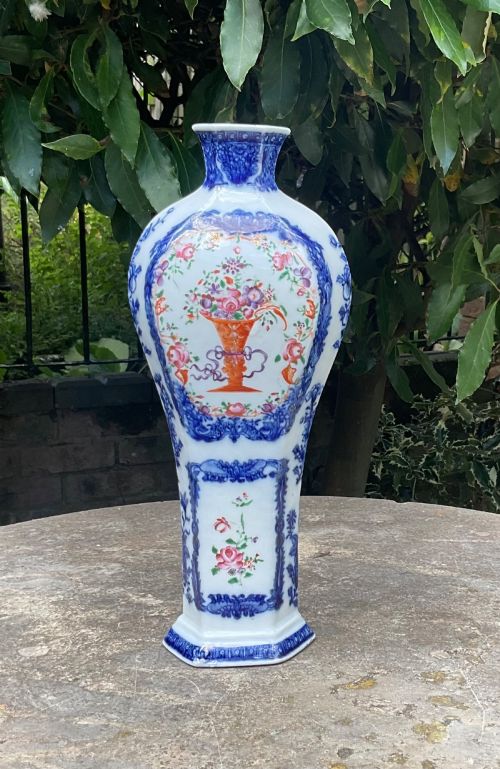
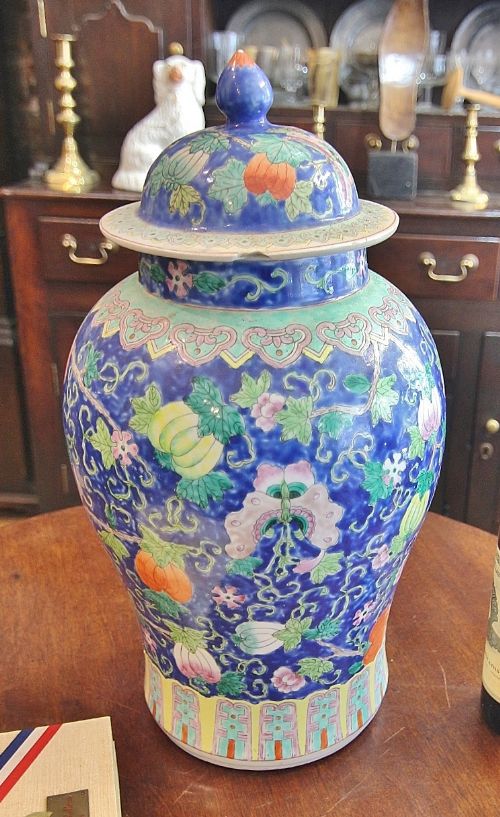
A famille rose porcelain jar brings vibrant enamel palettes and intricate floral or figural narratives into a room.
Famille Rose Porcelain Jar
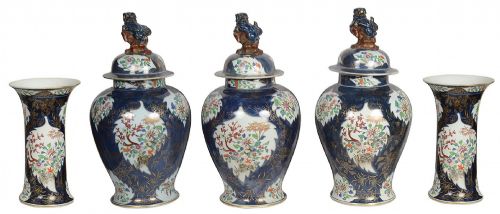
The forms encompass traditional ginger jars with covers, baluster vases, and garniture sets, occasionally mounted in ormolu or paired with timber tables. Origin markings and stylistic markers point toward periods such as the Guangxu era and the late Qing to early Republic transition. Alongside strict Chinese export work, European factories like Samson of Paris contributed revival styles during the nineteenth century.
Materials and construction
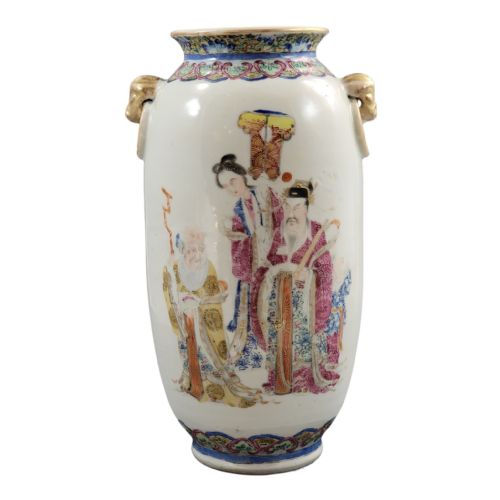
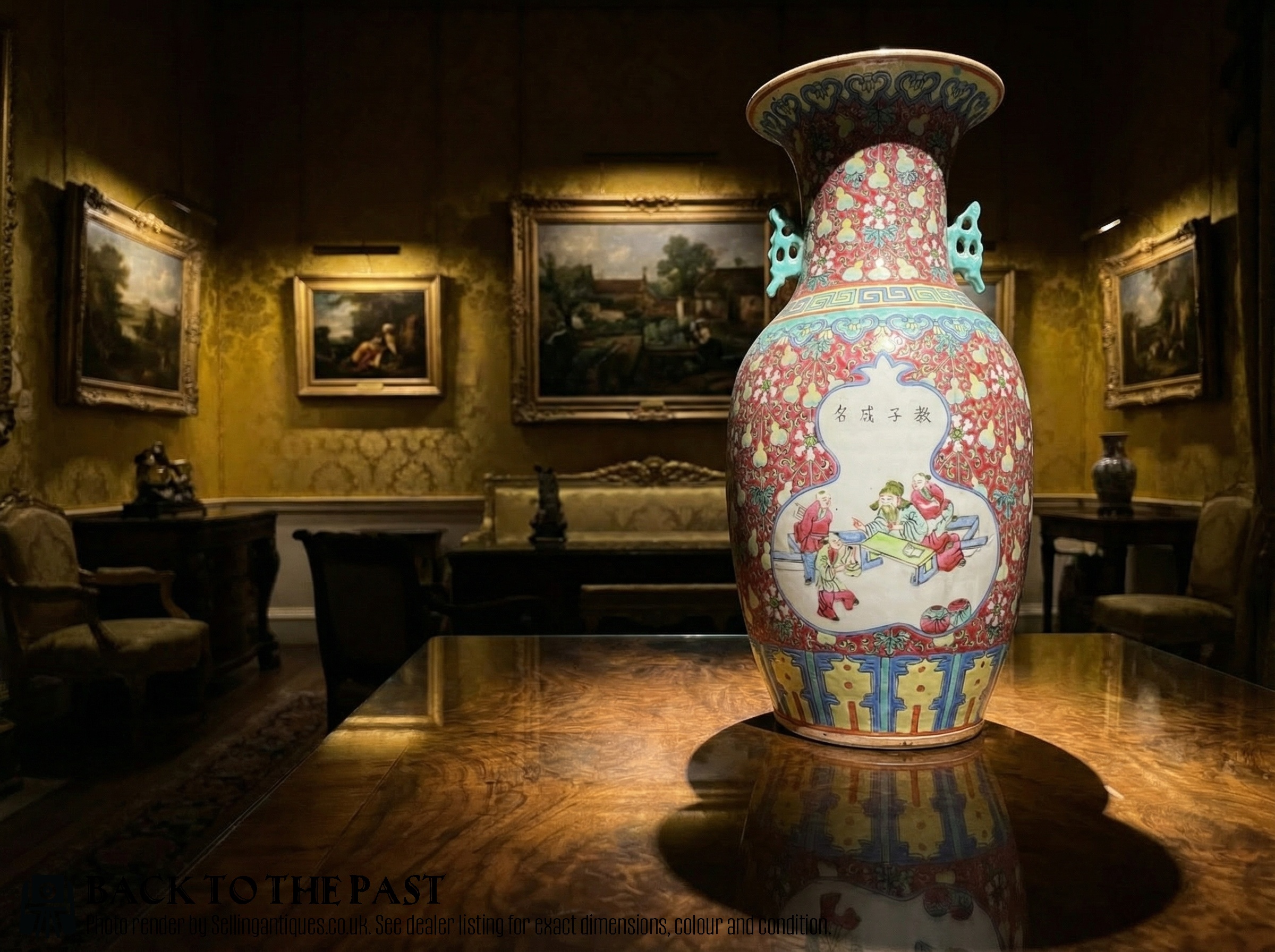
Potters built these vessels using white porcelain bodies, applying overglaze enamels to create the characteristic pink and multi-coloured palette. Artisans frequently integrated gold leaf or gilt details alongside iron-red accents and intricate ribbon motifs to frame pictorial scenes of birds, flowers, and figures.
Mounting techniques on surviving specimens incorporate brass, ormolu, and turned wood elements, particularly when jars are converted into table lamps with fabric shades. The primary medium remains hard-paste porcelain fired at high temperatures before the application of detailed enamel painting.
Listings feature porcelain vessels spanning the eighteenth to the twentieth centuries, including Victorian and Qing Dynasty periods.
Distinctions in quality
The standard of a painted surface dictates the standing of the piece, separating meticulously brushed figural scenes from repetitive factory output. Precision in the handling of overglaze enamels and the crispness of detail in birds, flowers, and narrative motifs mark superior examples.
Materials associated with mounts and conversions also differentiate the objects, such as finely chased ormolu versus basic brass fittings. The integration of period covers and the preservation of original gilding provide further distinction across the range.
Samson Paris·Spode·Jingdezhen
The Famille Rose Porcelain Jar Glossary
- Famille rose
- A class of Chinese porcelain characterised by a predominantly pink enamel palette introduced during the Qing dynasty. The style relies on opaque rose-pink pigments mixed with other overglaze colours.
- Ginger jar
- A wide-mouthed, globular storage vessel originating in China and commonly fitted with a flat lid. These pieces frequently appear in pairs or adapted as lamp bases.
- Rose Medallion
- A specific pattern of Canton porcelain featuring panels decorated with alternating scenes of figures, birds, and butterflies. The motifs are densely framed by gilt and floral borders.
- Canton
- A major port in China from which vast quantities of export porcelain were shipped to Western markets during the nineteenth century. Wares from this region often display vibrant, crowded enamel decoration.
- Ormolu
- Gilded bronze used for decorative mounts on ceramics and furniture during the eighteenth and nineteenth centuries. It provides structural support and ornate framing for porcelain jars.
Famille Rose Porcelain Jar: Frequently Asked Questions
How do I spot a reproduction jar?
Examination of the enamel depth and the ageing of the porcelain paste helps determine the period of manufacture. Nineteenth-century and earlier pieces exhibit distinct wear patterns and hand-mixed pigment characteristics compared to modern replicas.
Analysing the base construction and any reign marks provides additional context for dating. Comparing the weight and glaze consistency against verified archive examples clarifies authenticity.
Can I use these as lamps?
Many ginger jars and covered vessels from the nineteenth century are found converted into table lamps with fabric shades. This adaptation preserves the decorative body while introducing functional lighting to a room.
Original jar forms often remain intact beneath the wiring, allowing collectors to appreciate the traditional vessel shape. Professional conversion ensures the ceramic body suffers no permanent structural damage.
What is a garniture set?
A garniture set consists of multiple matching vases and jars designed to be displayed together on a mantelpiece or cabinet. These groupings typically combine beaker vases and lidded ginger jars sharing identical enamel palettes.
Surviving complete sets from the nineteenth century are valued for their uniformity. Individual pieces from a broken set frequently circulate independently as decorative objects.
How should I clean porcelain enamels?
Dusting the surface with a soft, dry cloth prevents the accumulation of grime on delicate overglaze enamels and gilt details. Moisture should be minimised to protect fragile nineteenth-century pigments and metallic highlights.
Harsh chemical cleaners or abrasive materials must be avoided entirely to preserve the original gloss of the glaze. Professional conservation advice should be sought for pieces with structural mounts or damaged areas.