




Famille Rose China Dish
These famille rose china dish selections bring hand-painted enamels and intricate floral motifs straight from historical export kilns into modern homes.
Famille Rose China Dish
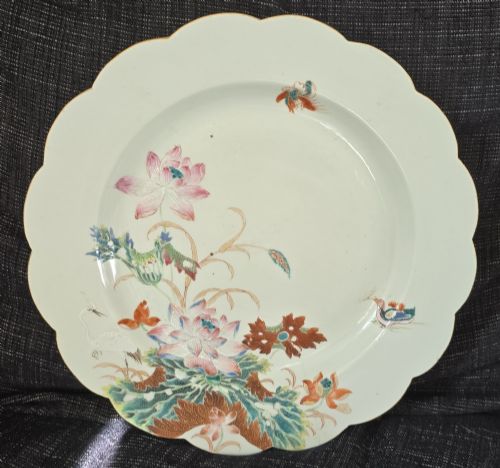
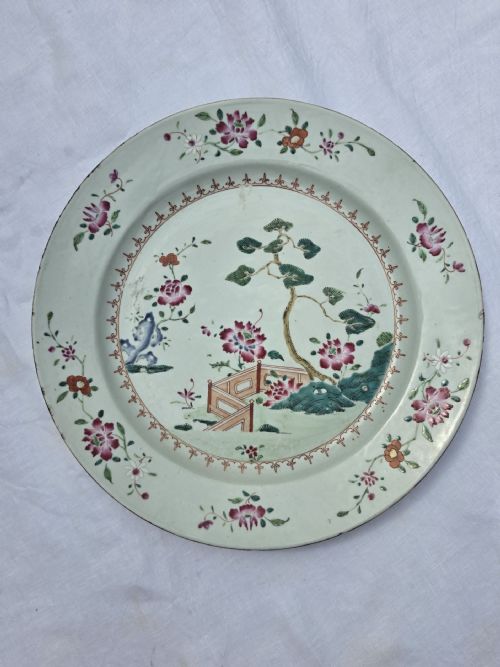
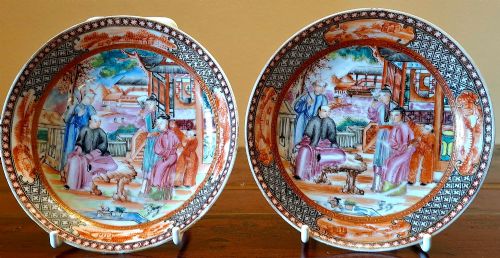
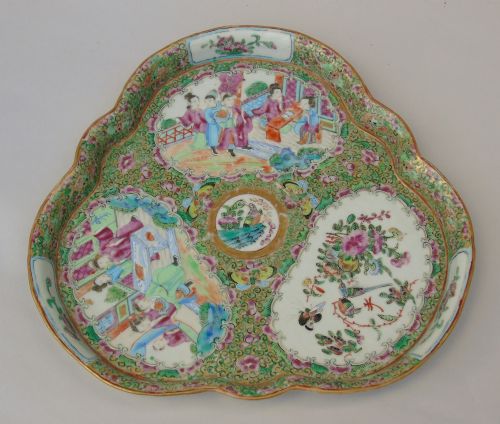
A famille rose china dish represents a sophisticated tradition of Chinese export porcelain decorated predominantly with opaque pink enamel alongside a rich palette of colours. Buyers searching for a famille rose china dish encounter various forms including chargers, plates, platters, saucers, tea bowls, trefoil trays, and chestnut baskets with stands.
The pieces on this page span several centuries and periods, with examples originating from the eighteenth century, nineteenth century, the Georgian era, and specific reigns such as the Qianlong period and Qing Dynasty. Most items reflect traditional Chinese export and Mandarin pallet aesthetics, often featuring bird and floral designs, armorial bearings, or auspicious scenes.
Forms range from simple domestic saucers to grand armorial rectangular dishes and pierced chestnut baskets designed for elite dining tables. Buyers are most likely to meet eighteenth-century Qianlong plates and nineteenth-century Canton plates, which dominate the available selection.
How they were made
Potters utilised hard-paste porcelain as the primary body, shaping plates, dishes, and hollowware before applying detailed hand-painted designs. Enamel glaze and gold leaf or gilt details were added in specific layers to create the distinctive palette associated with these wares.
The application of enamel required precise brushwork, particularly for intricate bird and floral patterns or five blessings scenes. Kiln workers fired these pieces multiple times to fix the porcelain body and subsequently fuse the delicate enamel colours and gold leaf accents to the surface.
Materials recorded across these pieces include porcelain, enamel glaze, gold leaf, and gilt applied to decorative plates and trays.
What varies in quality
The fineness of the hand-painted brushwork dictates much of the visual success, separating robust domestic wares from meticulously detailed armorial commissions or specialised Mandarin pallet scenes. Crispness in the rendering of bird and floral motifs or complex figural compositions shows the skill of the original decorator.
Preservation of the enamel glaze and the integrity of any gold leaf or gilt highlights influence the overall aesthetic power of a piece. Early hard-paste porcelain forms with intact piercing, such as chestnut baskets, demonstrate greater technical ambition from the potter.
The Famille Rose China Dish Glossary
- Famille rose
- A palette of Chinese porcelain enamels dominated by an opaque pink shade derived from colloidal gold, introduced during the Qing Dynasty.
- Chinese export
- Porcelain manufactured in China specifically for Western markets, often combining traditional Eastern shapes and techniques with European armorial or decorative requests.
- Qianlong
- The sixth emperor of the Qing Dynasty, whose long reign from seventeen thirty-six to seventeen ninety-five produced some of the finest export porcelain.
- Mandarin pallet
- A style of Chinese export porcelain decoration characterised by dense figural scenes set within elaborate floral and bird borders.
- Armorial
- Ceramics painted with specific European family coats of arms, ordered directly through trade agents in Canton during the eighteenth century.
Famille Rose China Dish: Frequently Asked Questions
What is a famille rose china dish?
A famille rose china dish is a piece of Chinese export porcelain decorated with opaque pink enamel and a broader palette of contrasting colours. These items were produced for international trade, primarily during the eighteenth and nineteenth centuries.
They encompass a variety of forms including deep platters, flat chargers, tea saucers, and serving trays. Each piece relies on hand-painted artistry to depict floral arrangements, birds, armorial crests, or narrative scenes.
How do I date an antique dish?
Dating an antique dish involves examining the porcelain body, the characteristics of the enamel glaze, and the stylistic cues of the painted design. Eighteenth-century Qianlong pieces often display refined potting and specific Mandarin pallet or armorial details.
Later nineteenth-century items, such as Canton plates, typically exhibit denser borders and heavier enamel application. Comparing forms and motifs against established historical periods helps narrow down the decade of production.
Were these dishes used for dining?
Many of these vessels served practical functions at elite European and American dining tables for courses involving fruit, tea, or sweetmeats. Platters and chargers accommodated large roasts or displayed provisions during formal meals.
Over time, many of transitioned from active dining service to decorative display due to their delicate enamel work. Saucers and tea bowls were integral to the eighteenth-century social ritual of tea drinking.
How should I display my porcelain?
Displaying porcelain safely involves using stable plate stands or wall mounts designed specifically to distribute weight evenly without straining the edges. Placing pieces away from direct sunlight protects the longevity of the hand-painted enamel colours and gilt highlights.
Maintaining a stable indoor climate prevents thermal shock to the hard-paste porcelain body. Gentle dusting with a soft, dry cloth keeps the surface clean without risking abrasion to the glaze.