



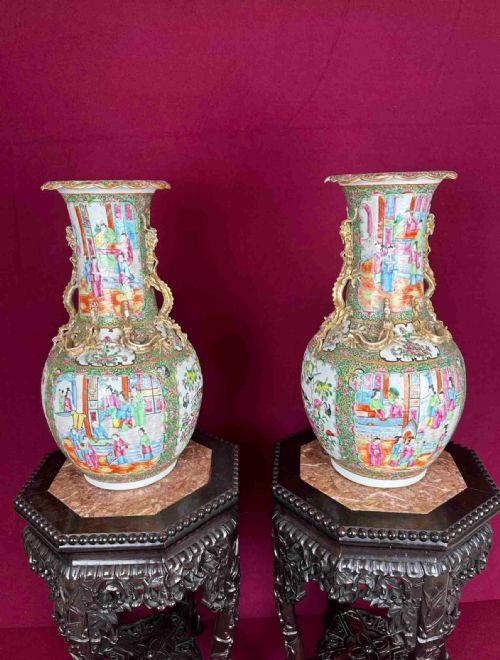


Famille Rose Baluster
Famille rose baluster vases bring rich polychrome enamel palettes and sweeping curves to interior spaces, offering collectors bold floral and figural narratives.
Famille Rose Baluster
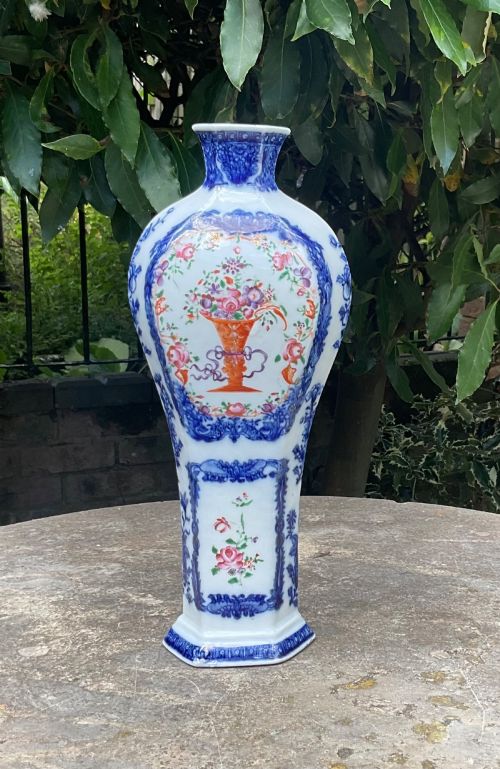
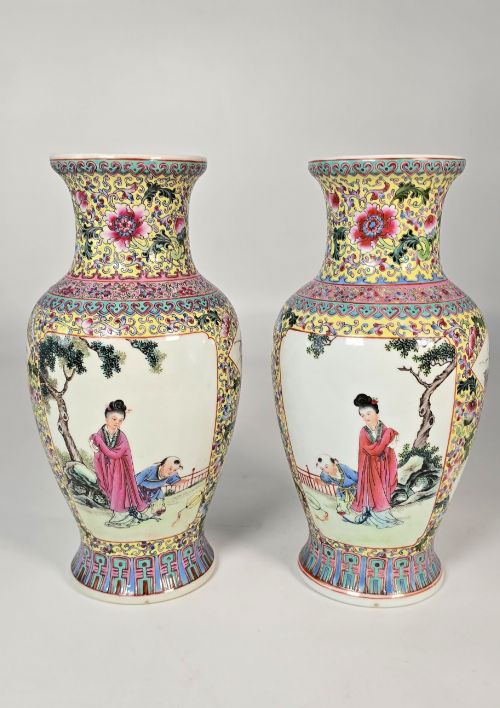
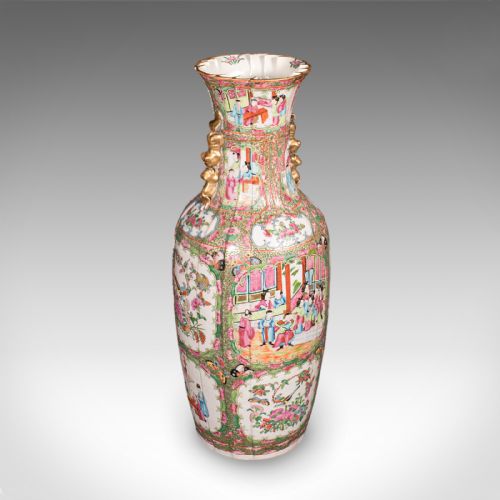
A famille rose baluster vase presents a characteristic curvaceous profile, swelling gracefully towards the centre before tapering and flaring at the neck. When buyers search for famille rose baluster vessels, they encounter a range of forms spanning eighteenth-century origins, nineteenth-century Canton production, and later Republican period works.
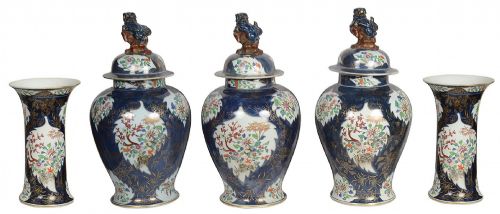
The objects listed here include monumental floor vases, decorative table lamps mounted in brass or gilt bronze, and pairs intended for centrepiece display. Porcelain bodies provide the canvas for detailed enamel glaze work across Victorian, Qing Dynasty, and twentieth-century interpretations.
Distinguishing quality across the range
Quality rests upon the precision and density of the hand-painted enamels, where finer works display meticulous brushwork in figural scenes and botanical motifs. The clarity of the porcelain body and the richness of the gilding further separate standard production pieces from exceptional examples.
Earlier eighteenth-century and Qianlong-marked specimens demonstrate a distinct crispness in form and pigment application compared to later nineteenth-century revival or export wares. The depth of the colour palette and the harmony of the overall composition guide the distinction between ordinary and superior pieces.
Floor-standing vases present such monumental presence that domestic cats treat them as towering architectural scratching posts.
The Famille Rose Baluster Glossary
- Baluster
- A tall ceramic vessel form characterised by a rounded body that swells below the centre and tapers towards the neck. This silhouette echoes architectural balusters found on staircases and railings.
- Famille Rose
- A prominent palette of Chinese porcelain enamels introduced in the eighteenth century, distinguished by the use of an opaque pink colour derived from gold. The term covers a vast range of floral, bird, and figural compositions.
- Canton
- A major export centre in southern China where much of the nineteenth-century porcelain decorated with dense panels of figures, birds, and flowers was produced. Canton wares often feature vibrant rose medallion patterns.
- Qing Dynasty
- The final imperial dynasty of China, ruling from sixteen-fourty-four until nineteen-twelve, encompassing significant periods of ceramic innovation and export trade. Many surviving baluster vases date from the later decades of this era.
- Gilt Bronze
- An alloy of copper, zinc, and tin treated with a gold amalgam or leaf finish, frequently used for mounts, bases, and lamp conversions on antique vases. This material adds weight and decorative contrast to the porcelain.
Famille Rose Baluster: Frequently Asked Questions
How do I date an old vase?
Dating relies on examining the characteristics of the porcelain body, the pigment palette of the enamels, and any reign marks on the base. Comparing the potting style and brushwork against established historical periods helps narrow down the decade.
Later copies and revival pieces from the nineteenth and twentieth centuries often employ heavier porcelain and brighter, more uniform enamel colours than eighteenth-century originals.
Are these vases suitable for everyday lamps?
Many historical baluster vases undergo professional conversion into table lamps using brass or gilt bronze fittings, allowing them to function safely in modern interiors. These conversions often preserve the original ceramic body without causing permanent damage.
Placement should avoid areas of direct sunlight to protect the surface enamels and gold leaf details from potential fading over time.
What is the difference between Canton and Qing wares?
Canton porcelain refers specifically to items decorated in workshops around the southern port city, often characterised by segmented panels filled with figures and flowers. Qing Dynasty encompasses a much broader imperial production style spanning multiple reigns and imperial kilns.
While Canton wares form a major category of nineteenth-century export goods, Qing pieces can include monochrome glazes, imperial dragon motifs, and refined court commissions.
How should I clean antique enamel porcelain?
Dusting gently with a soft, dry cloth is the safest method for maintaining painted enamel surfaces on antique porcelain. Avoid using water, abrasive cleaners, or chemical solvents that could lift or dull the delicate overglaze colours.
Professional restoration advice should be sought if structural repairs or deep cleaning become necessary for fragile antique pieces.