


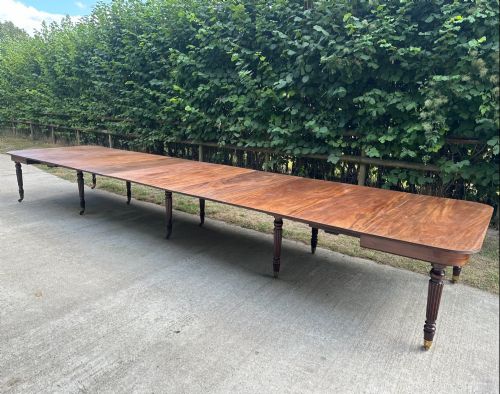
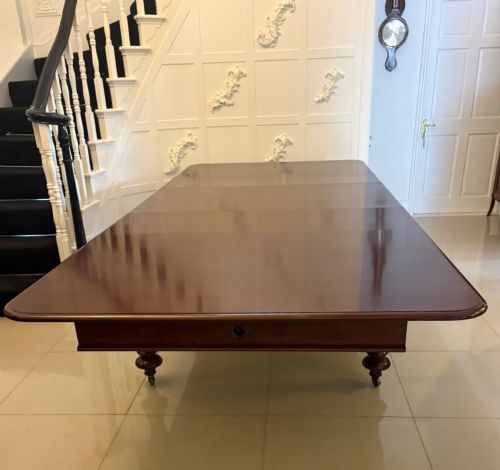
Extending Banquet Table
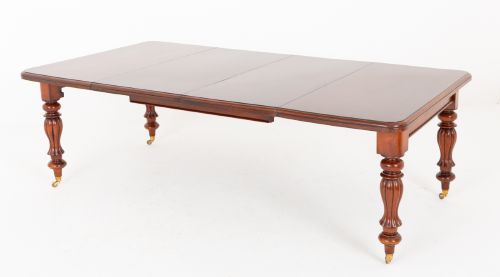
An extending banquet table brings grand scale and flexible dining capacity to large rooms, spanning periods from Regency to Edwardian.

Extending Banquet Table
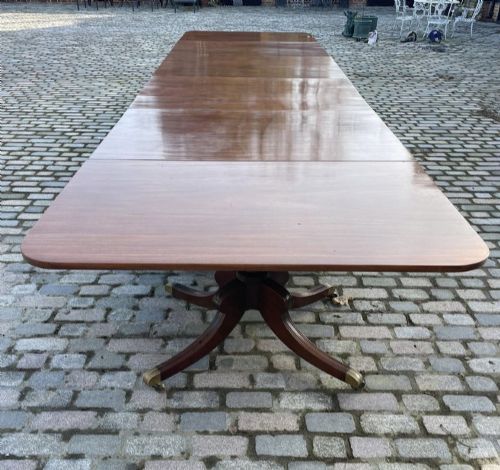
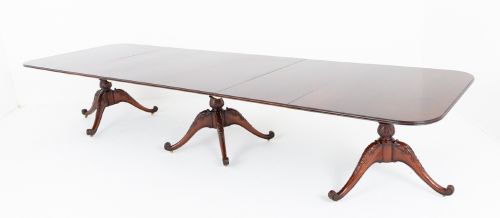
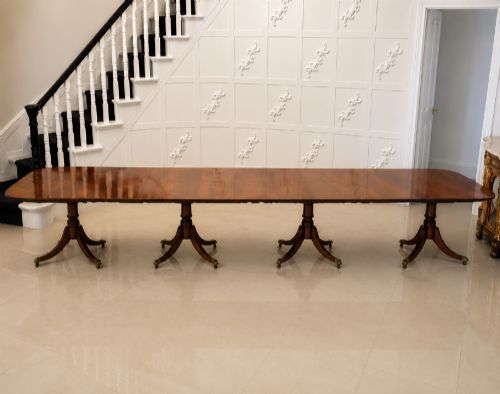
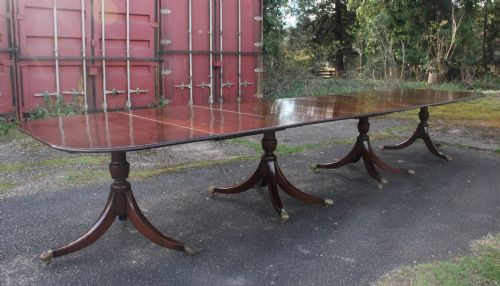
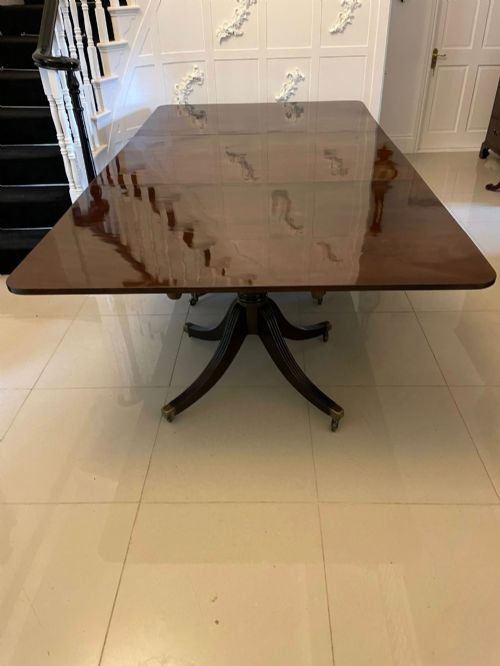
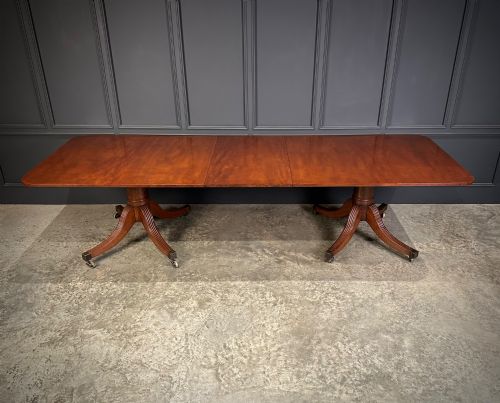
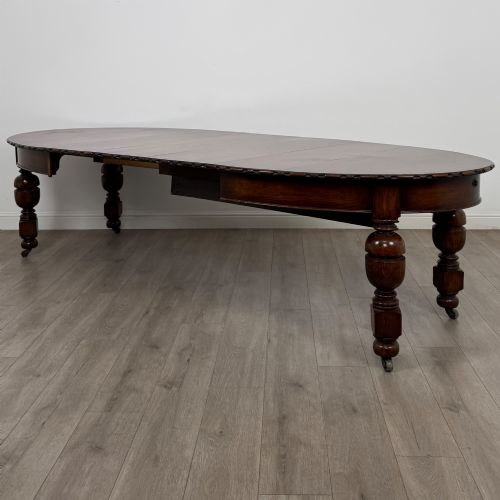
An extending banquet table provides substantial seating capacity for large dining rooms, frequently utilising multiple pedestals and removable leaves. When searching for an extending banquet table, buyers encounter formats ranging from twin-pillar models seating ten to massive four-pillar configurations accommodating over twenty diners.
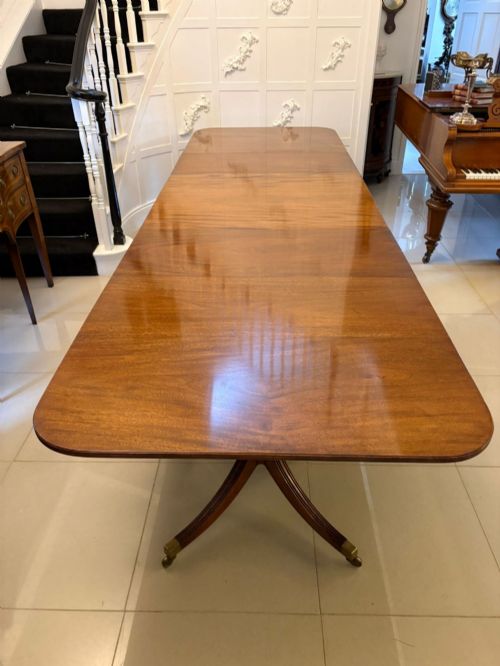
The selections span the Georgian, Regency, Victorian, and Edwardian eras, alongside later revivals. Mahogany dominates the offerings, supplemented by oak, burr walnut, and ceramic elements, often displaying distinctive figured wood grains.
How they were made
Cabinet makers constructed these tables primarily from solid and veneered mahogany, oak, and walnut, selecting timber for rich grain patterns such as figured mahogany and burr walnut. Brass fittings support the mechanical extending actions and caster wheels on pedestal bases.
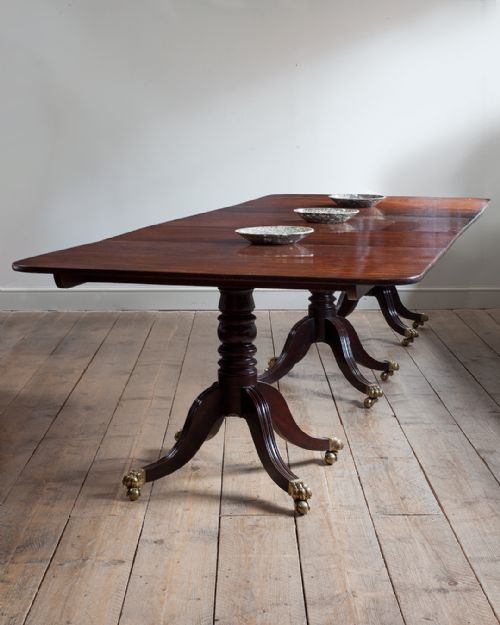
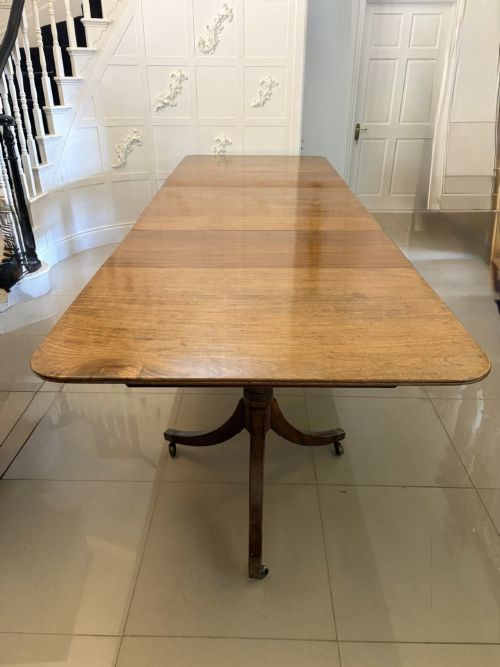
Pedestal configurations utilise central timber columns mounted on splayed legs, often terminating in brass claw casters. Additional leaves insert into the centre to expand the surface area, secured by brass clips and alignment pins.
Extending Banquet Table Retail Price Guide 2026
Typical asking prices for extending banquet table among the pieces listed under this phrase on Sellingantiques today, from the lower quarter to the upper quarter. They describe what is for sale here now, not the wider market.
Some grand tables require an entire battalion of leaves to reach their full twenty-eight seater glory.
What varies in quality
Quality rests upon the selection of timber veneers, the precision of the pedestal turning, and the integrity of the extending mechanism. Superior examples display highly figured grain matching across all inserted leaves and robust pillar supports.
Maker attribution and period authenticity distinguish exceptional pieces from later revivals. Tables bearing documented workshop signatures command attention for their proportion, carving depth, and structural joinery.
Gillows·Wylie and Lochead·Maple and Co·Whytock and Reid
The Extending Banquet Table Glossary
- Pedestal
- A central support column resting on splayed legs that holds the tabletop. These columns often feature reeding or carved detail.
- Leaf
- A removable section of timber inserted to extend the length of the table. Multiple leaves allow the table to seat varying numbers of guests.
- D-End
- A table end shaped in the semi-circular form of the letter D. These sections detach or fold when the table is shortened.
- Reeded
- A decorative moulding comprising parallel convex strips carved into the timber legs or pillars. This detail appears frequently on Regency furniture.
- Caster
- A small wheel fitted to the base of table legs to permit movement. They are commonly cast in brass.
Extending Banquet Table: Frequently Asked Questions
How do I operate the extending mechanism?
Most extending banquet tables utilise a runner system where the pedestals pull apart to create a gap in the centre. Insert the matching leaves into this space and secure them with the internal brass clips or table locks provided.
Ensure the table is cleared of heavy items before expanding the structure. Two people are typically required to pull the heavy mahogany or oak sections apart evenly without straining the central runners.
How many people can these tables seat?
Seating capacity ranges from ten guests on twin-pillar models up to twenty-eight guests on massive six-pillar configurations. The exact capacity depends on the length achieved when all original leaves are inserted.
Allow approximately sixty centimetres of table space per diner for comfortable seating. Measuring the room alongside the fully extended length ensures adequate clearance for chairs.
How do I care for polished mahogany surfaces?
Maintain the wood by dusting regularly with a soft, dry cloth and applying natural beeswax periodically to nourish the grain. Avoid placing hot dishes or wet glasses directly onto the polished finish to prevent ring marks.
Keep these tables away from direct sunlight and strong heat sources such as radiators to prevent the timber from drying and splitting. Use protective table pads beneath linens during formal dining.
How do I distinguish Regency from Victorian tables?
Regency tables generally exhibit restrained classical lines, brass reeded legs, and lighter mahogany tones influenced by ancient Greek and Roman forms. Victorian examples tend to be heavier in proportion, featuring darker timber and bolder carved pedestals.
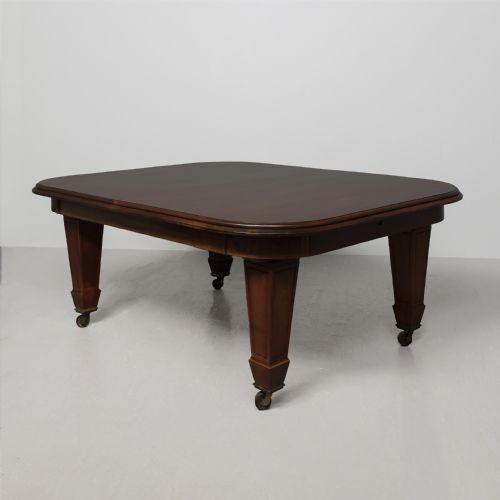
Examine the construction of the underside and the brass hardware for period characteristics. Victorian pieces frequently incorporate mechanical screw expanders alongside traditional drop-in leaves.