




Irish Mahogany Dining Table
An irish mahogany dining table brings substantial presence to a room, offering deep timbers and robust cabinetmaking handed down from past centuries.
Irish Mahogany Dining Table
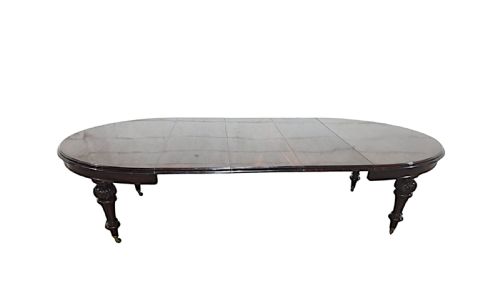
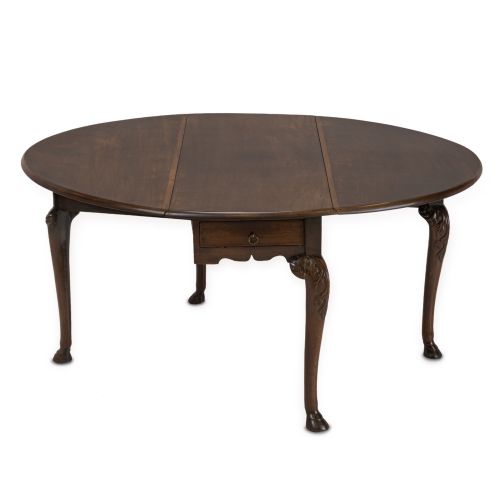
When you search for an irish mahogany dining table, you encounter substantial furniture spanning the eighteenth and nineteenth centuries, including large multi-pedestal formats, drop-leaf designs, and wake tables. The pieces on this page originate primarily from Georgian, Regency, and Victorian periods, reflecting the heavy timber trades and distinct cabinetmaking traditions of Ireland.
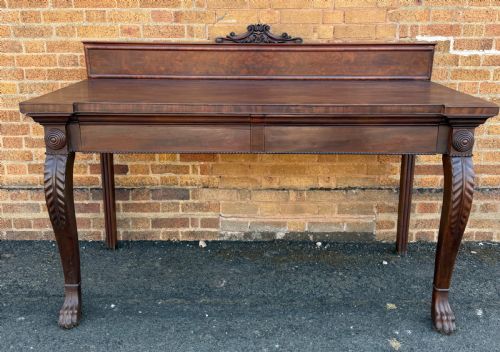
You are most likely to meet extending or drop-leaf versions, alongside imposing serving tables and sideboards that share the same materials and regional aesthetic. These forms range from modest oval drop-leaves to monumental four-pedestal tables designed to seat twenty-six people.
Materials and construction
Makers utilised dense mahogany timbers, frequently augmented by secondary woods such as burr elm, alongside brass castors and steel mechanisms for extending tables. Drop-leaf and gate-leg configurations rely on robust hinged frames, while pedestal formats feature heavy central pillars supported by splayed legs.
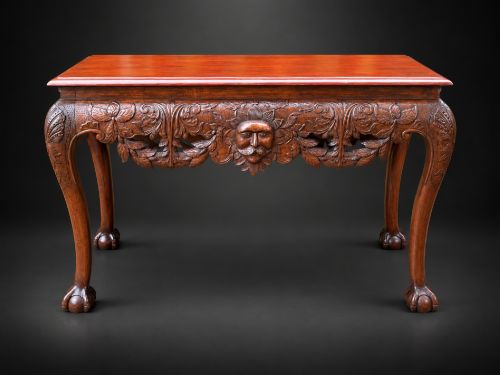
Carving appears on cabriole legs with hoof feet, parcel-gilt detailing, and crossbanded veneers. Workshops employed clever metamorphic mechanisms in specific pieces to alter the function and length of the table according to requirement.
Listings feature mahogany, brass, burr elm, and steel across George II, Regency, and Victorian periods.
Judging quality
Quality rests in the selection of the mahogany timber, particularly figured grain or dense Cuban mahogany, and the crispness of hand-carved details such as cabriole legs and hoof feet. The integration of extra leaves and the smoothness of folding or extending mechanisms also distinguish superior pieces.
Proportion and scale separate standard regional furniture from masterwork production. Pieces attributed to prominent Dublin workshops demonstrate exceptional joinery and ambitious architectural design that command attention.
Mack Williams and Gibton·William and Gibton Dublin·The Woodworkers Ltd Kilkenny
The Irish Mahogany Dining Table Glossary
- Cabriole leg
- A furniture leg that curves out and then in, mimicking animal legs. This form frequently terminates in a carved hoof or paw foot on eighteenth-century examples.
- Drop-leaf table
- A table with a fixed centre section and hinged flaps on either side that drop down when not supported by swing legs. These spacesaving forms were popular throughout the eighteenth century.
- Wake table
- A large dining or gathering table with multiple drop leaves supported by numerous swing legs. These long tables accommodated large households and communal gatherings.
- Metamorphic table
- Furniture engineered to transform from one form or size into another. Such pieces use clever internal mechanisms to alter their function entirely.
- Crossbanding
- A strip of veneer applied to the border of a tabletop with the grain running perpendicular to the main surface. This technique creates a decorative framing effect.
Irish Mahogany Dining Table: Frequently Asked Questions
How do I seat twenty people?
Monumental four-pedestal tables or large wake tables with multiple extra leaves provide the necessary length for large gatherings. These formats distribute weight evenly across heavy pillars or numerous swing legs.
Ensure your dining room possesses adequate floor space to allow movement around these extended tables while guests are seated.
How do I identify a Dublin workshop?
Makers in Dublin often utilised dense Cuban mahogany and employed distinct carving styles on cabriole legs, pedestals, and serving tables. Attribution usually relies on documented construction methods, proportions, and stylistic traits associated with known firms.
Expert cabinetmaking from this region frequently matches the ambitious scale seen in larger Irish houses.
Are these tables suitable for daily use?
These tables are built from solid timbers and sturdy frames designed to withstand generations of daily dining. Regular care involves using placemats and maintaining consistent room humidity to protect the polished wood surface.
Extending mechanisms and drop-leaf hinges should be operated with care to preserve the original nineteenth-century hardware.