
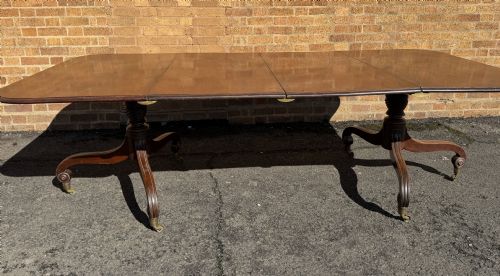
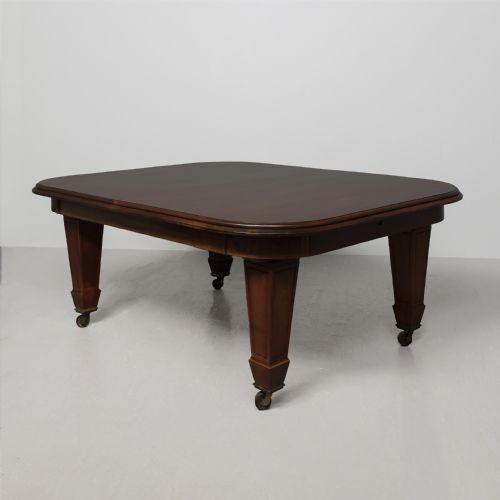
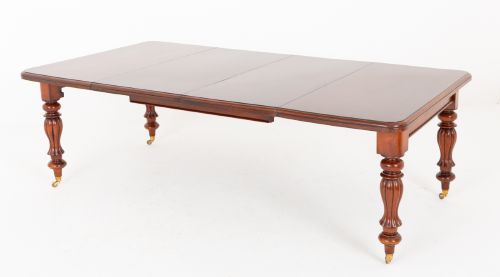
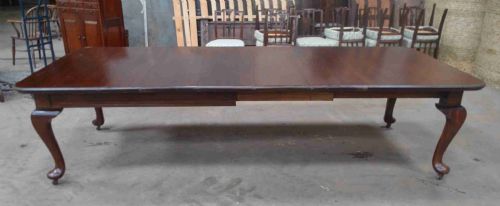
Large Extension Dining Table
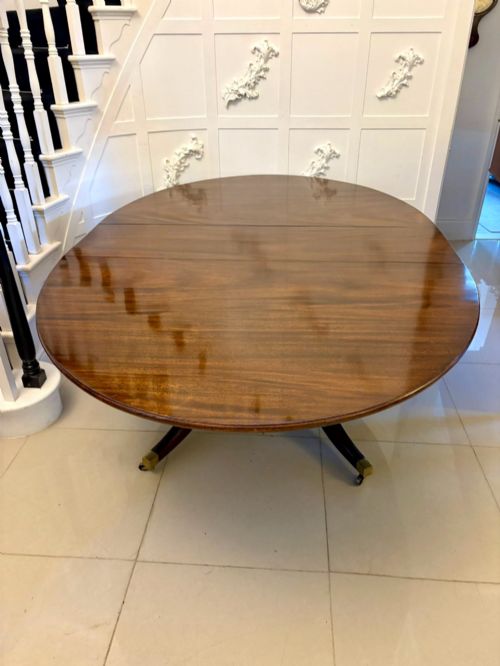
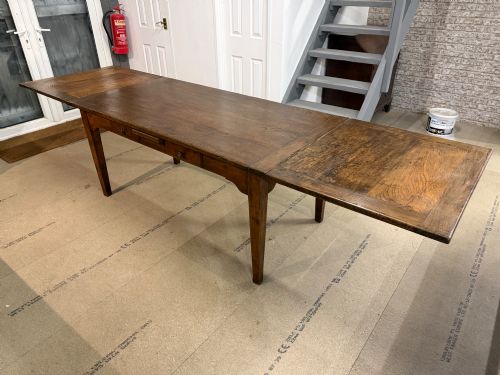
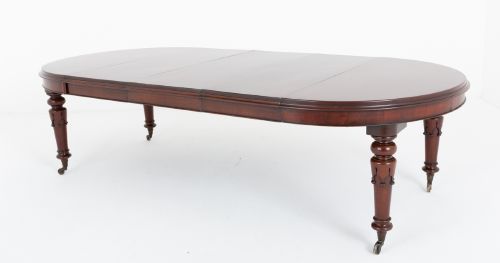
A large extension dining table gathers family and guests around generous boards, spanning periods from George III to the twentieth century in substantial mahogany and oak.

Large Extension Dining Table
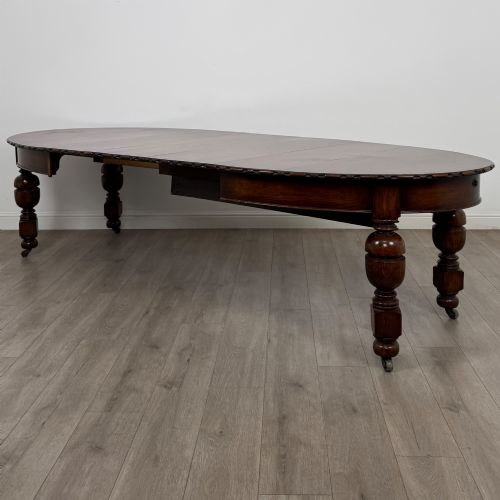
A large extension dining table meets the demand for adaptable seating, offering substantial proportions for grand rooms. These pieces originate predominantly from the nineteenth century, with Victorian and Regency examples appearing alongside later Edwardian and revival pieces.
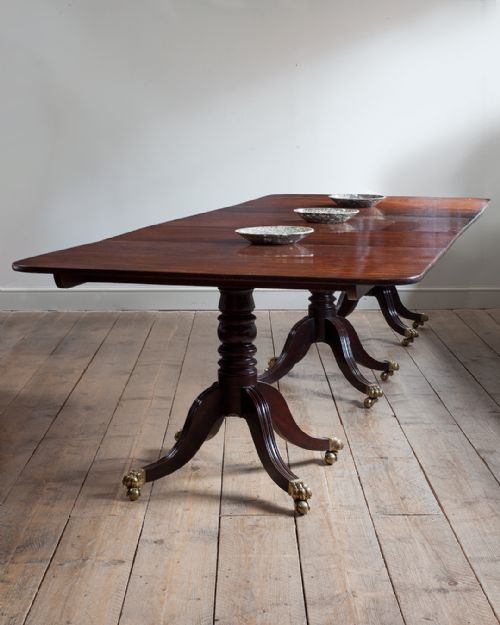
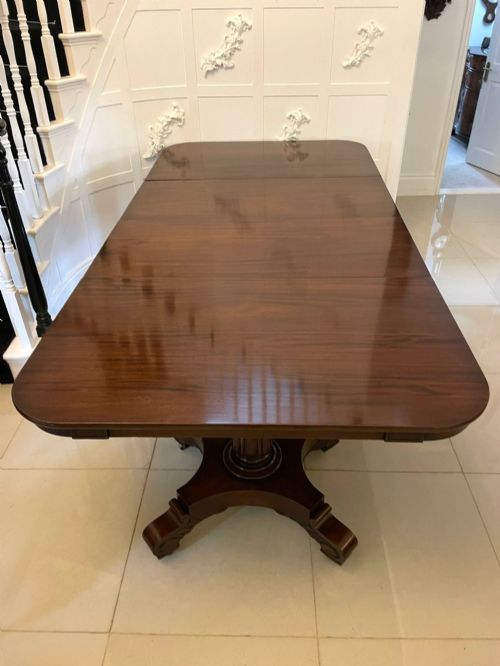
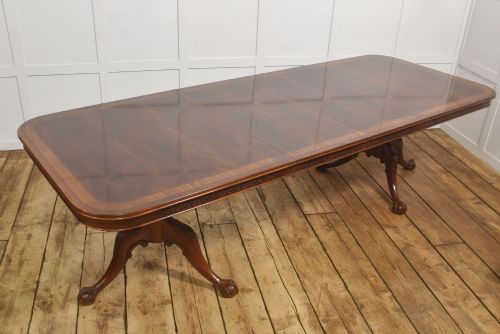
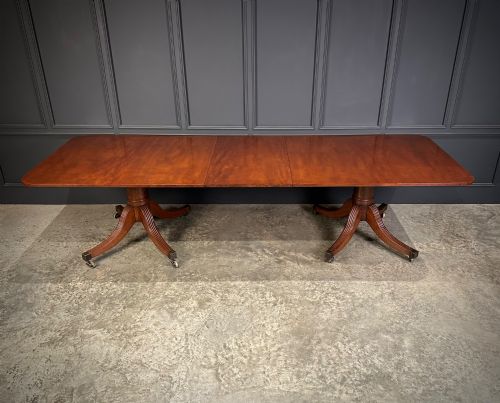
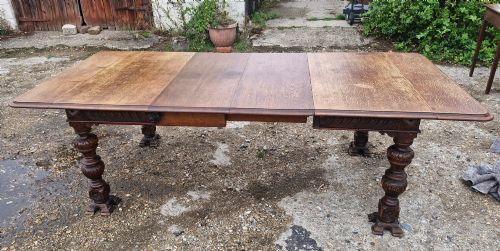
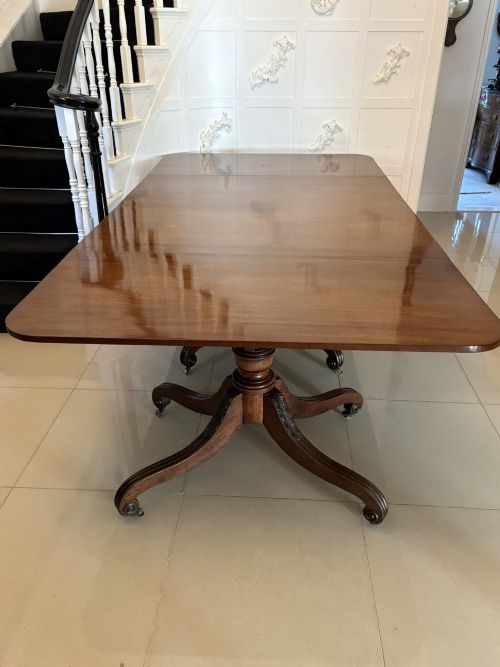
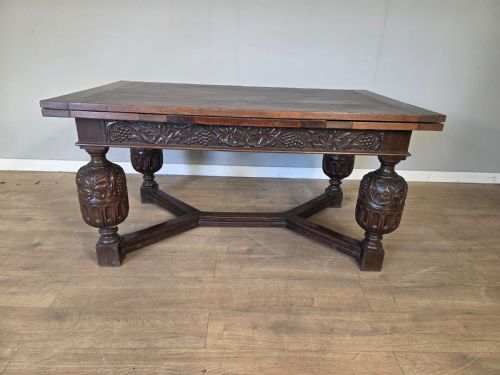
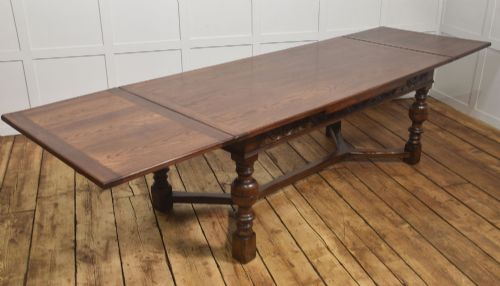
Mahogany and oak dominate the selection, shaped into twin-pillar, triple-pillar, and wind-out mechanisms with multiple leaves. Buyers frequently encounter versions with drop leaves, draw-leaf actions, or pedestal bases designed to expand for large gatherings.
Materials and Construction
Cabinetmakers utilised dense timbers such as figured mahogany, solid oak, and occasional fruitwood or walnut, joining them with robust mechanical frames. The addition of brass castor fittings and internal winding mechanisms allowed heavy timber leaves to separate smoothly.
The integration of original leaves required precise carpentry so that grained surfaces matched seamlessly when fully extended. Carved pedestals and draw-leaf runners provided the structural support necessary for grand proportions.
Listings feature mahogany and oak predominantly, spanning the Georgian, Regency, and Victorian periods through to the twentieth century.
Craftsmanship and Proportion
Quality rests in the selection of figured timber veneers and the smooth operation of the extension mechanism. Superior examples retain their original winding handles and matching extra leaves without warping or sagging at full stretch.
Proportion and stability separate standard pieces from monumental ones, particularly in multi-pedestal tables that seat dozens. Finer tables exhibit crisp carving on pedestal bases and precise alignment across every added leaf.
Gillows
The Large Extension Dining Table Glossary
- Wind-out
- A mechanical system using a detachable handle and internal screw mechanism to part the table halves for inserting leaves. This nineteenth-century innovation allows smooth expansion of heavy timber frames.
- Draw-leaf
- An extension system where auxiliary leaves slide out from beneath the main top. These pull out smoothly to lengthen the surface without removing separate boards.
- Pedestal
- A central column or cluster of pillars supporting the tabletop rather than traditional corner legs. Multiple pedestals provide stability for long dining tables.
- Figured mahogany
- Timber showing distinctive decorative grain patterns such as flame or curl. Cabinetmakers selected these boards for prominent tabletops.
- Gateleg
- A table construction featuring hinged legs that swing outward to support folding drop leaves. This traditional format offers flexible placement in domestic spaces.
Large Extension Dining Table: Frequently Asked Questions
How do wind-out extension tables operate?
A metal handle fits into a socket beneath the rim, turning an internal screw thread that parts the table halves. This allows the insertion of one or more matched timber leaves.
Once the leaves are placed in the gap, the mechanism turns in reverse to lock the top securely together.
Where were these large tables used?
These substantial tables served in country houses, rectory dining rooms, and urban townhouses where hosting large dinner parties was customary. Their extendable design accommodated fluctuating numbers of guests.
In daily use, smaller configurations suited family meals before expanding fully for formal occasions.
How do I identify a Regency period table?
Regency tables typically feature pillar-and-claw pedestals with brass castors and reeded table edges. The mahogany often displays rich figure and deep reddish-brown tones.
Proportions remain classical, reflecting design influences from the early nineteenth century.
How should I care for a antique dining table?
Maintain polished timber surfaces with traditional beeswax and soft cloths, avoiding silicone sprays and direct sunlight. Use heat mats and coasters to protect the finish from moisture and temperature shock.
Regularly check and gently wax extension runners to ensure smooth operation when opening the leaves.