



Extending Timber Dining Table
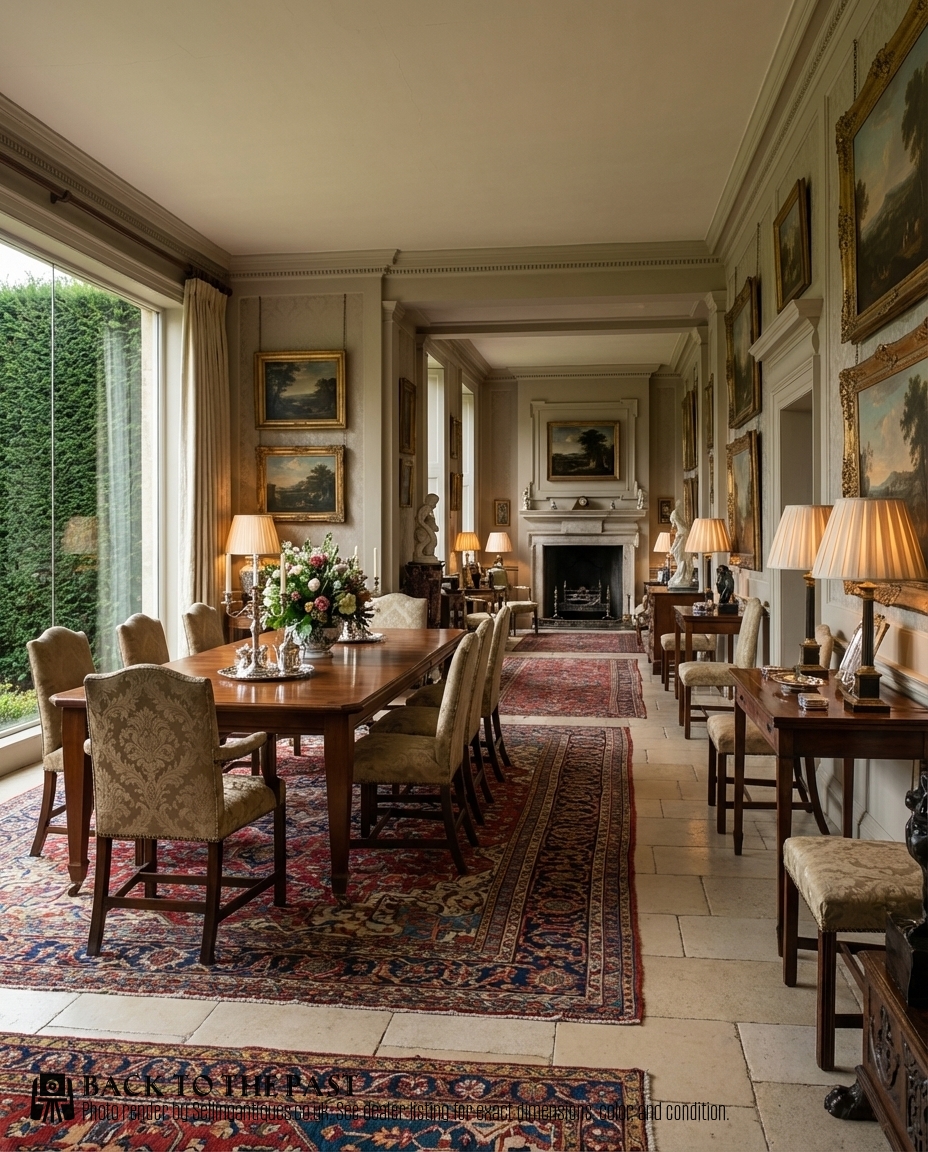
An extending timber dining table brings timeless host capability into the room, letting families gather for daily meals and stretch out for large dinner parties.
Extending Timber Dining Table
An extending timber dining table provides a flexible surface for hosting, expanding from compact daily proportions to accommodate large gatherings. When searching for an extending timber dining table, buyers encounter robust pieces designed to handle heavy use while anchoring the room.
The pieces on this page span several distinct periods, including the Regency, Victorian, and Georgian eras, alongside practical farmhouse examples. Woods such as mahogany, oak, fruitwood, and walnut form the core of these dining tables.
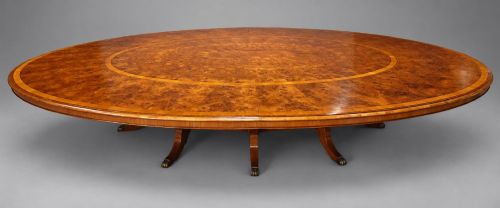
Forms range from twin pedestal formats to grand multi-leaf designs seating up to fourteen people. Buyers most frequently meet large mahogany constructions and rustic oak farmhouse tables among these listings.
How they were made
Cabinet makers constructed these tables from dense hardwoods like solid oak, figured mahogany, and fruitwood to ensure structural integrity during expansion. Grain patterns were carefully selected for visual impact on the primary top surfaces.
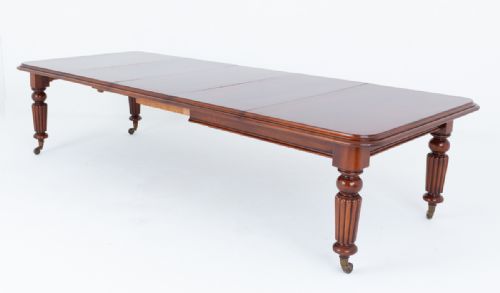
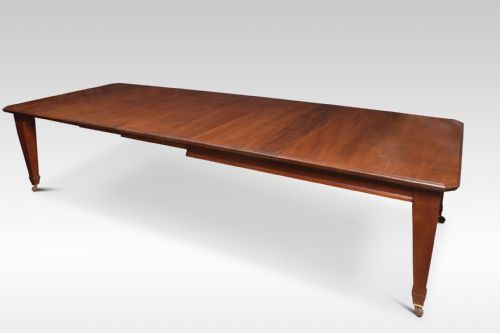
Extension mechanisms relied on sturdy wooden runners and removable leaves, often supported by additional pull-out legs or pedestals. Brass components frequently reinforced pivot points, castor housings, and mechanical joints.
Joinery techniques such as mortise and tenon framing kept heavy leaves aligned and level when fully extended under load.
Extending Timber Dining Table Retail Price Guide 2026
Typical asking prices for extending timber dining table among the pieces listed under this phrase on Sellingantiques today, from the lower quarter to the upper quarter. They describe what is for sale here now, not the wider market.
Mahogany and oak remain the most frequently recorded materials across these nineteenth-century extending dining table listings.
What varies in quality
Quality reveals itself in the choice of timber and the precision of the mechanics that allow the table to expand smoothly. Superior examples utilise dense, figured mahogany or well-seasoned oak that maintains stability across changing seasons.
The refinement of the carved details, from reeded legs to pedestals, separates workshop pieces from standard commercial production. Maker stamps and original brass hardware further elevate the standing of a dining table.
Gillows Lancaster
The Extending Timber Dining Table Glossary
- Leaf
- A removable section of timber inserted into the centre of a table to increase its overall length. Extra leaves allow the furniture to adapt its capacity for guests.
- Pedestal
- A central supporting column, often branching into multiple feet, used instead of standard corner legs. This configuration maximises legroom around the perimeter.
- Reeded
- A decorative moulding consisting of parallel convex strips carved directly into the wood. This finish appears frequently on Regency and Victorian table legs.
- Bread slide
- A pull-out wooden board integrated beneath the top of a farmhouse table. Historically utilised for resting bread or expanding workspace temporarily.
- Twin pedestal
- A table design supported by two distinct column structures placed near each end. This layout provides balanced weight distribution for long dining surfaces.
Extending Timber Dining Table: Frequently Asked Questions
How do extending tables work?
Most antique versions operate on wooden runners that pull apart from the centre to accept one or more removable leaves. Additional folding or pull-out legs often drop down to support the middle section.
This mechanism allows the footprint of the furniture to expand smoothly without compromising the stability of the main surface.
How many people can they seat?
Seating capacity varies widely depending on the number of inserted leaves, ranging from modest four-person formats up to grand fourteen-seat dining tables. The addition of each leaf typically adds space for two more diners.
Checking the length of the extended top provides a reliable guide for chair placement around the perimeter.
Which woods are most common?
Mahogany dominates the formal Regency and Victorian examples, offering a dark tone and prominent grain. Oak appears frequently in farmhouse and Gothic revival pieces, valued for its sheer durability.
Walnut and fruitwood also surface across nineteenth-century variants, bringing distinct colour variations to the dining space.
How do I care for timber tops?
Regular dusting with a dry cloth keeps the polished surface free from abrasive particles. Applying suitable natural waxes periodically nourishes the wood and protects against moisture.
Avoiding direct heat sources and placing hot dishes on mats preserves the finish of antique timber over decades of daily use.