



Extending Walnut Table
An extending walnut table adapts the dining room for gatherings through clever mechanics hidden within rich timber.
Extending Walnut Table
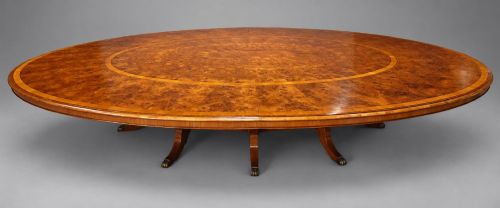
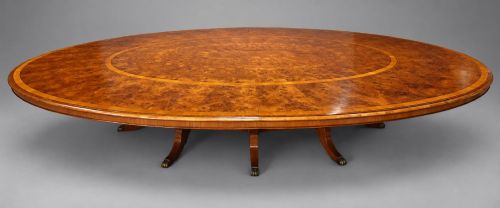
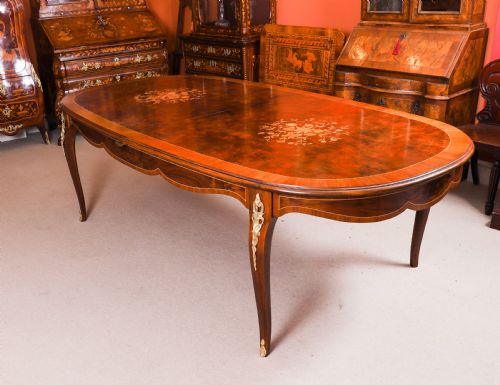
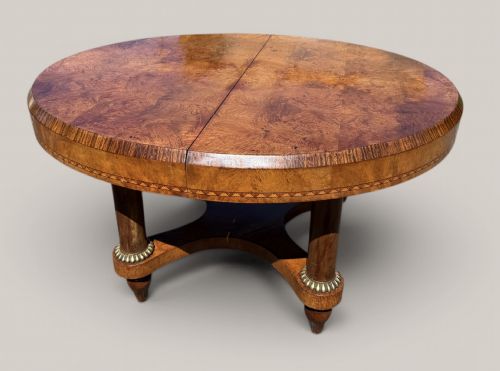
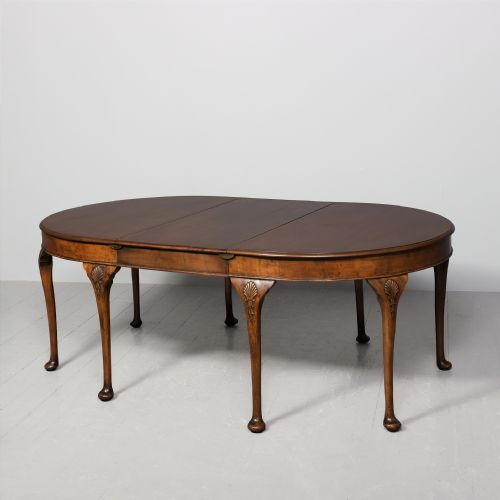
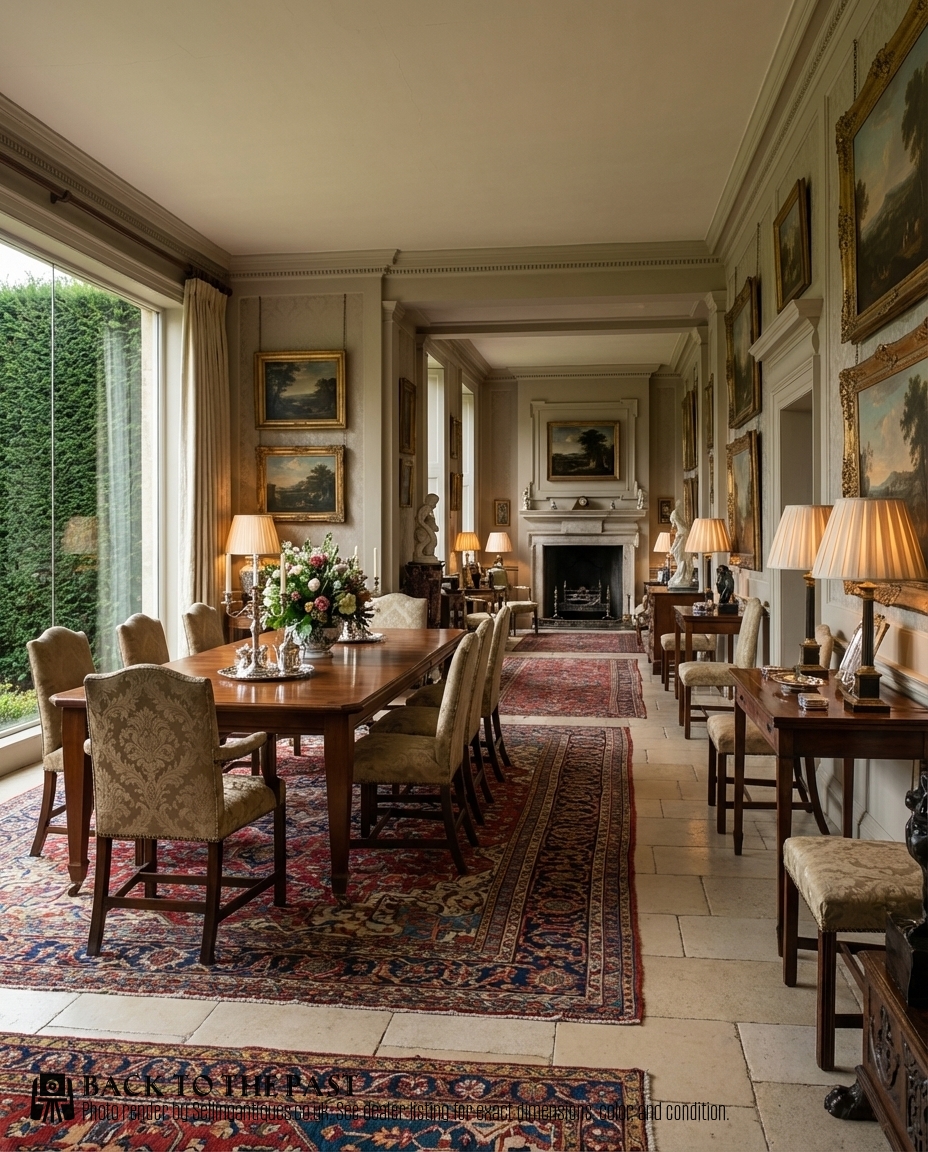
An extending walnut table serves as the centrepiece of the dining room, designed to expand for larger company and contract for everyday meals. When buyers search for an extending walnut table, they encounter pieces spanning from the eighteenth century through the Victorian era up to the Art Deco period of the nineteen-thirties.
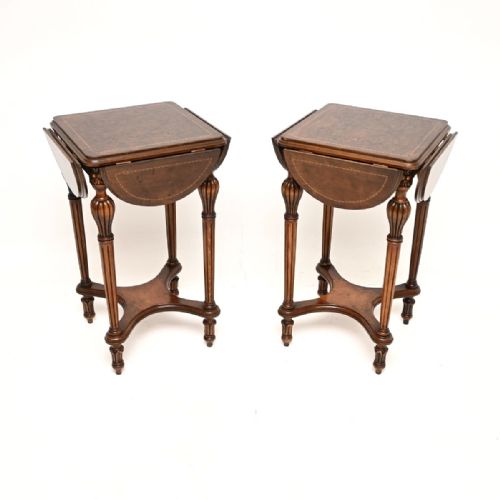
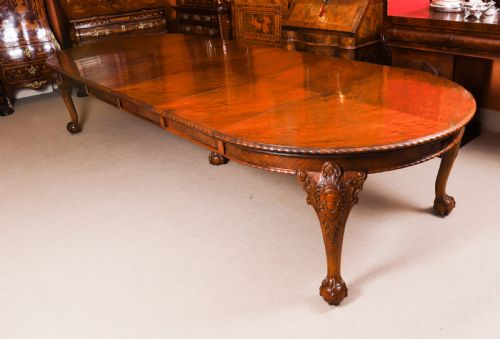
The most common versions met on this page are Victorian pull-out or wind-out dining tables alongside Queen Anne Revival models featuring burr walnut veneers. These dining tables appear alongside smaller side tables and occasional dining sets, offering various mechanisms to insert extra leaves.
Origins range from British workshops to French provincial makers, displaying styles from George II and Louis XV revivals to streamlined Art Deco designs. Each period brings distinct proportions and leg forms, from carved cabriole supports to substantial pedestals.
Materials and Technique
Cabinetmakers utilised solid walnut and decorative veneers such as burr walnut and figured walnut, often laid over secondary timbers like mahogany or maple to create patterned table tops. Parquetry inlay and marquetry added geometric or floral decoration to the surfaces of French and British tables alike.
Extending mechanisms relied on wooden runners, winding screws, or draw-leaf systems that allowed extra leaves to slide or drop into place smoothly. Ormolu mounts, brass castors, and carved wooden bases provided structural support and decorative contrast to the dark timber.
Extending Walnut Table Retail Price Guide 2026
Typical asking prices for extending walnut table among the pieces listed under this phrase on Sellingantiques today, from the lower quarter to the upper quarter. They describe what is for sale here now, not the wider market.
Listings feature extending walnut tables from the eighteenth century through the Victorian era up to Art Deco designs.
Assessing Craftsmanship
Quality rests in the selection of the timber, particularly the grain matching across the extra leaves when the table stands fully extended. Superior examples display carefully chosen burr walnut veneers that align symmetrically across the top.
The integrity of the extending mechanism dictates daily utility, with well-fitted runners and smooth winding actions separating standard production from fine cabinet work. Carved details on cabriole legs and the weight of the timber further distinguish high-grade pieces.
Maple & Co·Whytock & Reid of Edinburgh
The Extending Walnut Table Glossary
- Burr walnut
- A prized timber cut from the wart-like growths on walnut trees, producing intricate and swirling grain patterns.
- Draw-leaf
- A table design where extension leaves store underneath the main top and pull out easily from each end.
- Wind-out
- A mechanical system using a handle and internal screw thread to expand the table frame apart for inserting leaves.
- Ormolu
- Gilded bronze ornamentation applied to furniture, frequently seen on French revival pieces from the nineteenth and early twentieth centuries.
- Parquetry
- Geometric mosaic woodwork formed by small pieces of veneer arranged in patterns across the table surface.
Extending Walnut Table: Frequently Asked Questions
How do wind-out tables work?
A removable metal handle inserts into the side skirt to turn an internal wooden screw mechanism. This action pulls the two halves of the table apart smoothly.
The separation creates the gap needed to drop in extra timber leaves, which are then secured tightly together with brass clips underneath.
Can I seat ten people comfortably?
Many larger examples accommodate ten or twelve diners when fully extended with multiple leaves in place. The length determines the seating capacity rather than the width.
Checking the dimensions against the room size ensures adequate clearance for chairs when guests are seated around the extended perimeter.
How do I identify a Victorian piece?
Victorian examples often feature heavy turned legs, brass castors, and wind-out mechanisms patented during the nineteenth century. The timber shows deep patination and solid structural construction.
Stylistic cues lean toward traditional proportions, sometimes incorporating mahogany linings within the frame beneath the walnut top.
Are Art Deco tables different?
Art Deco versions from the nineteen-thirties favour geometric shapes, high-gloss figured walnut veneers, and clean architectural lines without traditional carving. These pieces often pair with matching dining chairs.
The extending mechanism frequently utilises draw-leaf or drop-in leaves that maintain the streamlined silhouette of the top.