




Etched Crystal Glass
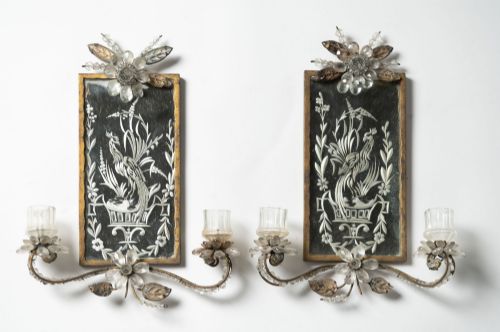
These etched crystal glass pieces bring pattern and light to a table, combining clear and coloured vessels with surface decoration from multiple centuries.
Etched Crystal Glass
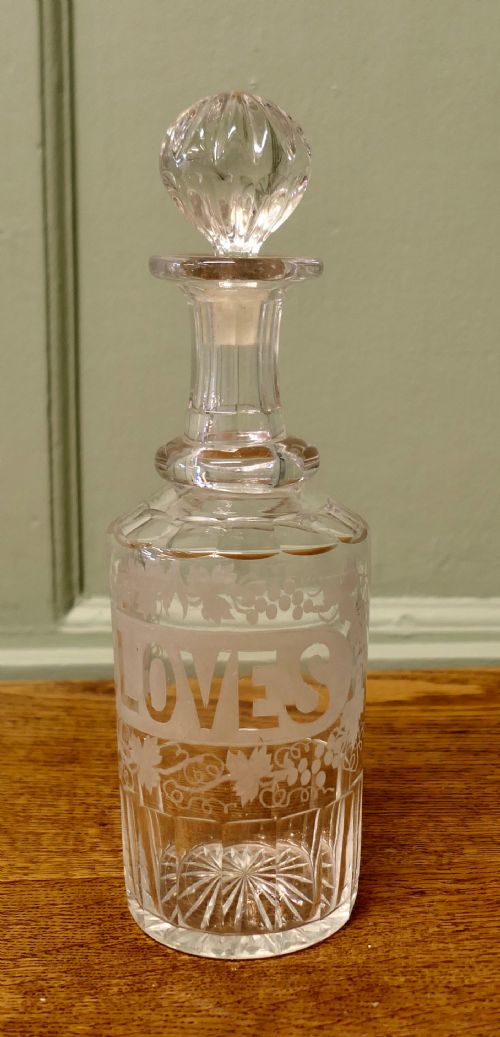
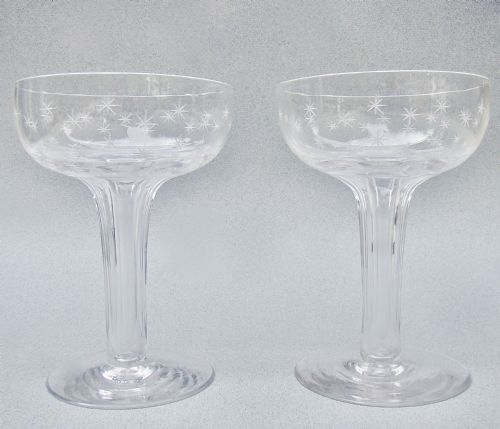
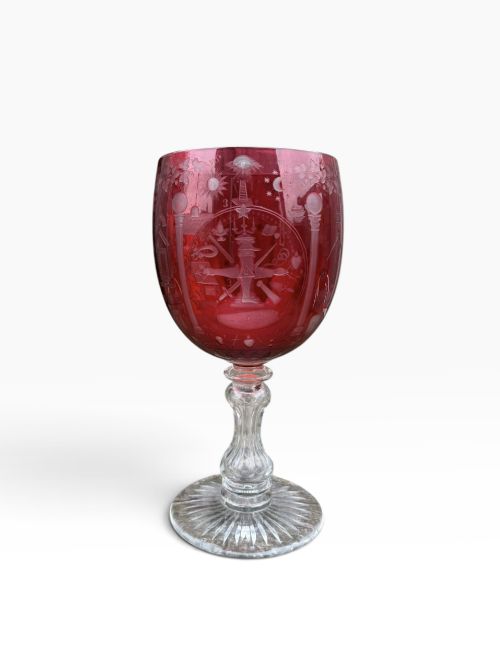
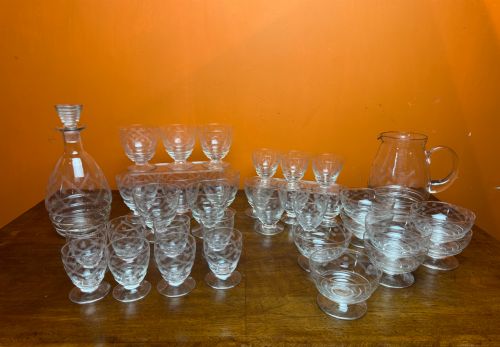
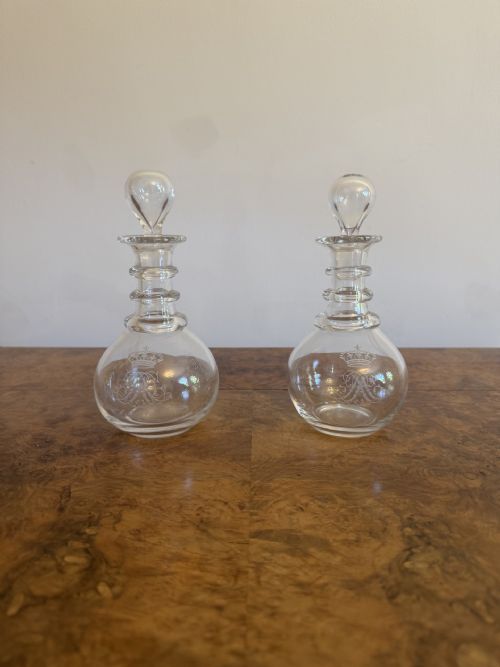
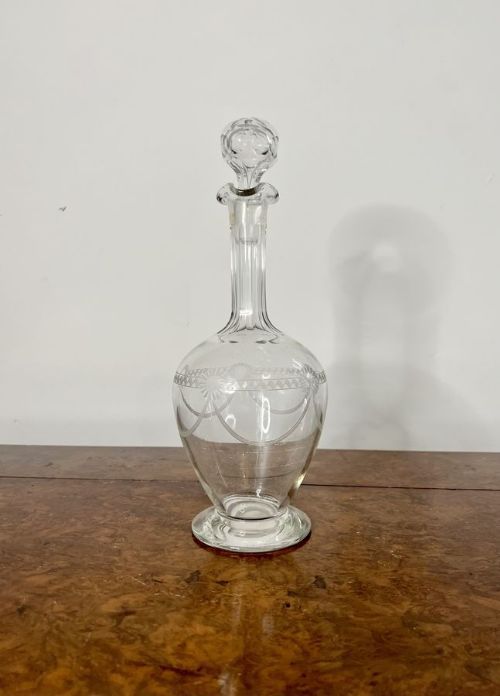
When you search for etched crystal glass, you encounter functional vessels and decorative objects spanning the Victorian, Edwardian, and Art Deco periods. The most common forms on this page include decanters, wine glasses, tumblers, rummers, and finger bowls made from clear glass, lead crystal, and coloured variants.
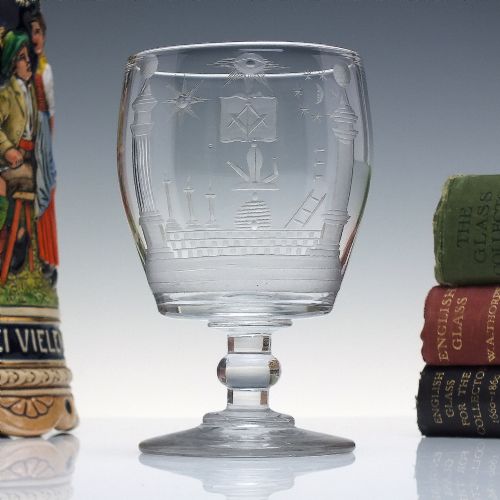
The selection ranges from individual Georgian rummers and Masonic glasses to large suites of drinking glasses and matching decanter sets. Pieces originate from English, French, and Bohemian makers, showing styles from Grand Regency and Arts and Crafts to French Neoclassical.
What varies in quality
The distinction between tiers rests on the crispness of the wheel engraving and the depth of the acid etching. Superior examples display precise, well-defined motifs without blurriness along the cut edges.
Material weight and clarity dictate the baseline of a piece, with heavy lead crystal producing a clear ring and bright refraction. Matching sets and suites command attention through consistent colour saturation and uniform glass thickness across every item.
Listings feature items spanning the eighteenth, nineteenth, and twentieth centuries, with a strong representation of Victorian and Art Deco forms.
Asprey and Co. Ltd·Maison Baguès·Rene Lalique·Karl Palda·Jean Luce·Hoffman·Stevens and Williams·Baccarat·St Louis
The Etched Crystal Glass Glossary
- Rummer
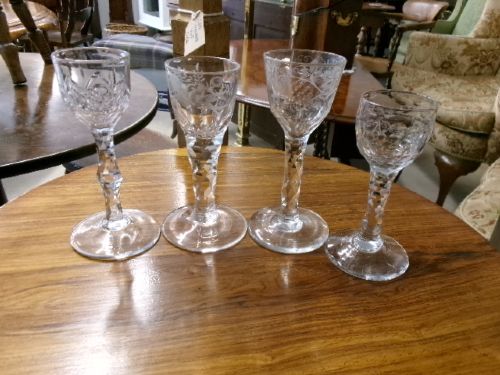
- A large drinking glass used for ale, wine, or punch during the eighteenth and nineteenth centuries. These sturdy vessels often feature faceted stems and decorated bowls.
- Finger bowl
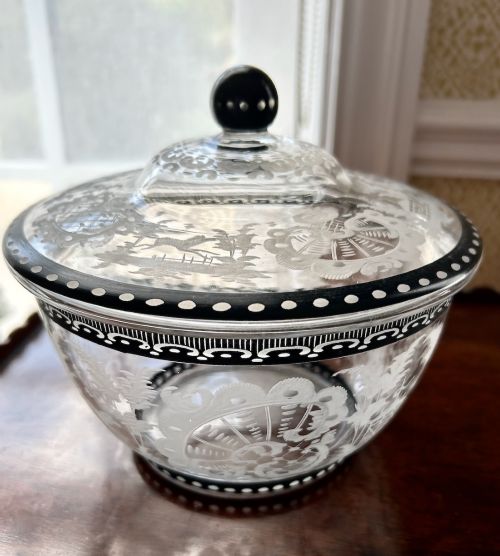
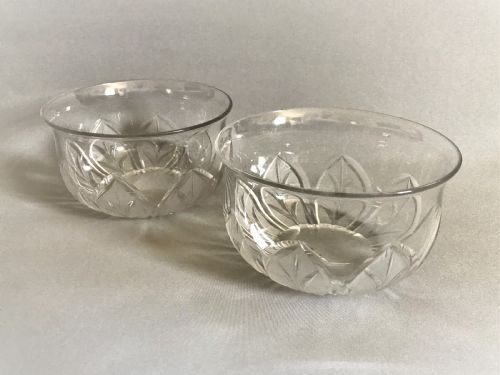
- A small bowl filled with water, placed on the table after a course for diners to rinse their fingers. Antique versions frequently exhibit cut and frosted glass surfaces.
- Claret jug
- A vessel designed for serving red wine at the dining table. They typically feature glass bodies paired with metal mounts and hinged lids.
- Acid etched
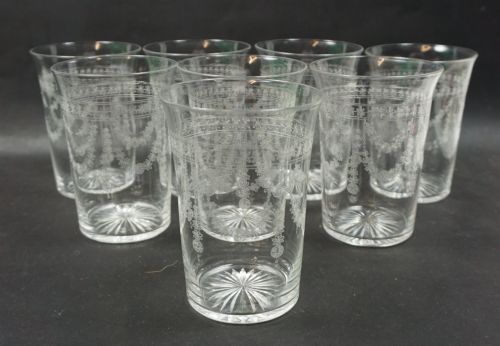
- A decoration technique where acid eats into unprotected areas of the glass to create frosted or recessed patterns. This method allowed for intricate, repeating designs on large production runs.
- Epergne
- A large table centrepiece featuring a central bowl with branching arms to hold smaller baskets or vases. Victorian examples frequently combine carved wooden stands with crystal glass components.
Etched Crystal Glass: Frequently Asked Questions
How do I clean antique crystal?
Wash pieces by hand in warm water using mild soap, avoiding harsh scrubbing brushes and sudden temperature changes that can crack old glass.
Place a towel at the bottom of the sink to cushion heavy decanters and stemware during the washing process.
Can I use these glasses daily?
Many buyers incorporate antique stemware and tumblers into modern dining, provided they handle them with appropriate care.
Hand washing remains essential to preserve the integrity of thin rims and delicate acid-etched surfaces over time.
What is the difference between glass and crystal?
Lead crystal contains added mineral content that increases the weight, refractive index, and resonance of the material compared to standard glass.
This composition allows artisans to cut deeper facets and achieve sharper engraved details without fracturing the vessel.
How do I date a decanter?
Examine the base for a pontil mark, inspect the stopper shape, and note the cutting style to determine the likely period of manufacture.
Victorian and Georgian pieces often display distinct neck rings and heavy lead composition compared to later twentieth-century designs.