
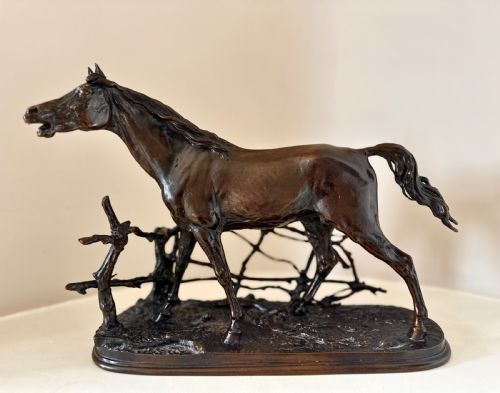


Equine Bronze Statue
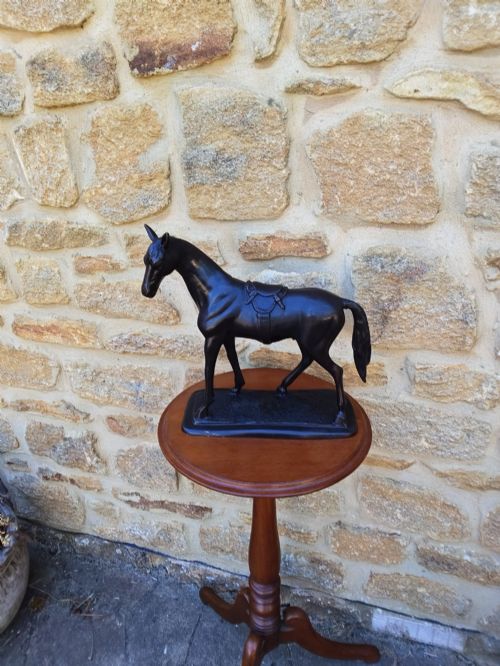
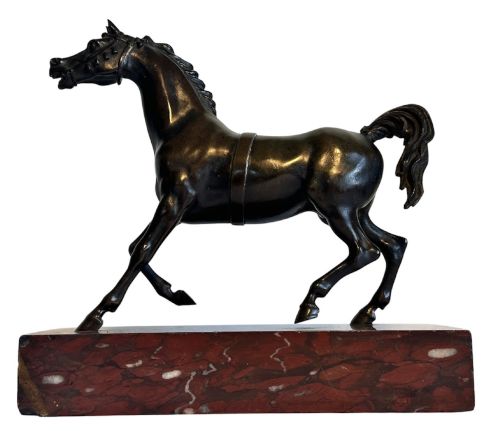
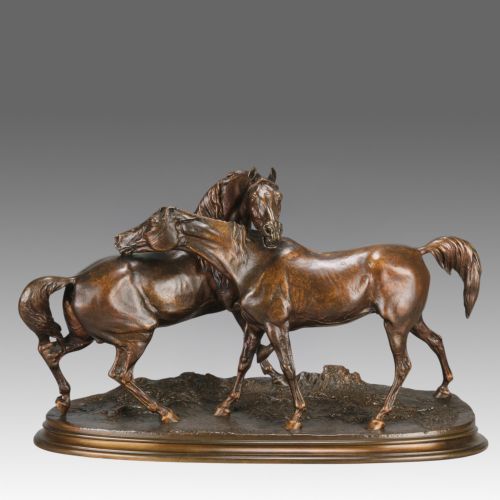
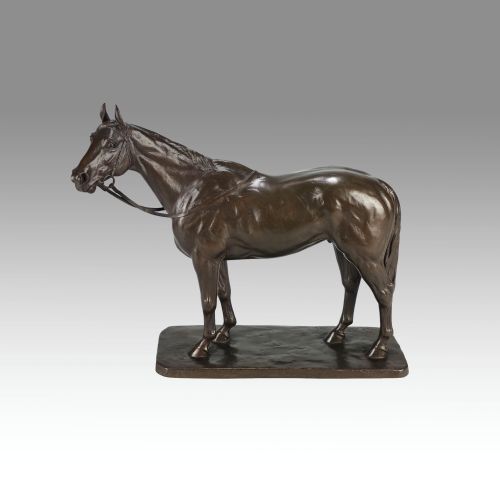
An equine bronze statue captures the power and anatomy of the horse through enduring cast metal.
Equine Bronze Statue
An equine bronze statue represents horses in various poses, ranging from standing stallions and dynamic animalier groupings to monumental figures set upon stone bases. When searching for an equine bronze statue, buyers encounter creations spanning the nineteenth century through the art deco and mid twentieth century periods, reflecting diverse international sculpting traditions.
Materials and construction
These works utilise bronze, patinated bronze, and cast bronze, frequently mounted upon heavy bases of marble, onyx, or brass to provide stability for the metal sculptures. Alternative compositions incorporate bronzed metal and spelter, employing traditional foundry techniques to achieve detailed surface textures and rich patination.
Foundries in Europe and Asia utilised lost-wax or sand-casting methods, followed by hand-chasing and chemical treatments to create distinctive surface finishes. The integration of stone plinths requires precise fitting to anchor the heavy metal figures securely.
The listings span from the Victorian era through the 1940s, featuring French animalier and Japanese Taisho period works in bronze, marble, and spelter.
Assessing quality
Quality rests in the precision of the casting, the fidelity of the anatomical rendering, and the depth of the patination applied across the surface of the metal. Finer examples display meticulous attention to musculature, movement, and expression, whereas simpler pieces show less definition in the chasing and finishing stages.
The integrity of the mounting, whether on marble or onyx, and the presence of clear foundry marks or signatures distinguish standard commercial castings from the more accomplished works produced by noted sculptors and workshops.
P J Mêne·Kunio Itô·Sakai Kōzan·Pierre Jules
The Equine Bronze Statue Glossary
- Animalier
- A nineteenth century artistic movement focused on the realistic portrayal of animals. Sculptors in this tradition studied anatomy closely to capture creatures in motion or repose.
- Patinated bronze
- Bronze that has been treated with chemical solutions to produce a specific surface colour or tone. This finish protects the metal and adds visual depth.
- Spelter
- An alloy of zinc and other metals frequently used as a substitute for bronze. It is lighter in weight and softer than true bronze.
- Lost-wax casting
- A traditional method for creating metal sculptures from a wax model. This technique allows for intricate detail and undercut forms to be reproduced faithfully.
Equine Bronze Statue: Frequently Asked Questions
What is an animalier bronze horse?
An animalier bronze horse is a nineteenth century sculpture created by artists who specialised in realistic depictions of animals, capturing natural behaviour and physical power.
These pieces focus heavily on accurate anatomy, muscular tension, and lifelike movement rather than stylised abstraction.
How do I identify the period of a bronze horse?
Dating relies upon stylistic markers, casting techniques, foundry stamps, and the materials used for the accompanying base, such as marble or onyx.
Victorian and art deco pieces display distinct aesthetic traits characteristic of their respective eras of production.
Where should I display a heavy bronze sculpture?
These statues require sturdy, level surfaces capable of supporting substantial weight, particularly when mounted on dense stone bases like marble.
Placement should avoid direct exposure to extreme moisture to preserve the stability of the patinated metal and the stone plinth.
Are these statues solid bronze?
Many bronze sculptures are cast hollow to reduce weight and material costs, while maintaining structural rigidity through internal support and thick walls.
Solid casting is less common except in smaller studies or specific sculptural fragments.