
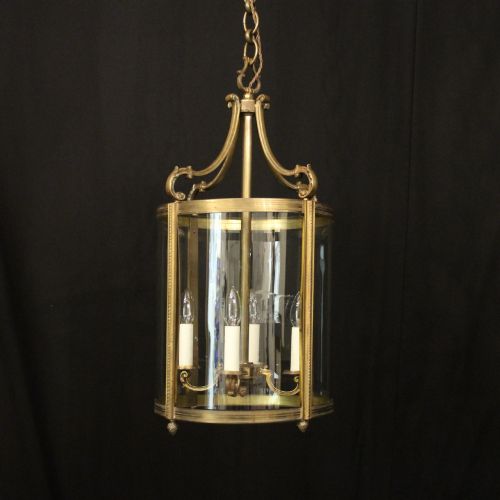
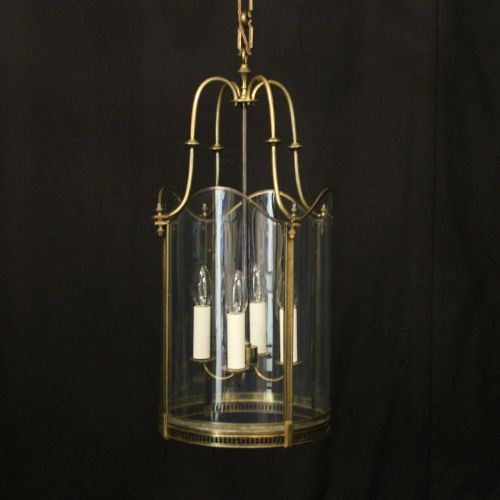
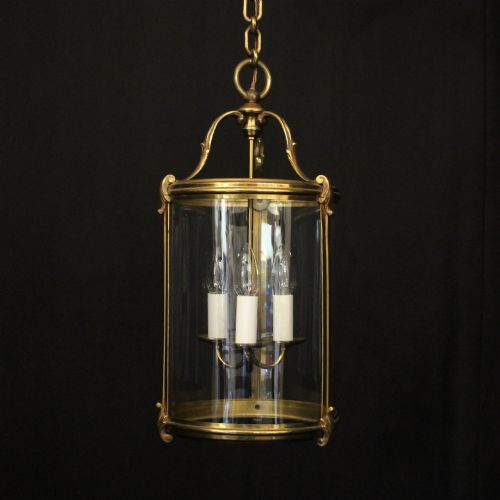
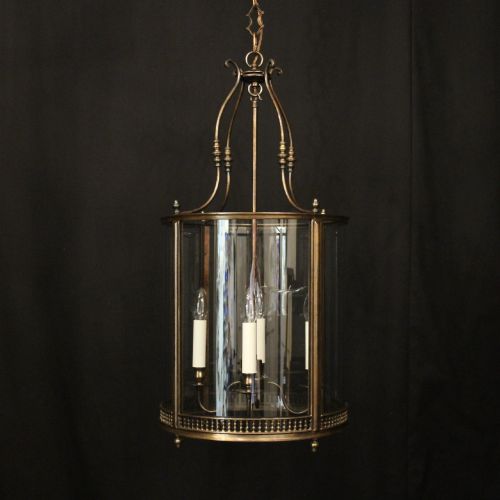
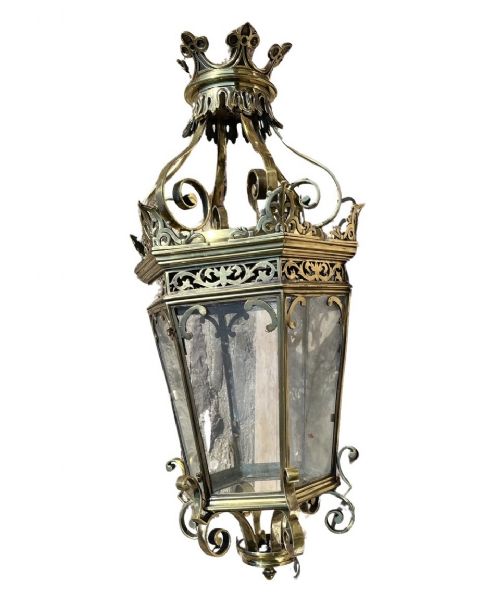
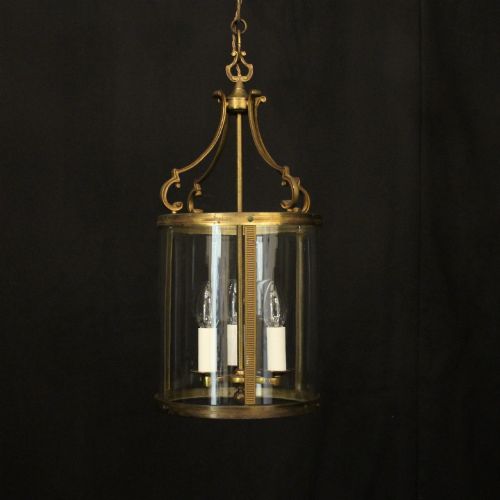
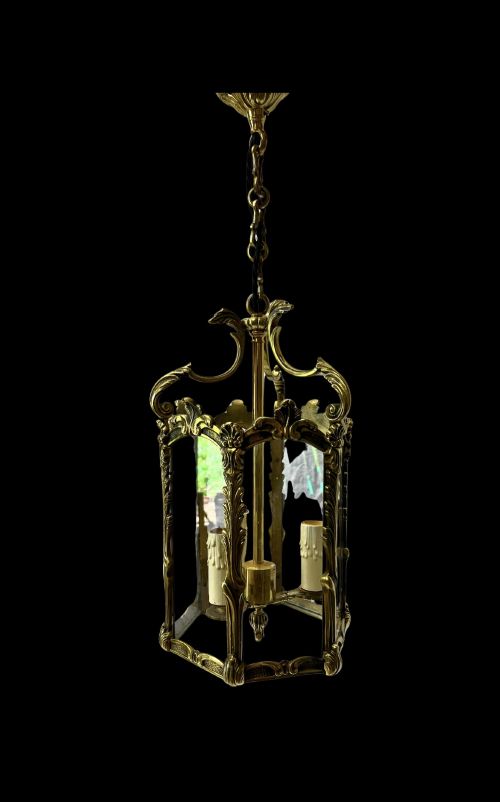


Entryway Ceiling Lantern
An entryway ceiling lantern sets the tone for a hallway, offering practical illumination wrapped in period character.
Entryway Ceiling Lantern
When you search for an entryway ceiling lantern, you are looking at overhead hanging lights designed specifically for vestibules, hallways and corridors. These fixtures illuminate entrance spaces while adding decorative presence close to the ceiling line.
The most common examples on this page are French and English designs dating from the late nineteenth century through to the 1930s. They appear in styles such as French Louis XVI, Regency and Gothic Revival, often taking the form of hall lanterns or single and multi-light pendants.
Many of these pieces feature glazed panels held within metal frames, designed to cast a welcoming glow downward and outward into narrow architectural spaces.
Materials and construction methods
These lanterns rely primarily on cast and wrought metals paired with glass panes to enclose the light source. Brass, bronze and gilded or silvered bronze form the structural frames and decorative mounts.
Glass panels are frequently curved or convex, requiring specialised shaping to fit snugly within the metal cage. Frames incorporate hinged doors for internal access, joined with visible pins and screws typical of the period.
Listings for entryway ceiling lanterns span from the 1860s through to the 1930s, featuring glass, brass, bronze and silvered finishes.
Distinguishing quality in period lanterns
Quality reveals itself in the weight and thickness of the metal frame and the crispness of any cast decorative detailing. Finer examples display meticulous chasing and finishing on bronze and brass components rather than simple stamped sheet metal.
The glass also separates standard pieces from superior ones, particularly where heavy, thick convex glass is utilised. The integration of multi-light internal clusters and original suspension hardware further elevates the piece.
The Entryway Ceiling Lantern Glossary
- Convex glass
- Curved glass panels that bulge outward, designed to soften and diffuse the light emitted from the interior bulbs. This technique requires skilled glassblowing or pressing.
- Hall lantern
- A compact hanging ceiling fixture intended for narrow passageways and entrance halls where floor space is limited. They often feature enclosed glass sides to protect the flame or bulb from drafts.
- Gilt bronze
- Bronze metal that has been coated with a thin layer of gold leaf or applied gold amalgam. This finish provides a warm, reflective surface that resists tarnishing over decades.
- Gothic Revival
- An architectural and decorative style drawing inspiration from medieval design. Pieces in this style often incorporate pointed arches, tracery and robust iron or bronze work.
- Regency
- An English design style spanning the early nineteenth century, characterised by classical restraint, symmetry and occasional neoclassical motifs. Fixtures from this period emphasise clean architectural lines.
Entryway Ceiling Lantern: Frequently Asked Questions
How do I hang an entryway ceiling lantern?
These lanterns suspend from the ceiling using chains, rods or hooks attached to a matching ceiling canopy. Professional installation is recommended to ensure the ceiling structure can support the weight of solid bronze or brass fixtures.
Height placement depends on your ceiling clearance and the swing of any entry doors. Ideally, the bottom of the lantern should hang high enough for people to walk underneath comfortably.
Are these lanterns wired for modern electricity?
Many period lanterns have been updated with internal electrical fittings to accommodate standard modern bulbs. Rewiring is often carried out to meet current safety standards while preserving the exterior antique appearance.
Multi-light versions often house two, three or four candle-style fixtures inside the glass cage. Check individual listings to see the current wiring configuration.
How do I clean and maintain a brass lantern?
Routine maintenance involves gentle dusting with a soft, dry cloth to prevent grime accumulation on the glass and metal. Avoid harsh chemical cleaners that can strip original gilding or patina from bronze and brass surfaces.
Glass panels can be carefully wiped down with a mild glass cleaner applied to a cloth rather than sprayed directly onto the metal frame. This protects the surrounding metal from unintended staining or moisture damage.
How do I identify French styles on these lanterns?
French lanterns from periods like Louis XVI or the broader French Chateau tradition often feature refined crests, acanthus leaf mounts and delicate cast bronze detailing. They lean toward ornate symmetry and classical decorative motifs.
By contrast, English Regency or Gothic Revival pieces tend to exhibit stricter geometric forms or medieval-inspired structural ironwork. Examining the cast ornamentation usually reveals the design origin.