

Classic Brass Pendant
These classic brass pendant designs bring historical illumination into a room through cast metal, gilt bronze, and cut crystal.
Classic Brass Pendant
A classic brass pendant search draws together hanging ceiling lights, lanterns, and multi-armed chandeliers spanning the late nineteenth century through the nineteen-thirties. Buyers encounter works originating chiefly from French, English, Italian, and Dutch workshops, reflecting regional decorative preferences of those decades.
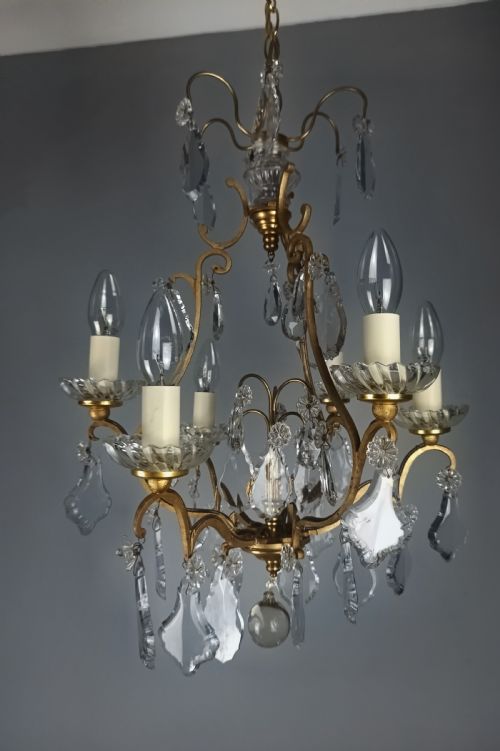
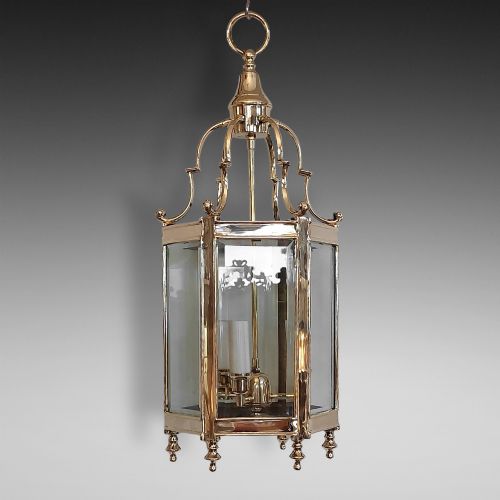
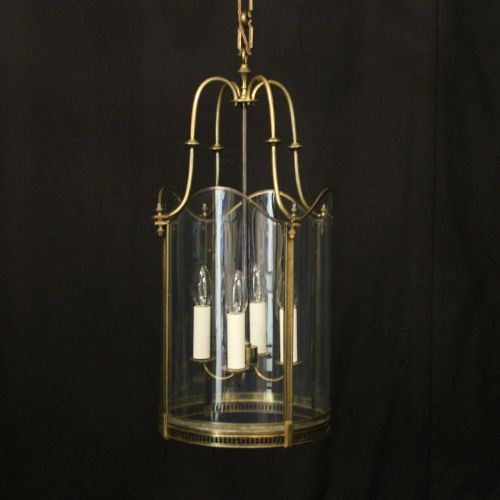
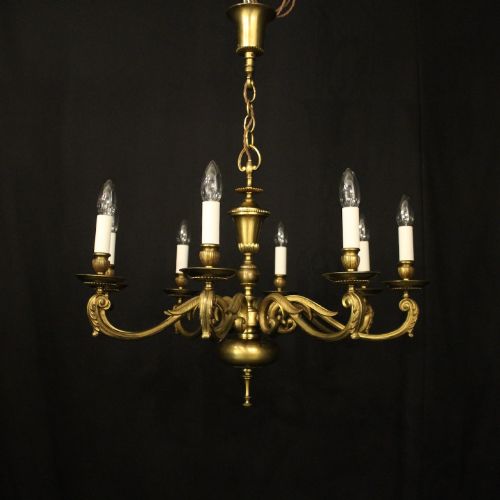
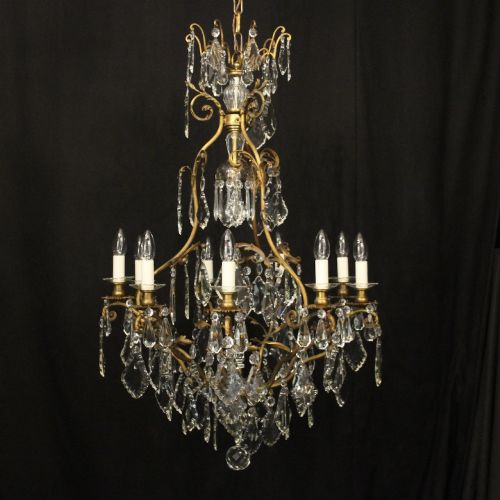
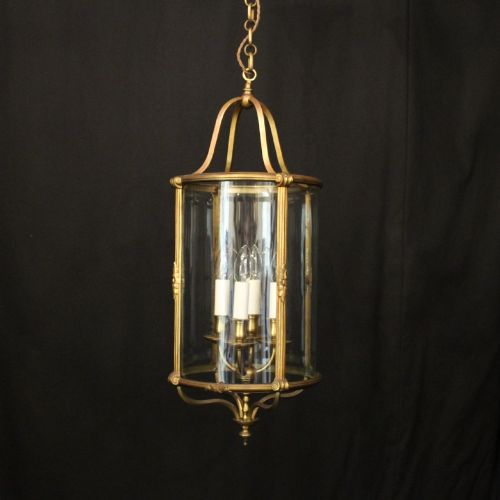
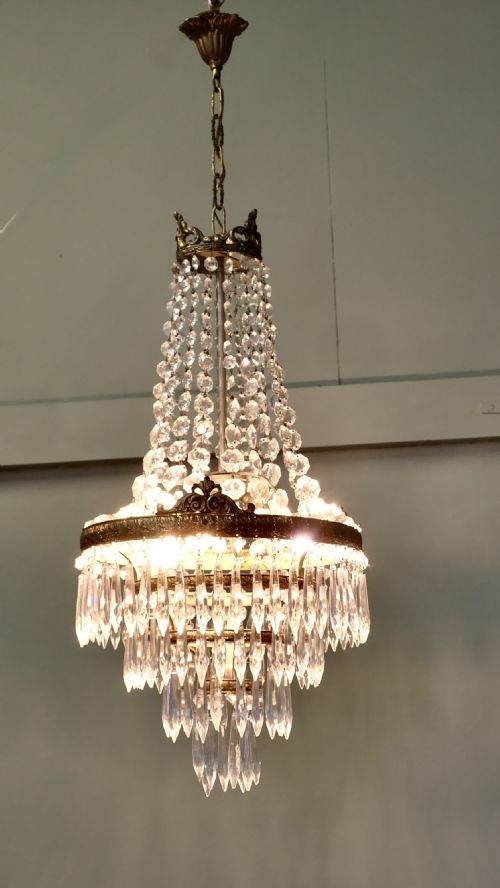
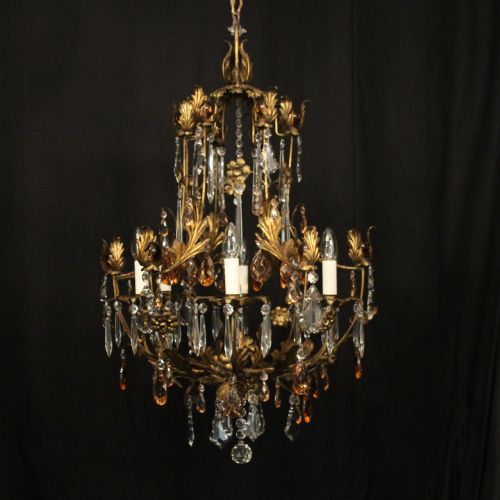
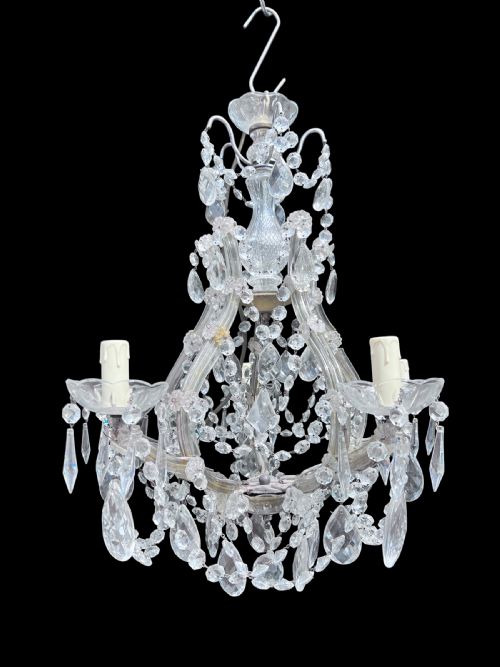
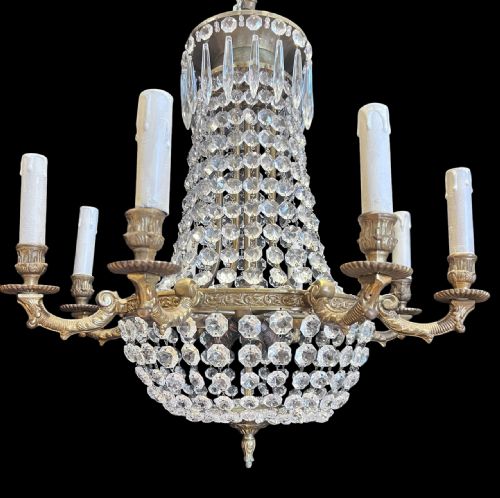
The most frequent examples on this page are French and English chandeliers and hall lanterns utilising brass, gilt bronze, and glass components. These fixtures range from simple single-light hexagonal lanterns to multi-tiered crystal birdcage and tent designs with numerous arms.
How they were made
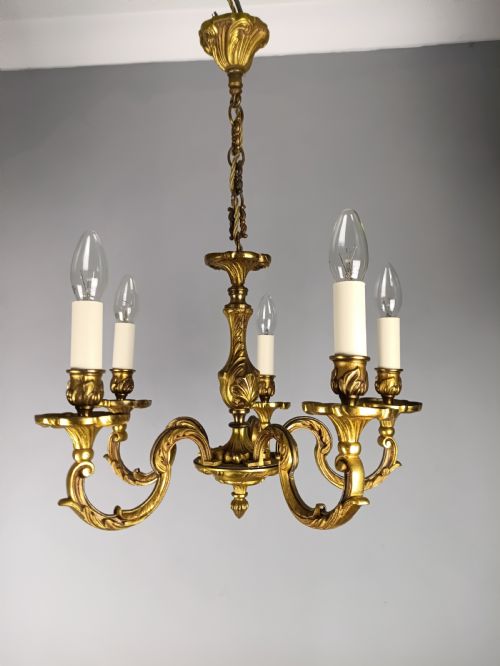
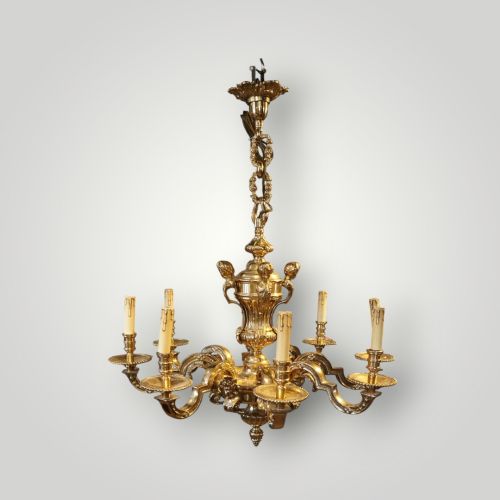
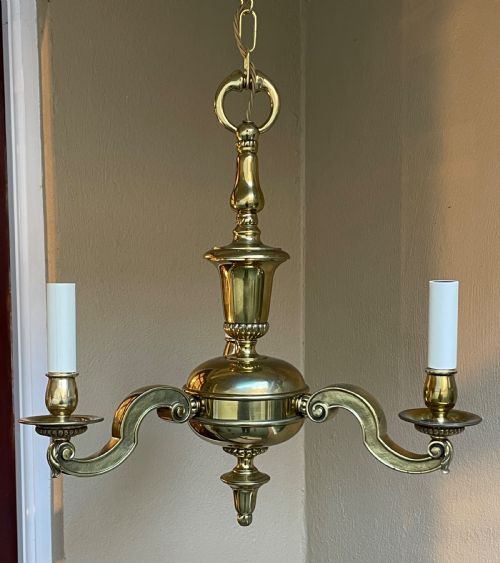
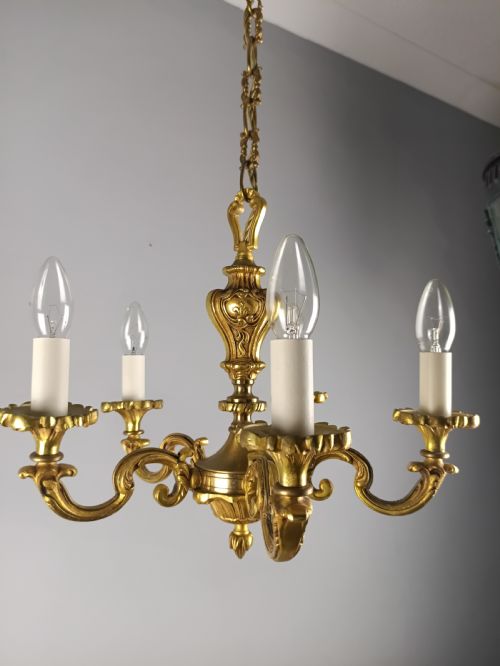
Maker workshops constructed these fixtures primarily from cast brass, bronze, and gilt metal, frequently incorporating cut glass and crystal drops to enhance light reflection. Gilded finishes and silver-gilt treatments were applied to bronze and brass surfaces to achieve specific decorative effects.
Design styles draw upon historical vocabularies including French Empire, Rococo Revival, Neoclassical, and Edwardian traditions. Frameworks employ structural elements such as convex glass panels, metal birdcage frames, and bag tent configurations.
Several lanterns include hidden interior loops designed for securing glass panels against the rattle of passing horse-drawn carriages.
What varies in quality
Quality diverges in the crispness of metal casting and the depth of the applied gilding on the bronze or brass framework. Finer pieces demonstrate meticulous hand-chasing on cast mounts and well-integrated structural proportion.
The grade of the glass and crystal elements also defines the upper tier, noting particularly clear cut glass, amethyst crystal accents, and complete, matching cascades of drops rather than replacement components.
G.E.C
The Classic Brass Pendant Glossary
- Birdcage chandelier
- A lighting fixture featuring a skeletal metal frame shaped like an avian cage, supporting interior lights and exterior crystal strands.
- Gilt bronze
- Bronze metal treated with a thin layer of gold or gold-coloured alloy to produce a bright, luminous surface finish.
- Bag tent chandelier
- A hanging light characterised by an upper tent configuration of crystal beads cascading down to a gathered bag-shaped lower section.
- Hexagonal lantern
- A rigid hanging light enclosed by six glass panels within a structured brass or bronze frame.
- Marie Theresa
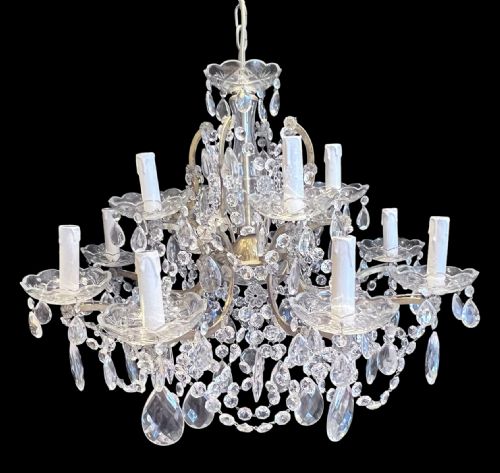
- A distinct style of chandelier characterised by a flat metal strap framework entirely concealed by glass drops and crystal garlands.
Classic Brass Pendant: Frequently Asked Questions
Where were these brass pendant lights hung?
These fixtures typically illuminated entrance halls, grand staircases, and principal reception rooms in period residences.
Smaller lanterns suited narrow corridors, while multi-armed chandeliers provided primary overhead illumination for high-ceilinged parlours and dining spaces.
How do I identify a French Empire style fixture?
French Empire pieces rely on classical architectural motifs, symmetrical arrangements, and tent-and-waterfall crystal formations.
They frequently utilise gilt bronze frames paired with dense cascades of cut glass drops reflecting early twentieth-century interpretations of Napoleonic design.
What is the difference between brass and gilt bronze?
Brass is an alloy of copper and zinc, yielding a warm metallic tone that can be polished or patinated over time.
Bronze is an alloy of copper and tin, which makers often gilded with gold leaf or mercury gilding to create a rich, non-tarnishing surface.
How do I determine the period of a chandelier?
Dating relies on stylistic markers, casting techniques, and the specific composition of the glass and metal components.
Fixtures from the Edwardian era and the nineteen-twenties often blend historical revival styles with early electrical wiring adaptations alongside traditional candle-form sockets.