


Engraved Sterling Vesta
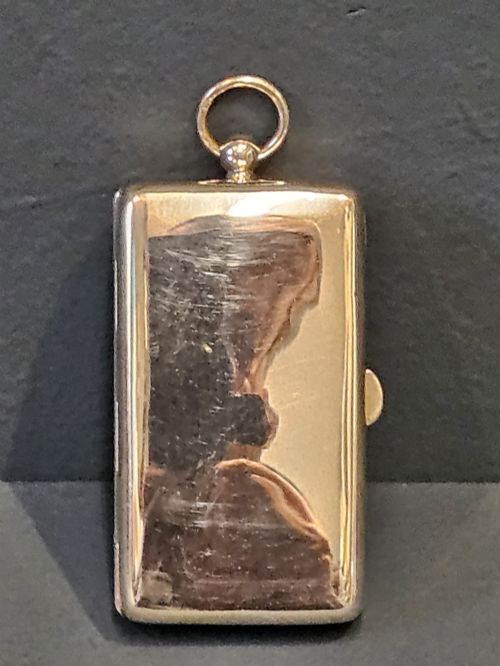
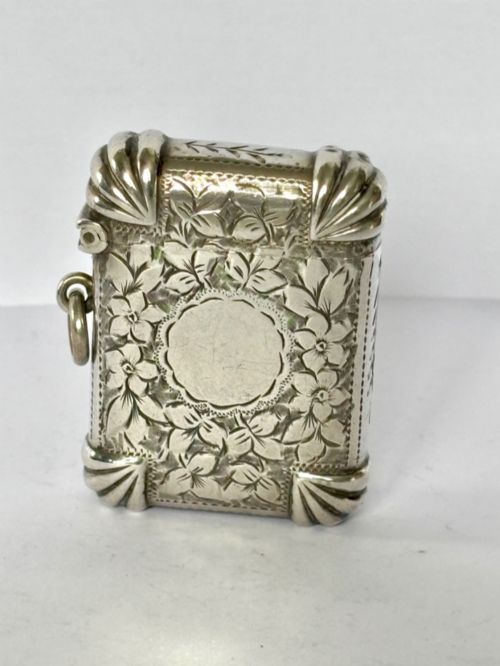
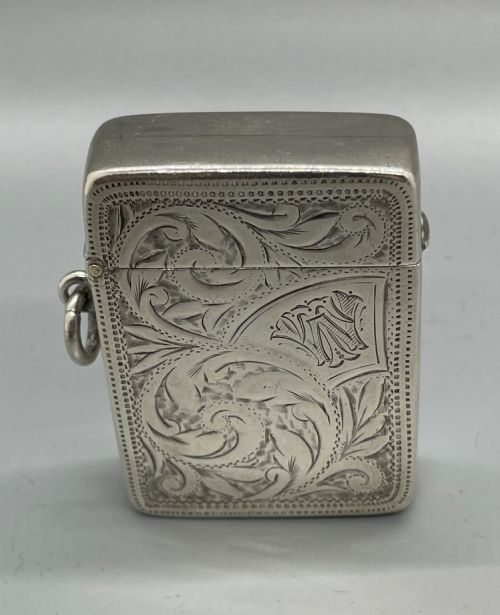
These engraved sterling vesta cases are pocket-sized silver match holders bearing detailed surface decoration from the late nineteenth and early twentieth centuries.
Engraved Sterling Vesta
When you search for an engraved sterling vesta, you encounter small pocket containers designed to hold matches safely while keeping them dry. The examples seen here belong predominantly to the Victorian and Edwardian periods, stretching from the late nineteenth century into the reigns of George V.
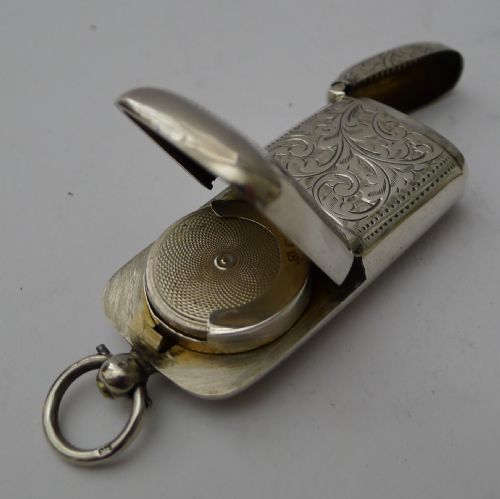
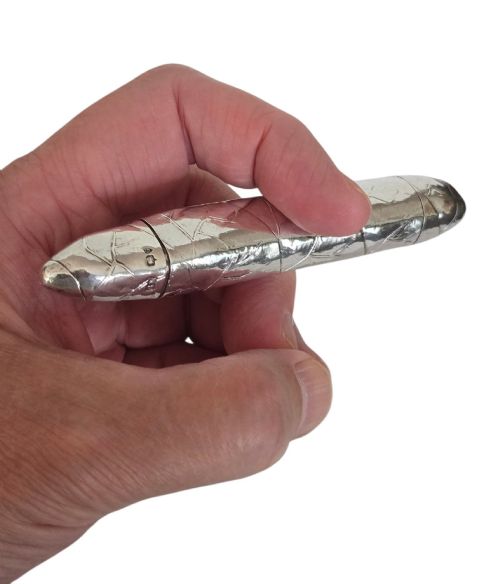
Most specimens take standard rectangular or shaped forms intended for a waistcoat pocket, though novelty shapes such as horseshoes, boars, hearts and cigars appear alongside combinations housing sovereigns or snuff. Makers in Birmingham and London produced the majority of these pieces, marking them with assay office details and sterling silver standards.
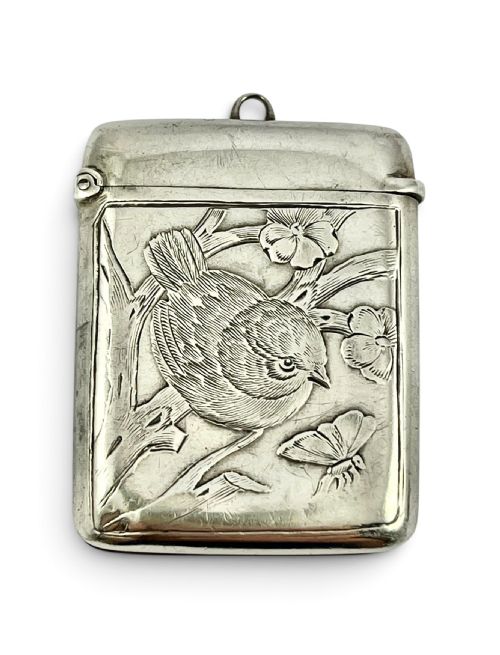
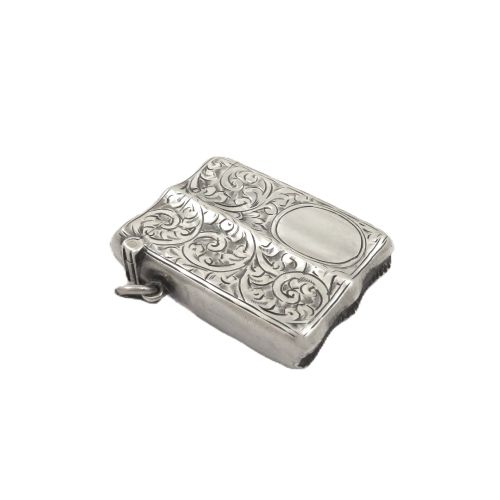
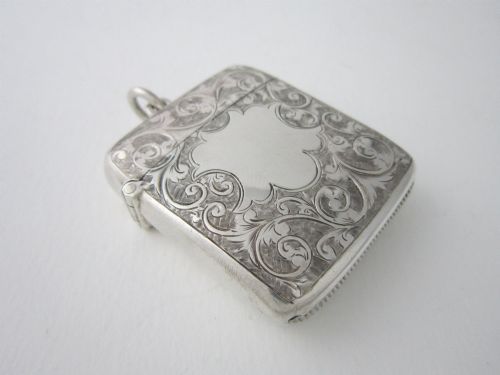
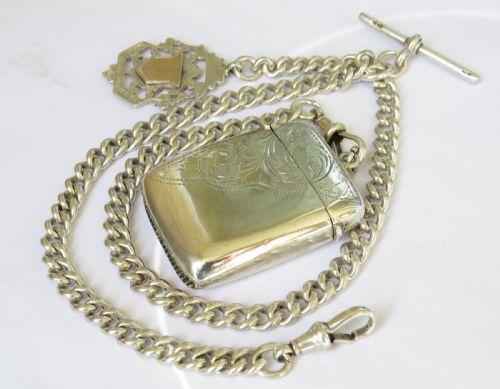
You are most likely to meet standard rectangular boxes decorated with hand-engraved foliage, scrolls, or specific motifs like golfers and dogs. These functional accessories reflect the widespread use of matches before disposable lighters became common.
Silver and surface decoration
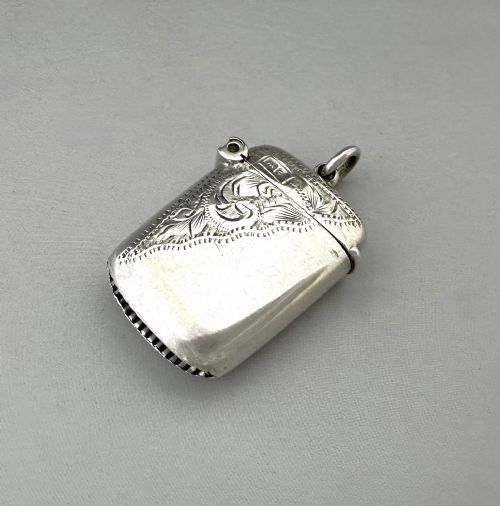
Silversmiths constructed these cases from sterling silver sheet, hammering and pressing the metal into two main halves joined by a sturdy hinge. A spring-loaded lid kept the contents secure against accidental opening in the pocket, while a serrated stripe on the base served as a striking surface for matches.
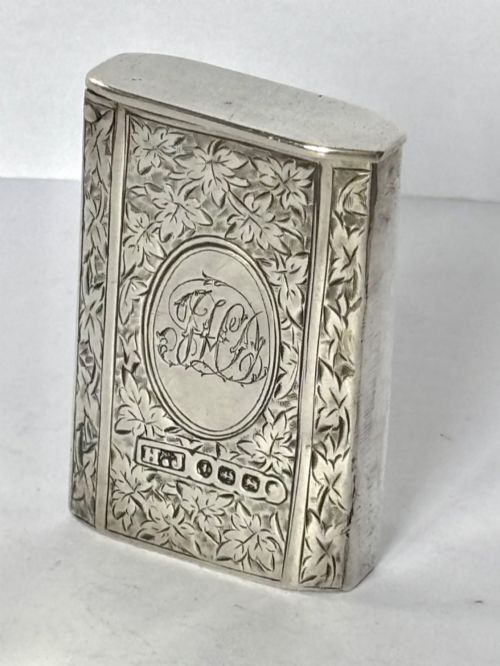
Artisans applied surface decoration by hand using gravers to cut scrolls, geometric patterns, or pictorial scenes directly into the silver. Certain pieces incorporate applied rose gold accents, enamel panels, or internal divisions to separate matches from sovereigns or stamps.
A few cunning makers fashioned vestas as snarling boars and cheeky pug dogs, ensuring that lighting a pipe started with a conversation.
Craftsmanship and design
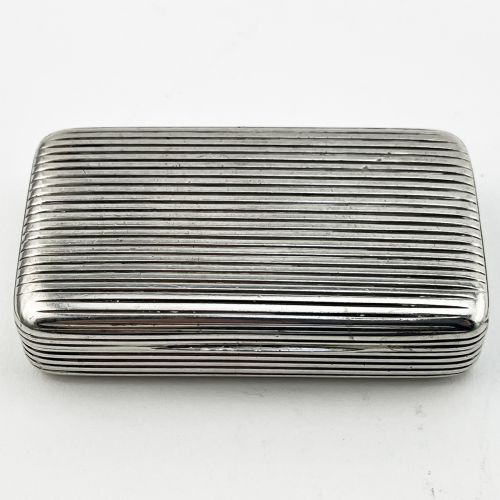
Quality rests upon the crispness of the hand engraving and the structural integrity of the hinge and spring mechanism. Superior pieces show deep, precise cuts that define foliage or animal subjects clearly without slipping, whereas simpler examples rely on shallow machine stamping or sparse linear decoration.
Makers known for exceptional production, such as Sampson Mordan, achieved distinction through innovative mechanical designs and heavier gauge silver. The presence of specialised forms, such as double compartments, novelty animal shapes, or coloured enamel, elevates a piece beyond standard utility.
HOWARD JAMES BIRMINGHAM·EV PLEDGE AND SON·Sampson Mordan and Co·Alfred Clark·William Hair Haseler
The Engraved Sterling Vesta Glossary
- Vesta
- A small pocket container designed to hold matches and strike them on an integrated abrasive strip. They emerged in the mid-nineteenth century following the invention of friction matches.
- Sterling silver
- An alloy containing 92.5 percent silver by mass, with the remainder usually copper. British pieces carry hallmarks confirming this standard.
- Hallmark
- A set of official marks stamped on precious metals indicating the maker, assay office, and year of manufacture. Birmingham and London offices predominate in this selection.
- Sovereign case
- A small circular pocket holder sized specifically to fit British gold sovereign coins. Some examples combine this function with a vesta compartment.
- Albert chain
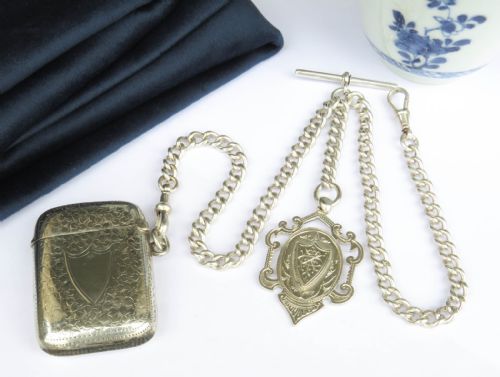
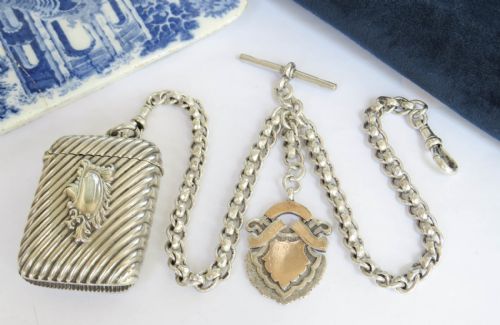
- A watch chain attached to a waistcoat, often paired with a vesta case or watch fob. They gained popularity during the Victorian era.
Engraved Sterling Vesta: Frequently Asked Questions
What is an engraved sterling vesta?
An engraved sterling vesta is a small silver container used in the nineteenth and twentieth centuries to carry safety matches in a pocket or on a watch chain. The exterior surfaces carry hand-cut decorative patterns, monograms, or pictorial scenes.
These pieces protected fragile matches from moisture and friction until needed. Today they function as collectible silver objects or pocket accessories.
How do I know my vesta is sterling silver?
British pieces feature hallmarks stamped into the metal, usually inside the rim or on the inner lip of the lid. These marks typically include a lion passant indicating sterling standard, alongside assay office symbols and date letters.
Unmarked Continental pieces or later items may carry different purity numbers such as standard silver designations. Examining the interior with a loupe reveals these small stamped impressions.
What is the difference between a vesta and a snuff box?
A vesta includes a dedicated serrated striking strip on the exterior base or side for igniting matches. Snuff boxes lack this feature, as their purpose is to hold powdered tobacco for nasal ingestion.
Combination pieces exist that house both a small snuff compartment and a vesta section, reflecting changing personal habits of the period.
How were vestas carried?
Owners typically slipped them into a waistcoat pocket or attached them to a pocket watch chain, known as an albert chain, using a small loop or ring on the end of the case. This kept the matches accessible throughout the day.
Some designs formed part of chatelaines or sat suspended from belts alongside other small personal items.