
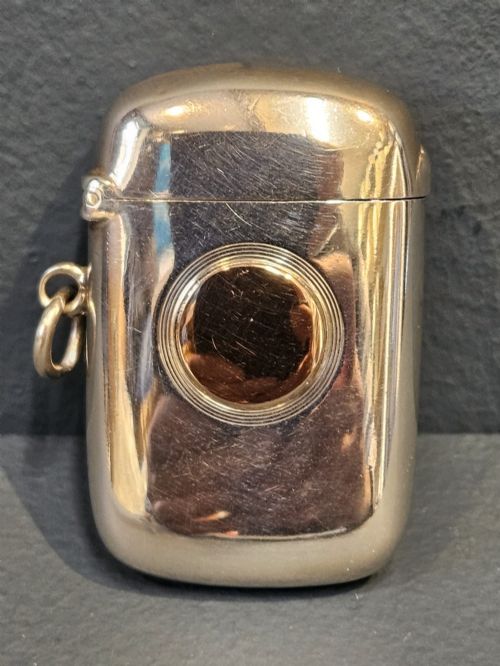
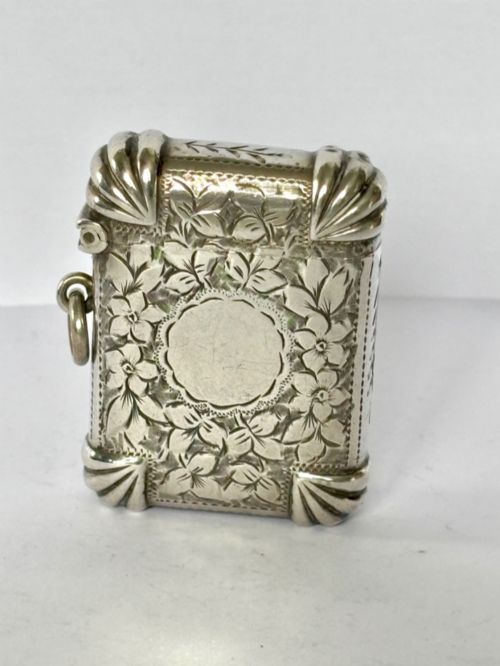
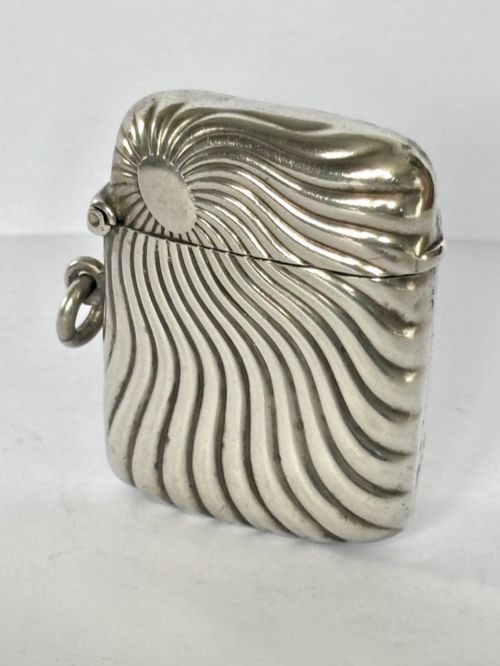
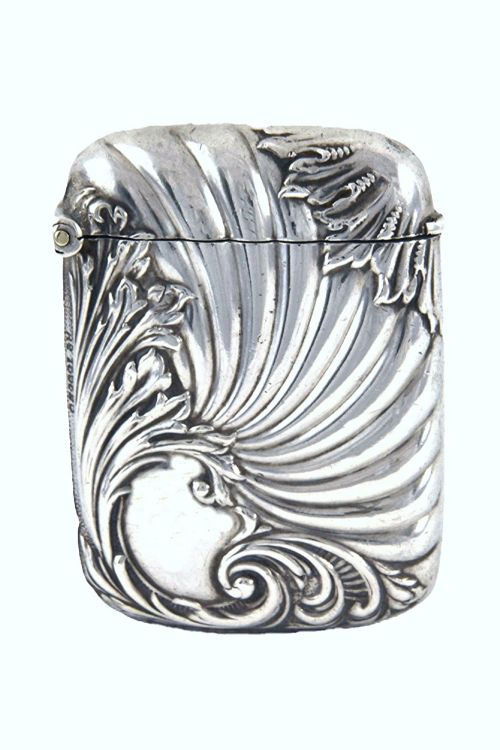


Silver Matchbox Container
These silver matchbox container pieces, better known as vesta cases, offer pocket-sized Victorian and Edwardian craftsmanship that collectors prize for everyday pocket utility and display.
Silver Matchbox Container
When you search for a silver matchbox container, you are looking at small vestas and pocket match holders that housed matches before the widespread availability of safety matches. The pieces on this page span the Victorian and Edwardian periods, stretching from the late nineteenth century into the opening decades of the twentieth.
You will most frequently encounter plain or engraved sterling silver examples alongside pieces enhanced with vitreous enamel or hand-painted details. Formats range from standard rectangular shapes to heart-shaped designs and unusual novelty forms like sentry box configurations.
Materials and construction
These items are constructed predominantly from sterling silver, fashioned by silversmiths using traditional forming, pressing and engraving techniques. Many pieces incorporate applied decoration, hinged lids and integrated striking ridges on the base for igniting vestas.
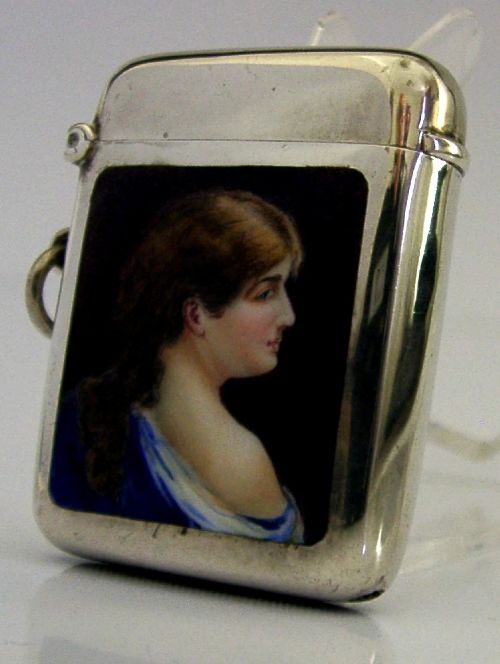
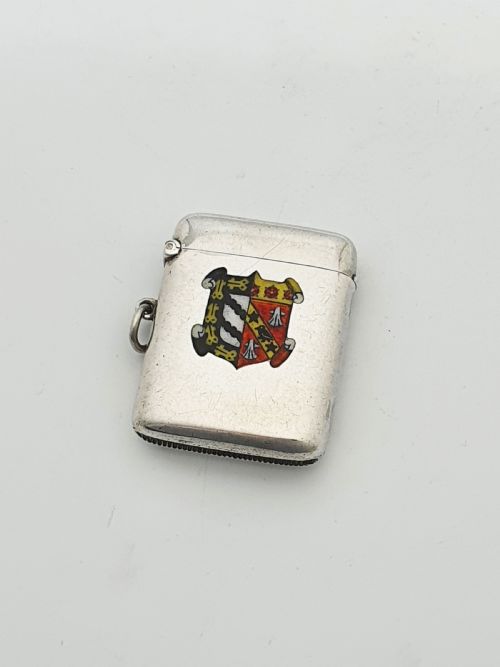
Finer examples integrate vitreous enamel work, requiring skilled artisans to fuse powdered glass to the silver base under high heat. Hand-painted motifs and applied enamel crests further elevate the construction complexity of specific Edwardian and Victorian variants.
The listings span the Victorian and Edwardian periods, utilising sterling silver, enamel, and vitreous enamel in forms such as standard vesta cases and novelty designs.
Assessing quality and distinction
The division between standard production and superior quality rests in the crispness of the hallmarks, the depth of the hand-engraving and the structural integrity of the hinge. Crisp chasing and well-preserved maker marks indicate workshops operating at a higher standard.
Enamel work introduces another level of distinction, where undamaged surfaces and intricate hand-painted detail separate ordinary containers from exceptional novelty and pictorial pieces. Novelty forms that diverge from standard rectangular shapes demand greater artisan skill and command higher regard.
EV PLEDGE AND SON·ROBERT CHANDLER·SAMPSON MORDAN
The Silver Matchbox Container Glossary
- Vesta Case
- A small pocket container designed to hold vestas, which were short matches tipped with phosphorus. These cases feature a ribbed striking strip on the bottom.
- Sterling Silver
- An alloy of silver containing 92.5% pure silver and 7.5% other metals, usually copper. This standard composition is marked on British pieces with the lion passant.
- Vitreous Enamel
- A material made by fusing powdered glass to a substrate by firing, usually between 750 and 850 degrees Celsius. The resulting smooth, durable surface decorates select Edwardian and Victorian containers.
- Hallmark
- An official stamp applied by an assay office indicating the purity of the metal, the maker, and the year of manufacture. British silver carries distinct symbols to verify its provenance.
Silver Matchbox Container: Frequently Asked Questions
What is a vesta case?
A vesta case is a small, portable container engineered to carry short matches safely in a pocket or handbag. They became essential accessories during the nineteenth century when smokers and homeowners relied on friction matches.
Most versions feature a hinged lid to keep the matches dry and a textured striking surface on the exterior base. Collectors prize them today as miniature sculptures reflecting the metalworking trends of their era.
How do I date a silver vesta?
Dating a silver vesta relies primarily on the legible hallmarks stamped directly onto the metal by British assay offices. These marks typically include a date letter alongside symbols denoting the town of origin and the silver standard.
Stylistic cues also help narrow down the period when hallmarks are rubbed or missing. Victorian pieces often display heavy floral or scroll engraving, whereas Edwardian examples frequently embrace sunburst motifs or clean geometric lines.
Are enamel vesta cases fragile?
Enamel surfaces consist of fused glass, meaning they can crack or chip if the container is dropped onto a hard floor. Care must be taken when carrying or displaying enamelled pieces to preserve the painted details.
Despite this vulnerability, vitreous enamel remains durable under normal handling conditions. Gentle cleaning with a soft cloth avoids scratching the glassy surface while keeping the surrounding silver bright.
Why do some vestas have novelty shapes?
Novelty vesta cases were manufactured to appeal to Victorian and Edwardian buyers who appreciated whimsical accessories and conversation pieces. Silversmiths pushed beyond standard rectangular boxes to create items shaped like books, animals, or sentry boxes.
These unusual forms required advanced metalworking skills and specialised dies or hinge placements. Today, such variations are sought after by collectors searching for uncommon designs outside standard production.