



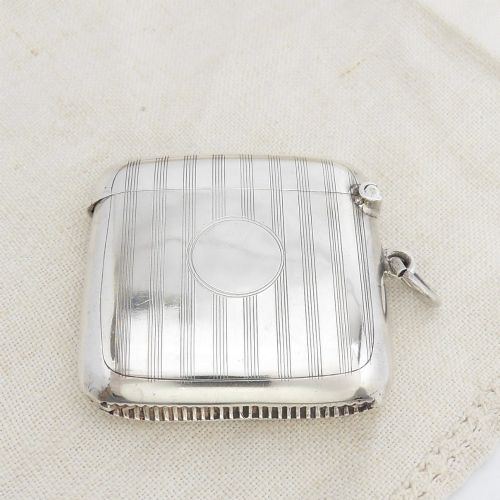

Engraved Match Safe
An engraved match safe is a pocket-sized sterling silver case designed to protect safety matches, offering portable utility paired with intricate period decoration.
Engraved Match Safe
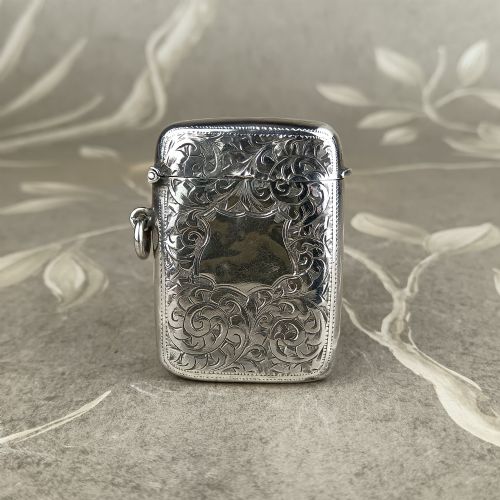
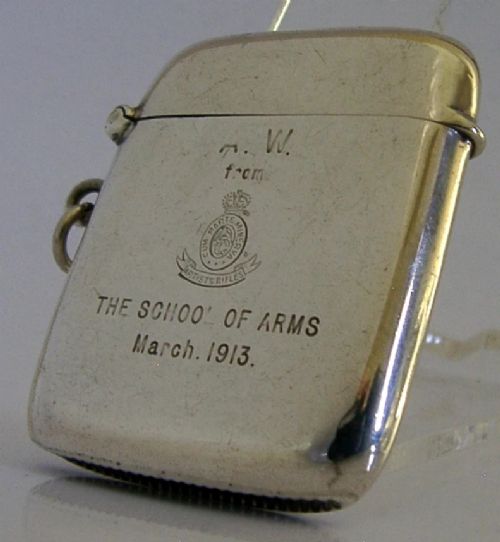
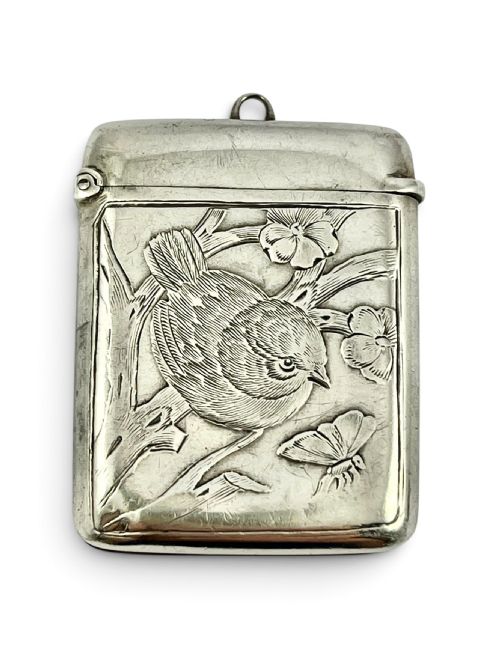
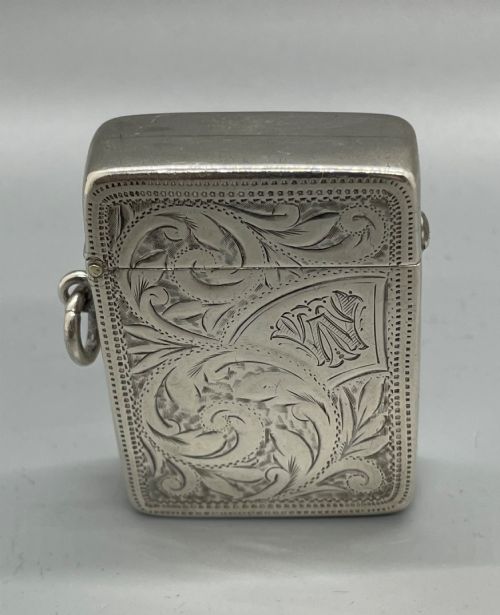
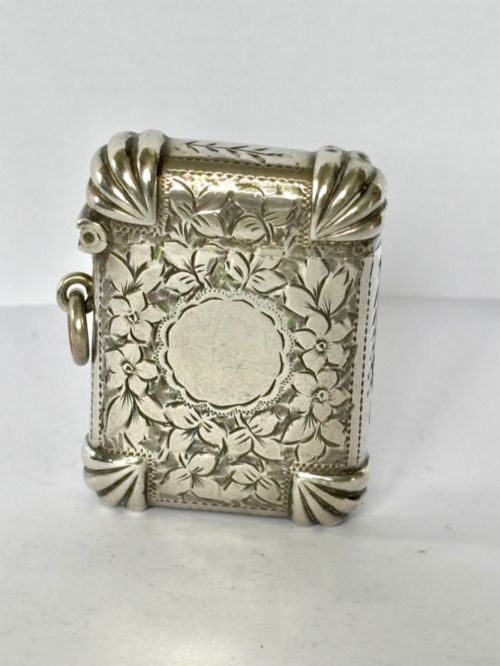
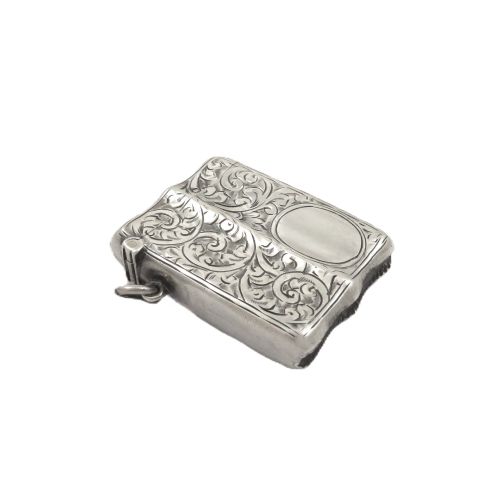
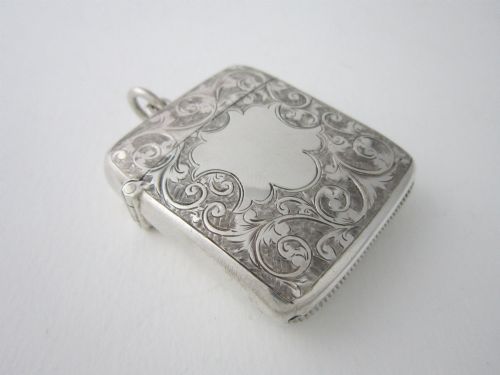
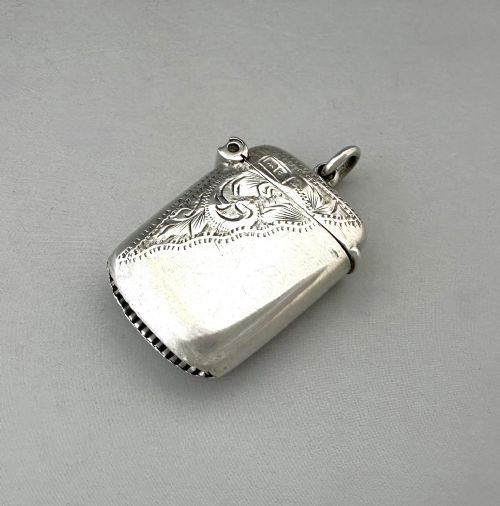
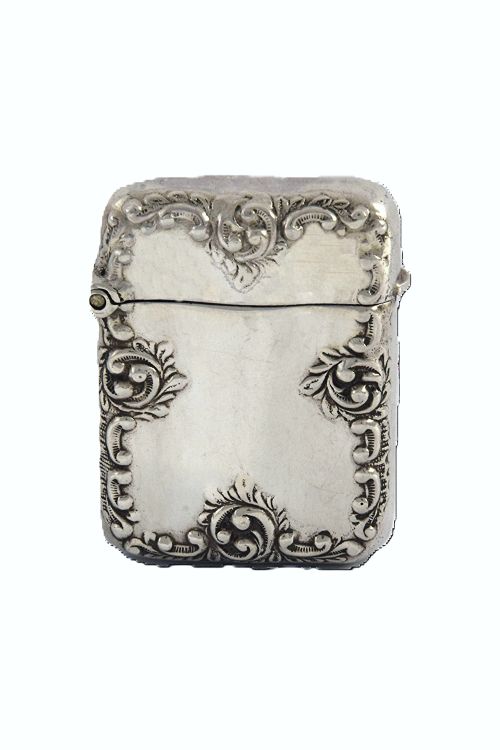
An engraved match safe, also known as a vesta case, is a small container carried in the pocket or attached to a fob chain to keep matches dry and safe from friction. The pieces seen on this page span the Victorian and Edwardian eras, alongside items dated around nineteen hundred, reflecting a time when pocket lighting was an everyday necessity.
The forms vary slightly from compact rectangular shapes to rounded oval formats, occasionally incorporating small decorative details like jade shamrock inserts. Most examples encountered here are fashioned from solid sterling silver, displaying surface ornament that ranges from delicate foliate engraving to denser geometric patterns.
Materials and construction
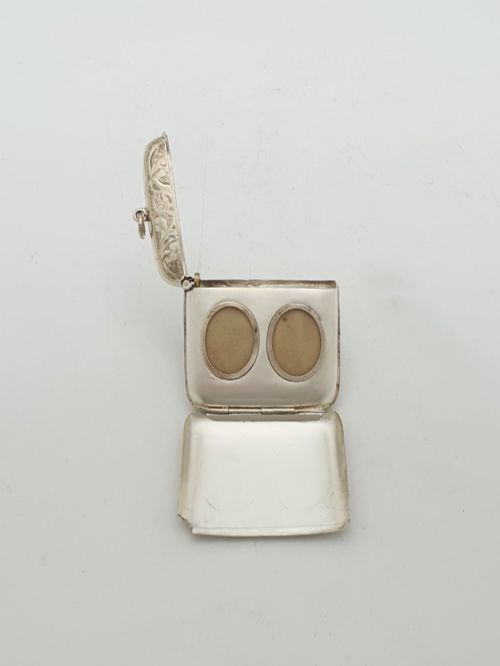
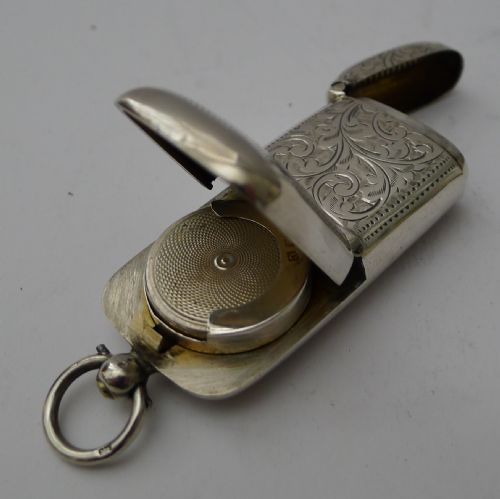
Every piece recorded in our current selection and archive is made from sterling silver, highlighting the metal's durability and suitability for daily handling in the pocket. Smiths utilised sheet silver to form the body and lid, integrating a hinged mechanism that kept the contents secure until required.
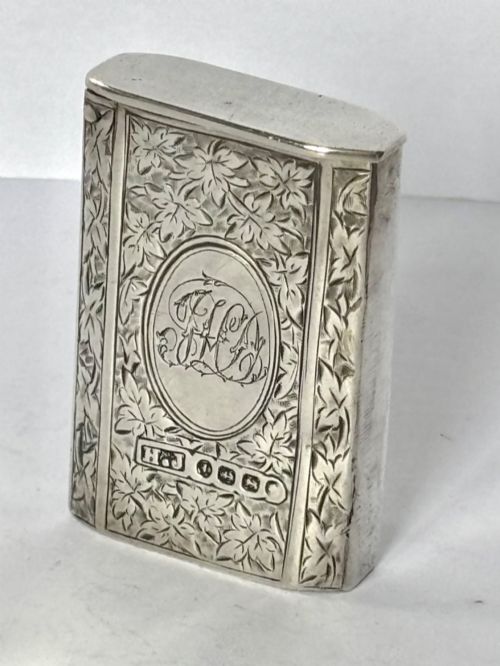
The characteristic decoration was applied by hand using gravers to cut intricate foliate and abstract patterns into the metal surface. Makers often utilised hallmarks struck directly into the silver to record the assay office, such as Birmingham or Chester, alongside the date letter and standard marks.
Engraved Match Safe Retail Price Guide 2026
Typical asking prices for engraved match safe among the pieces listed under this phrase on Sellingantiques today, from the lower quarter to the upper quarter. They describe what is for sale here now, not the wider market.
Some nineteenth-century match safes conceal tiny jade shamrock inserts, proving that Victorian smokers appreciated a touch of whimsical botanical luck.
Distinguishing quality across examples
The distinction between standard production and superior work lies in the depth and clarity of the hand engraving. Sharper, more deeply cut foliate designs retain their crispness through decades of pocket wear, whereas shallow surface decoration tends to soften over time.
Constructional integrity also defines the better pieces, particularly the snugness of the lid closure and the spring tension of the hinge. Cases that retain their original form without distortion demonstrate a higher grade of initial silversmithing and careful subsequent handling.
Robert Pringle·Sarah And Sally
The Engraved Match Safe Glossary
- Vesta case
- A small pocket container designed to hold vestas, which were an early type of match tipped with phosphorus. These cases feature a striking stripe, usually grooved into the bottom, to ignite the match.
- Sterling silver
- An alloy consisting of ninety-two point five percent silver and seven point five percent other metals, typically copper, chosen for strength. This standard is indicated by the lion passant hallmark on British pieces.
- Hallmark
- A series of official marks stamped on precious metal items to guarantee the purity of the metal, the maker, and the year of assay. Birmingham and Chester are prominent assay towns found on these pieces.
- Foliate engraving
- Surface ornamentation composed of stylised leaves, vines, and floral motifs cut into the metal. This style is characteristic of Victorian and Edwardian decorative arts.
Engraved Match Safe: Frequently Asked Questions
What is a vesta case?
A vesta case is a small container historically used to carry matches safely in a pocket or handbag. They were essential personal accessories during the nineteenth and early twentieth centuries.
These objects feature a hinged lid and a striated panel on the base for striking the match before use.
How do I date an antique match safe?
Dating relies heavily on the hallmarks struck into the sterling silver body. These tiny stamped symbols indicate the assay office and the specific year letter.
Stylistic elements like foliate engraving and the overall shape also provide strong clues to whether a piece originates from the Victorian or Edwardian era.
Are these cases made of solid silver?
The pieces recorded here are fashioned from solid sterling silver rather than plated base metals. This ensures the material maintains its structural integrity over time.
Silver content is verified by official assay office marks stamped directly onto the metal surface.