


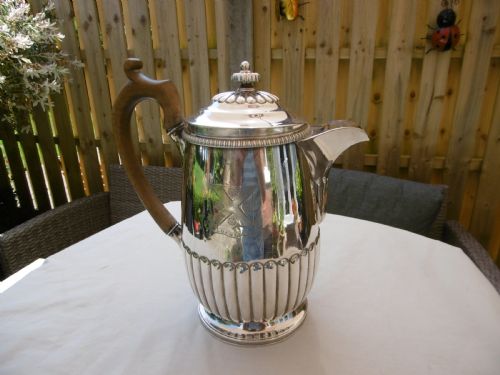
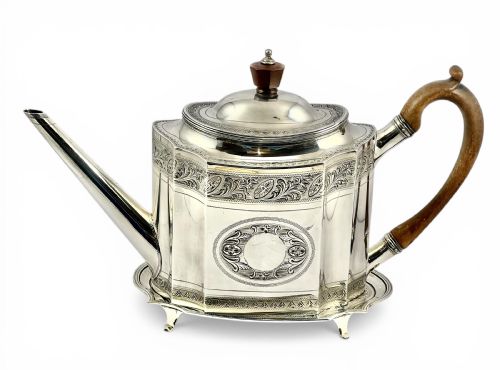


Engraved Silver Teapot
An engraved silver teapot brings pattern and weight to the table, combining chased decoration with solid metal or plate.
Engraved Silver Teapot
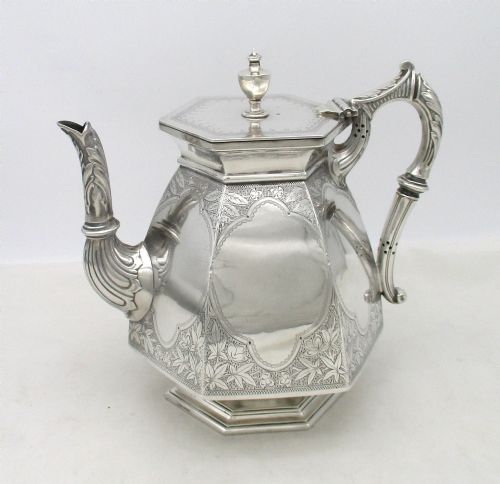
An engraved silver teapot is a vessel for serving hot tea, shaped as a bullet, oval or urn, and finished with chased or incised ornamentation.
Buyers searching for an engraved silver teapot encounter items ranging from eighteenth-century Georgian silver to nineteenth-century silver plate and Victorian services.
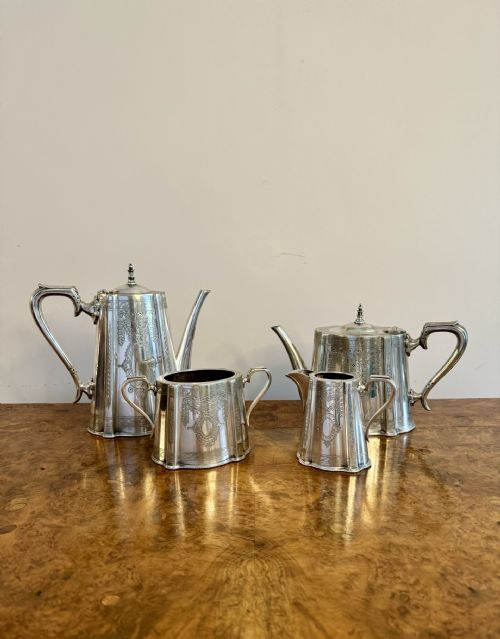
The selection includes individual pots alongside stands, kettles with burners, and complete tea sets comprising coffee pots and sugar basins.
How they were made
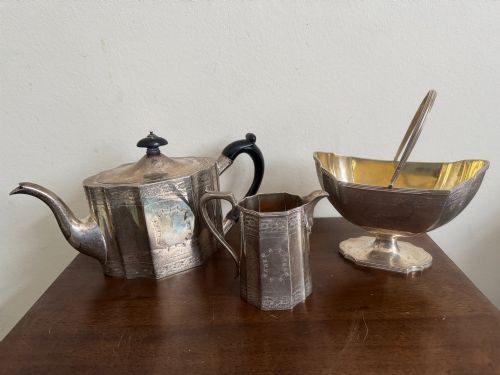
Silversmiths utilised sterling silver or applied silver plate over base metals, often incorporating wood, bone or ebony for handles to insulate against heat.
Decoration relied on hand engraving and chasing to cut floral scrolls, crests and geometric panels into the metal surface.
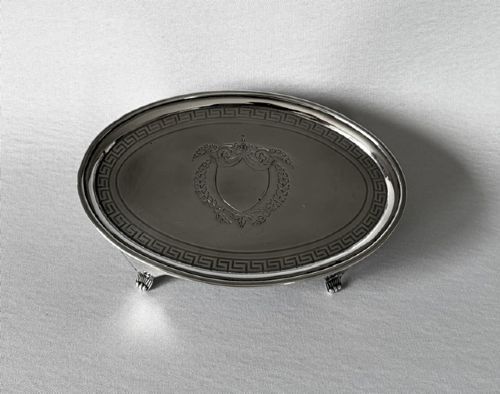
Internal gilt layers protected certain vessels, whilst separate stands raised pots above the furniture.
Engraved Silver Teapot Retail Price Guide 2026
Typical asking prices for engraved silver teapot among the pieces listed under this phrase on Sellingantiques today, from the lower quarter to the upper quarter. They describe what is for sale here now, not the wider market.
Scottish provincial items from Edinburgh and Glasgow appear alongside London pieces and Old Sheffield plate.
What varies in quality
Quality rests in the crispness of the hand engraving and the balance of the pot upon its base.
Maker reputation and provincial hallmarks distinguish standard production items from distinguished workshop output.
The retention of original insulators like wood handles and matching stands elevates the integrity of a set.
Walker and Hall·Robert Hennell I·Matthew Boulton·Boardman Glossop and Co·John and George Angell
The Engraved Silver Teapot Glossary
- Sterling silver
- A silver alloy containing 92.5 percent pure silver by mass, standard for quality British plate and hollowware.
- Silver plate
- A layer of silver fused to a base metal core, common in nineteenth-century manufacturing.
- Chasing
- A metalsmithing technique where metal is hammered from the front to sink the design and create relief work.
- Hallmark
- A series of official marks stamped on items to show the metal standard, assay office, and year of manufacture.
- Bullet teapot
- A spherical or globular teapot form popular during the eighteenth century.
- Gilding
- A thin layer of gold applied to the interior surface of a silver vessel.
Engraved Silver Teapot: Frequently Asked Questions
How do I date an engraved silver teapot?
Dating relies primarily on the stamped hallmarks showing the assay office and date letter, supported by the stylistic period of the form.
Changes in handle materials and engraving motifs from Georgian scrolls to Victorian floral panels also help narrow the decade of production.
Are silver plated teapots usable?
Silver plated pots function well for serving tea, provided the underlying metal remains covered and the interior is clean.
Careful hand washing preserves both the plating and any original wooden or bone insulators on the handle.
What is a teapot stand used for?
A teapot stand protects wooden tables from the heat of the metal base after brewing.
Matching stands share the engraving style and period of the accompanying pot, completing the tea service.
Why do some teapots have wooden handles?
Wood, ebony and bone handle mounts prevent heat transfer from boiling water to the hand.
These materials add a dark textural contrast against polished sterling silver and silver plate.