



Neoclassical Silver Teapot
These neoclassical silver teapots bring disciplined classical ornament and bright silver to the table.
What neoclassical silver teapots are
A neoclassical silver teapot combines classical architectural restraint with the domestic ritual of tea, forming a centrepiece of the tea service. These vessels arrive from the Georgian and Victorian periods, carrying the heritage of eighteenth-century design and nineteenth-century revival work.
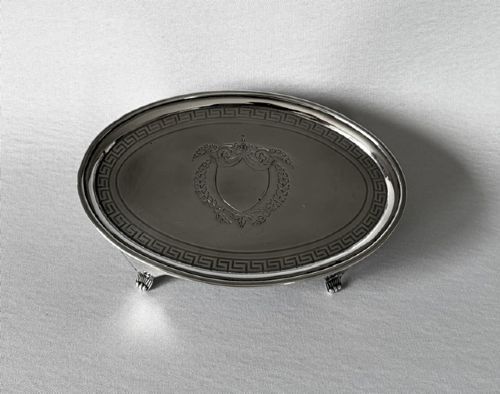
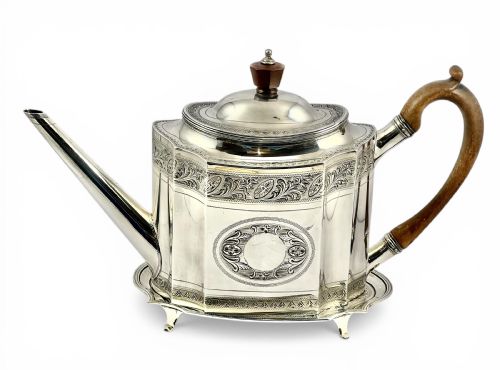
The pieces listed here include complete tea pots with their matching stands, as well as standalone pots in sterling silver. Makers from the Georgian era through to the Victorian revival employ the clean lines and symmetrical forms characteristic of the neoclassical style.
How they were made
Silversmiths construct these teapots using sterling silver, hammering, raising, and soldering the metal to achieve rigid geometric bodies. Handles frequently incorporate wood to insulate against heat while pouring.
Makers apply neoclassical motifs through chasing, engraving, or piercing, ensuring the ornamentation echoes classical friezes and urns. Associated stands are shaped to match the exact profile and footed base of the main vessel.
Wooden handles ensured that nineteenth-century hosts could pour afternoon tea without burning their fingers on classical dignity.
What varies in quality
Quality rests in the crispness of the classical ornamentation and the structural harmony between the teapot and its accompanying stand. Finer examples maintain sharp chased details and balanced proportions that reflect the rigorous standards of period silversmiths.
The integration of materials also defines the tier of a piece, particularly the secure fit of wooden elements and the weight of the sterling silver. Superior craftsmanship ensures the vessel remains both a balanced functional object and a refined decorative statement.
Robert Hennell I
The Neoclassical Silver Teapot Glossary
- Neoclassical
- A style drawing inspiration from the classical art and architecture of ancient Greece and Rome. It prioritises symmetry, straight lines, and classical motifs.
- Sterling silver
- An alloy of silver containing ninety-two point five percent silver and seven point five percent other metals, usually copper. This standard ensures durability while retaining a bright metallic lustre.
- Stand
- A supportive base plate designed to hold the teapot protecting table surfaces from heat. In period sets, the stand shares the exact decorative vocabulary of the pot.
Frequently Asked Questions
What is a neoclassical silver teapot?
A neoclassical silver teapot is a drinking vessel shaped by eighteenth and nineteenth century classical design principles. These pieces utilise sterling silver and often incorporate wooden handles.
They reflect the aesthetic of ancient architectural forms, bringing symmetrical lines and restrained ornamentation to tea service.
Why do some teapots include stands?
Stands were designed to hold the hot teapot safely above wooden tabletops and sideboards. They share the decorative style of the main vessel.
Matching stands complete the original tea service configuration and provide a stable base for the pot during use.
How do I date a silver teapot?
Dating relies on stylistic markers such as neoclassical proportions, alongside physical hallmarks stamped into the silver. These marks typically indicate the maker, town, and year of assay.
Georgian and Victorian examples exhibit distinct manufacturing techniques and decorative motifs typical of their respective eras.