


Silver Tea Service Piece
When you search for a silver tea service piece, you step into a tradition of formal hospitality shaped by centuries of British silversmithing.
Silver Tea Service Piece
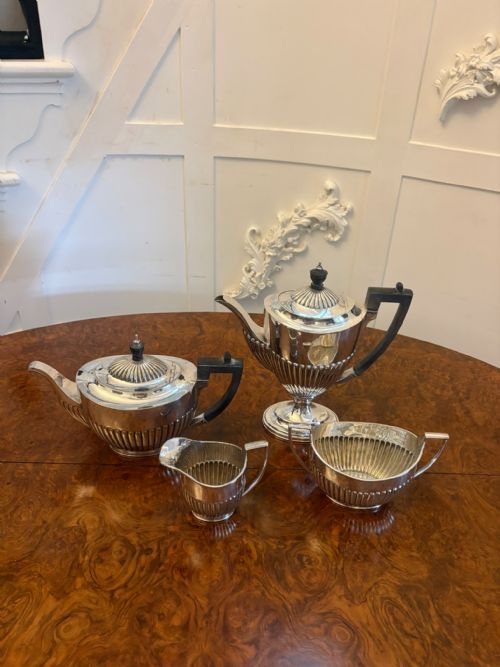
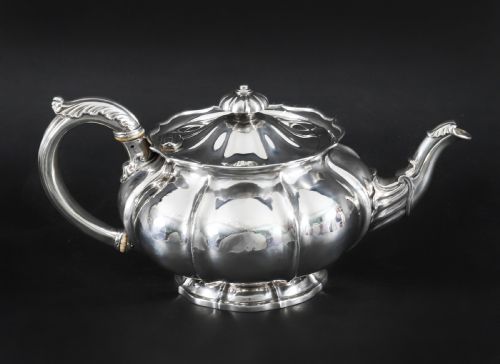
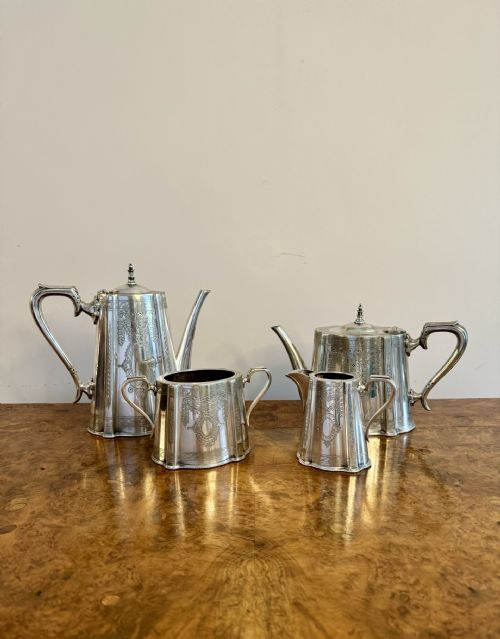
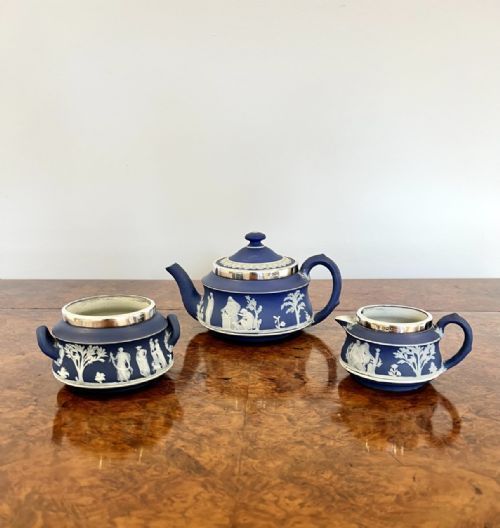
A silver tea service piece represents an individual component or a complete grouping designed for the historic ritual of serving tea and coffee. Buyers browsing this page will encounter everything from solitary cream jugs and teapots to multi-piece sets spanning the Georgian, Victorian, and Edwardian eras.
Pieces often arrive as part of larger suites comprising teapots, coffee pots, sugar bowls, and cream jugs, reflecting the formal dining habits of the nineteenth and early twentieth centuries.
Materials and Construction Methods
Craftsmen utilised sterling silver and electroplated nickel silver as the primary metallic foundations for these vessels, shaping them through traditional hammering, spinning, and casting techniques. Silver plate became widespread during the Victorian and Edwardian periods, offering the lustrous appearance of solid silver through an applied layer over a base metal.
Handles and insulators frequently incorporated contrasting elements such as ebonised wood, plain wood, ebony, and bone to prevent heat transfer during use. Decorative surface treatments included ornate chasing, repoussé work, and Neoclassical engraving to achieve the distinct styles of the Georgian, William IV, and Art Deco periods.
Silver Tea Service Piece Retail Price Guide 2026
Typical asking prices for silver tea service piece among the pieces listed under this phrase on Sellingantiques today, from the lower quarter to the upper quarter. They describe what is for sale here now, not the wider market.
Listings feature items spanning the Georgian era through to the late twentieth century, utilising both sterling silver and silver plate.
Distinctions in Quality
The standard of a silver tea service piece rests upon the weight of the metal, the crispness of the hand-chased detailing, and the integrity of the original construction. Heavier gauges of silver or thick silver plate indicate superior durability and a more substantial feel in the hand.
Maker attribution heavily influences desirability, with works from established workshops commanding attention for their refined proportions and careful balance. The retention of original fitted wooden cases and complete matching components further elevates the standing of a service.
Paul Storr·Walker and Hall·Wedgwood·Goldsmiths and Silversmiths Co·Elkington·Henry Clifford Davis·Barnard·A Davenport·Harrods·Harry Atkin
The Silver Tea Service Piece Glossary
- Sterling silver
- A silver alloy containing 92.5 percent pure silver and 7.5 percent other metals, usually copper, chosen for strength and workability.
- Silver plate
- A base metal, such as nickel silver, coated with a thin layer of pure silver using chemical or electrochemical processes.
- Repoussé
- A metalworking technique where the smith pushes the design out from the reverse side by hammering, creating low relief decoration.
- Chasing
- The complementary process to repoussé, executed from the front by hammering tools into the metal to sink the background and refine surface details.
- Baluster
- A curved, vase-like architectural form often utilised for the bodies of teapots, coffee pots, and jugs during the Victorian era.
Silver Tea Service Piece: Frequently Asked Questions
What is included in a standard tea service?
A standard service typically includes a teapot, a cream jug, and a sugar basin, forming the baseline of tea hospitality.
Larger configurations often expand to incorporate a matching coffee pot, a hot water kettle on a stand, and a serving tray.
How do I care for antique silver?
Antique silver requires gentle cleaning with non-abrasive polishes specifically formulated for silver to preserve the underlying metal and any fine chasing.
Storing pieces in dry, tarnish-resistant cloths helps maintain the finish between uses without wearing down the surface details.
How do I identify the date of a piece?
British sterling silver pieces carry official hallmarks stamped by an assay office, including symbols for the town, the standard, and a specific date letter.
Silver-plated items generally rely on maker marks, style characteristics, and registration numbers to narrow down their period of manufacture.