



Engraved Glass Jug
When you search for an engraved glass jug, you encounter nineteenth and early twentieth century vessels designed for serving wine, water, and claret.
Engraved Glass Jug
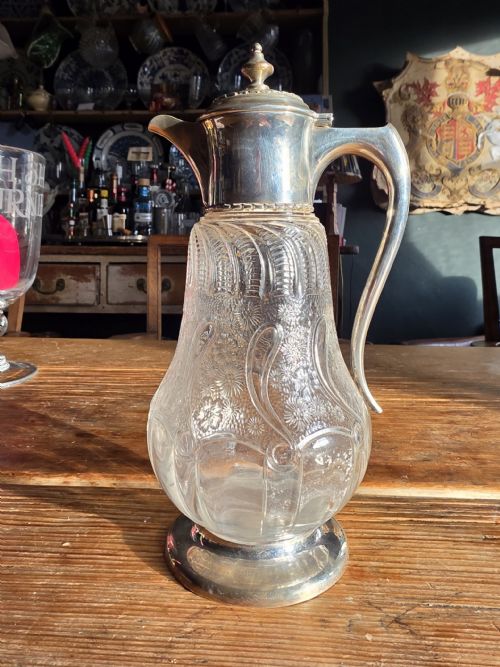
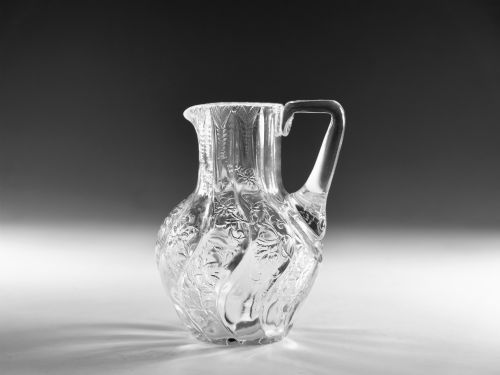
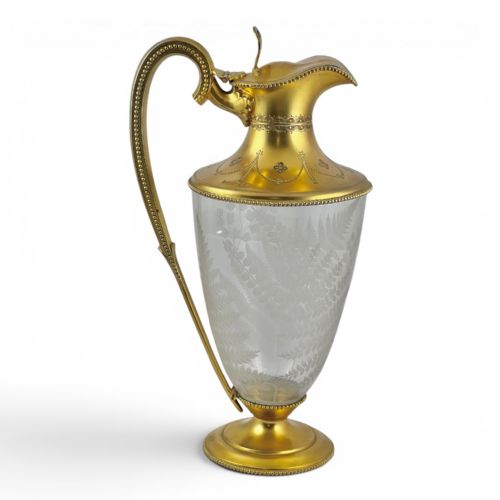
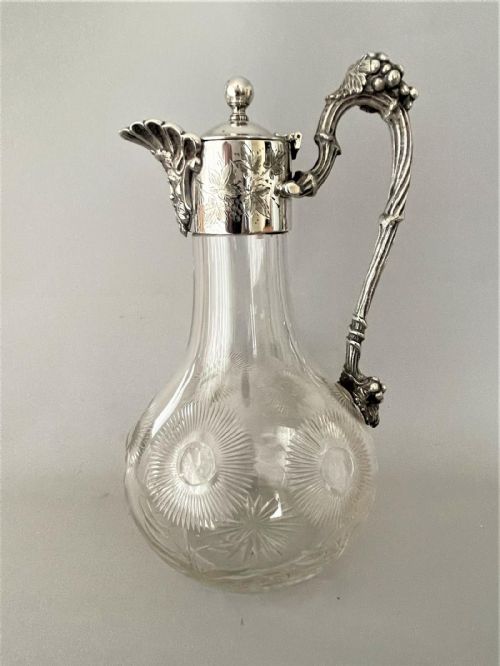
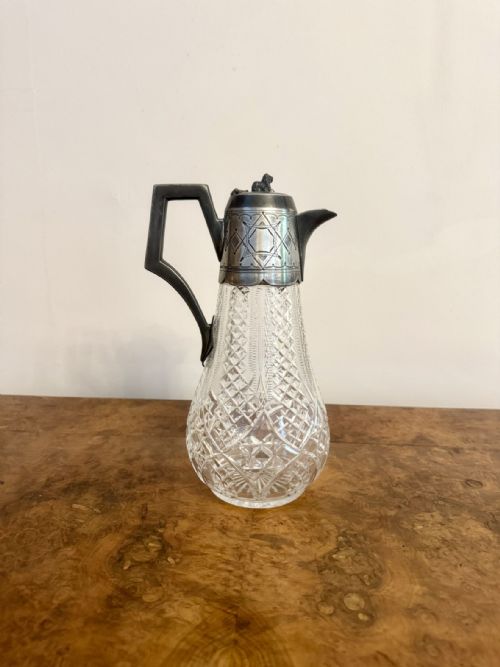
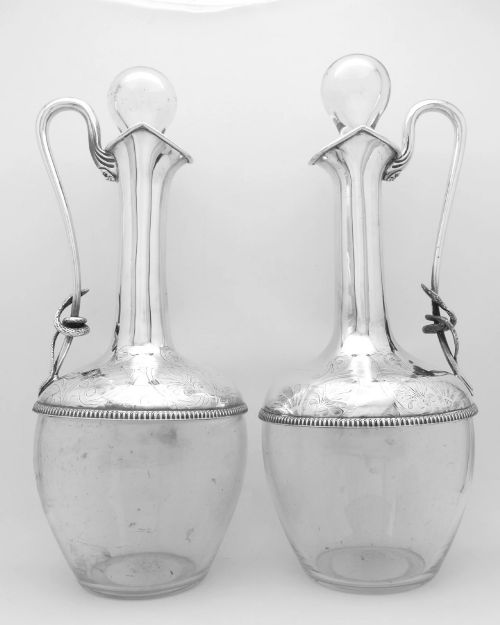
An engraved glass jug on this page typically takes the form of a nineteenth century Victorian claret jug, wine pitcher, or water ewer.
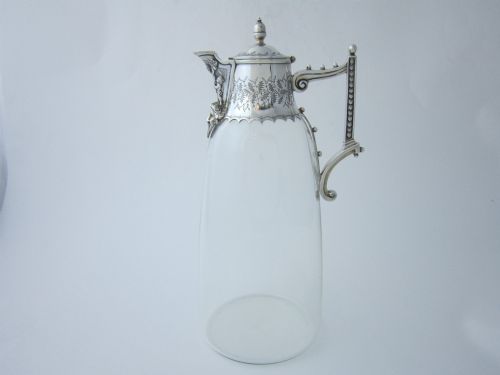
Makers shaped these vessels from lead crystal or coloured glass, frequently mounting them with sterling silver or silver plate hinged lids and handles.
The selections span from the 1860s through the Edwardian era, encompassing traditional English Stourbridge pieces and continental European designs.
Materials and Technique
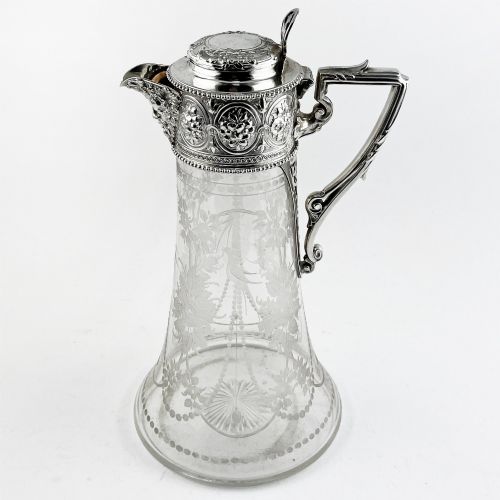
Craftsmen combined heavy lead crystal or cut glass bodies with cast and chased silver or silver-plated mounts, securing them around the neck.
The glass surface received hand wheel engraving, wheel cutting, or etching to depict floral garlands, fruiting vines, birds, and dolphins.
Several Victorian jugs feature Bacchus masks or mischievous dolphins peering out from the handle junctions to greet your guests.
Quality and Execution
Superior examples demonstrate deep, crisp wheel engraving on heavier crystal bodies, paired with fully hallmarked sterling silver mounts rather than silver plate.
The distinction lies in the fluidity of the hand-engraved motifs, such as detailed botanical subjects or animal figures, executed by skilled glass-cutters.
William Comyns·Asprey and Co. Ltd·Stevens and Williams·Webb Corbett·Richardsons·William Davenport·Lobmeyr·Thomas Webb·Robert Pringle·Whitefriars
The Engraved Glass Jug Glossary
- Claret jug
- A specialised pouring vessel created for serving red wine, usually featuring a glass body and a metal mount with a hinged lid.
- Lead crystal
- A high-clarity glass containing lead oxide, which increases weight and allows for deep, brilliant cutting and engraving.
- Stourbridge
- An English geographical centre renowned for glass production and skilled wheel engraving during the nineteenth century.
- Silver plate
- A base metal coated with a layer of silver, commonly utilised for the handles, collars, and lids of Victorian jugs.
- Intaglio
- A technique where designs are carved into the surface of the glass rather than raised above it, creating a sunken relief.
Engraved Glass Jug: Frequently Asked Questions
How do I clean an antique glass jug?
Wash the vessel by hand in warm soapy water using a soft bottle brush. Avoid harsh abrasives that might scratch the antique glass or damage the silver mounts.
Dry the metal and glass thoroughly immediately afterward to prevent water spots and tarnishing on the silver plate or sterling components.
Were these jugs used exclusively for wine?
While the majority served as claret jugs or dessert wine decanters during formal nineteenth century dining, many functioned as water pitchers or lemonade jugs.
Design variations, such as larger spouts or handled ewers, indicate whether a specific piece was intended for wine service or general table water.
How do I date an engraved glass jug?
Examine the metal mounts for hallmarks, which indicate the exact assay office and year of production for silver components. Stylistic clues in the glass engraving, such as Victorian floral motifs or Art Nouveau lines, help narrow down the decade.
Cut glass patterns and the weight of the lead crystal also provide strong indicators of whether a piece originates from the mid-nineteenth century or the Edwardian period.