


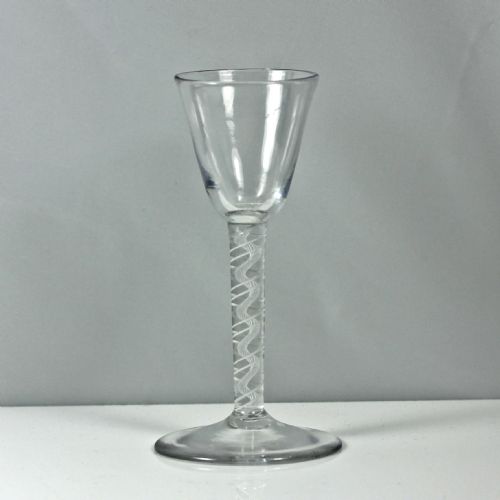

Engraved Crystal Wine Glass
An engraved crystal wine glass brings tactile history to the table, carrying centuries of wheel-cut ornament and spirited drinking traditions.
Engraved Crystal Wine Glass
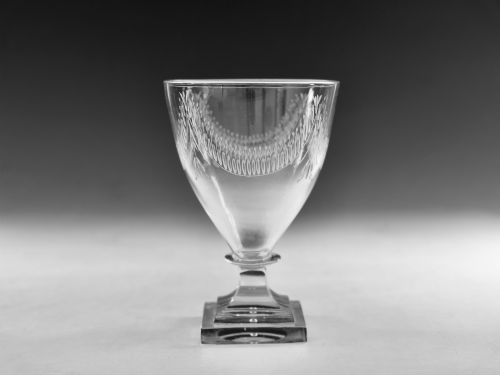
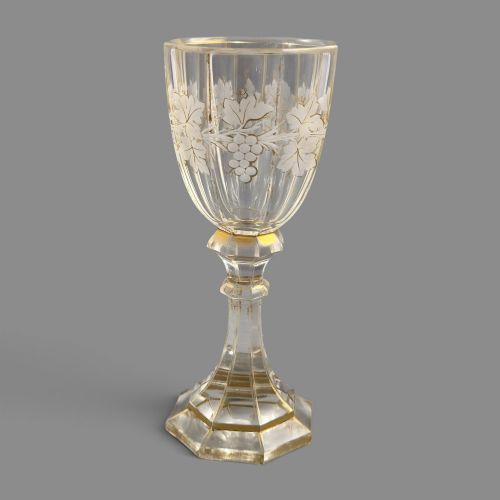
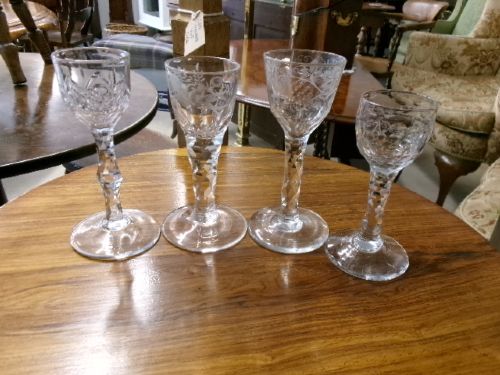
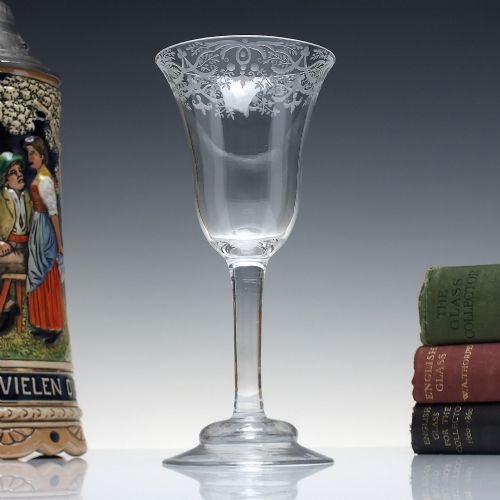
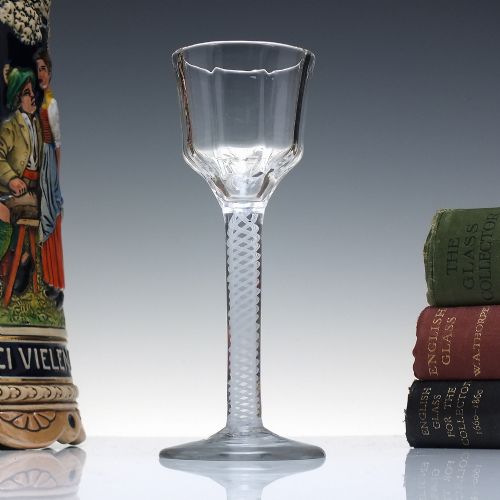
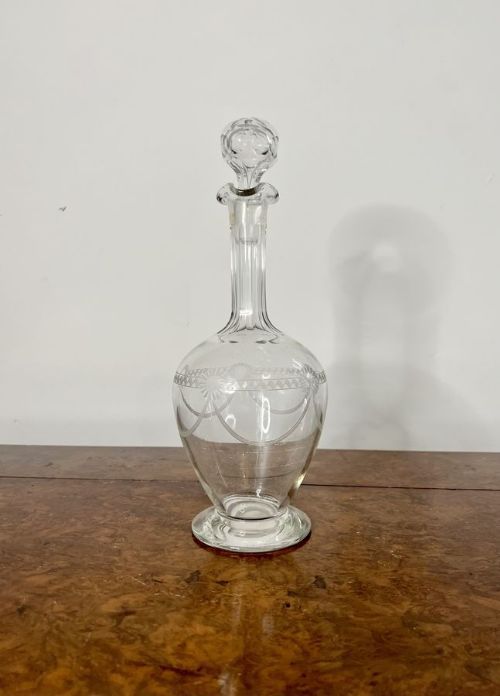
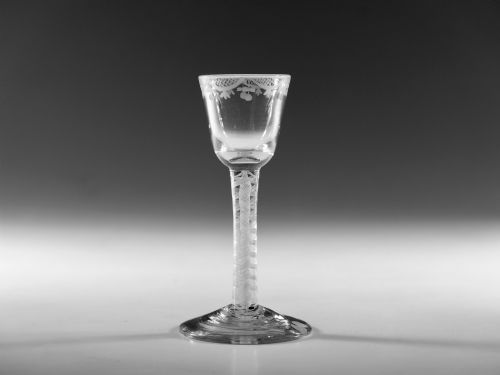
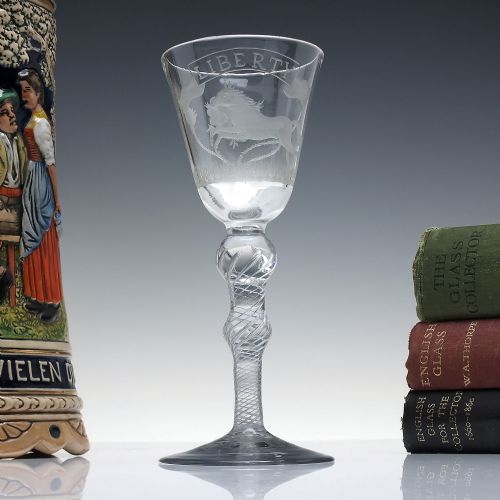
When you search for an engraved crystal wine glass, you encounter drinking vessels spanning the Georgian, Victorian, and Edwardian periods, alongside earlier eighteenth-century forms. These pieces include plain stem, facet stem, and air twist wine glasses, as well as larger rummers and goblets bearing wheel-cut floral, heraldic, or Jacobite motifs.
The version most commonly met on this page is the eighteenth-century English wine glass or nineteenth-century continental Römer, often characterised by lead glass or clear crystal bowls resting on decorated stems. Many examples display detailed engraving upon ogee, rounded funnel, or flared bowls.
Materials and Technique
Makers utilised lead glass and heavy crystal to achieve brilliant clarity and substantial weight, allowing deep optical effects when shaped by hand. Lead crystal provided the ideal malleable medium for both intricate wheel engraving and precise stem formations.
Craftsmen shaped the bowls and stems through hot-glass manipulation before cooling the vessels for cold-work decoration. Copper wheels and abrasive stones engraved delicate floral sprays, coats of arms, or political emblems directly onto the surface.
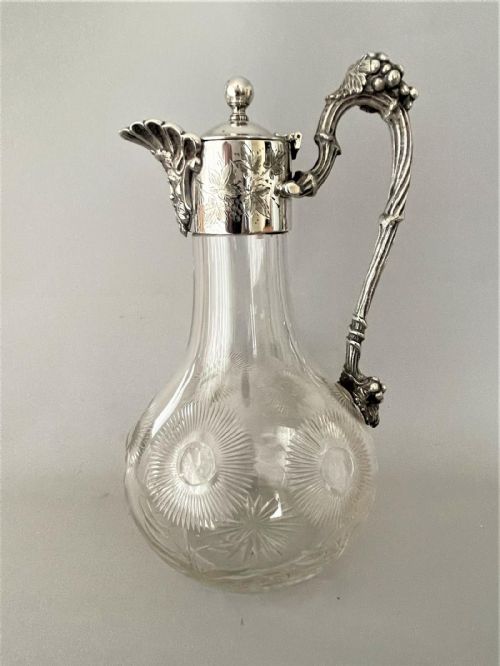
Listings span from the 18th Century through the Victorian and Edwardian eras, incorporating lead crystal, silver plate, and clear glass.
Evaluating Quality
Quality rests upon the crispness of the wheel engraving and the proportional balance between the bowl, stem, and foot. Superior examples display precise depth and control within the cutting, whereas lesser pieces show shallow, hesitant lines.
The purity and metal of the glass itself dictate the visual impact, with high-lead crystal offering superior resonance and light refraction. Additionally, historical significance, such as authentic Jacobite iconography or dated commemorative inscriptions, elevates certain vessels above standard tablewares.
Asprey and Co. Ltd·Moser Bohemian·Webb Corbett
The Engraved Crystal Wine Glass Glossary
- Lead Crystal
- Glass containing significant lead oxide, increasing density, clarity, and refractive index. This formulation allows for sharper wheel engraving and a resonant ring when struck.
- Air Twist
- A stem containing spiral threads of elongated air bubbles trapped within the glass. Makers achieved this effect by drawing and twisting heated cane containing internal air channels.
- Jacobite Glass
- An eighteenth-century drinking vessel bearing covert political symbols supporting the exiled Stuart dynasty. Common motifs include roses, oak leaves, and the 'Fiat' motto.
- Rummer
- A large, sturdy drinking glass introduced in the late eighteenth century for heavier wines, ale, or punch. These vessels typically feature capacious bowls on short stems with square or circular feet.
- Ogee
- An S-shaped curved profile forming the bowl of a drinking glass. This contour combines a concave lower section with a convex upper rim.
Engraved Crystal Wine Glass: Frequently Asked Questions
How do I identify an eighteenth-century wine glass?
Examine the stem construction and foot formation for period characteristics such as air twists, opaque twists, or heavy plain stems with folded feet. Pontil marks underneath the base indicate hand-blown manufacture before the widespread adoption of nineteenth-century machine grinding.
Look closely at the metal of the glass, which often exhibits the darker tone and weight typical of early lead formulations. The engraving style should match contemporary hand-wheel techniques rather than later acid-etching.
What distinguishes Jacobite engraving?
Jacobite glasses feature specific symbolic iconography intended to signal allegiance to the exiled Stuart kings without risking treason charges. Common elements include multi-budded roses, butterflies, and specific Latin inscriptions.
Authentic examples require careful attribution, as commemorative reproductions exist from later eras. The crispness of the wheel-cut details and the age of the underlying glass provide primary clues to authenticity.
Can I use antique crystal glasses for dining?
Many collectors regularly use eighteenth and nineteenth-century glassware for special occasions, provided they receive careful handling. Hand washing in warm water prevents thermal shock and protects fragile stems from modern dishwasher damage.
Avoid sudden temperature changes, such as pouring boiling liquids or placing glasses in refrigerators. Storing them upright on stable surfaces prevents rim chipping.
What is the difference between lead glass and crystal?
Historically, lead glass and crystal describe similar high-clarity compositions containing metallic oxides that increase weight and brilliance. Modern terminology often differentiates standard glass from heavy lead crystal based on specific oxide content percentages.
In antique pieces, heavier metal content usually indicates superior craftsmanship designed for detailed cutting and engraving. This composition allows the glass to hold sharper edges under the engraver's wheel.