
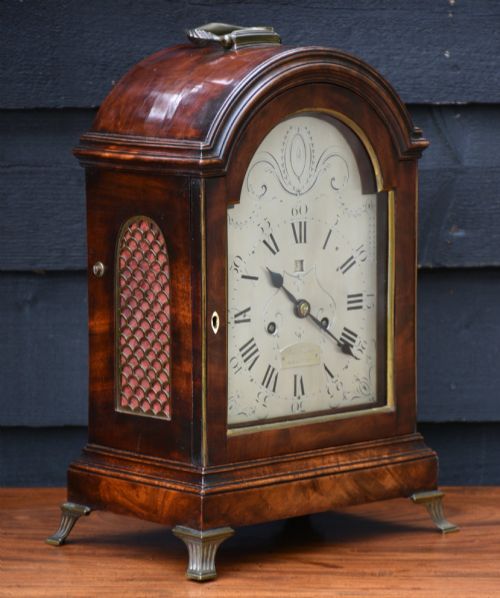
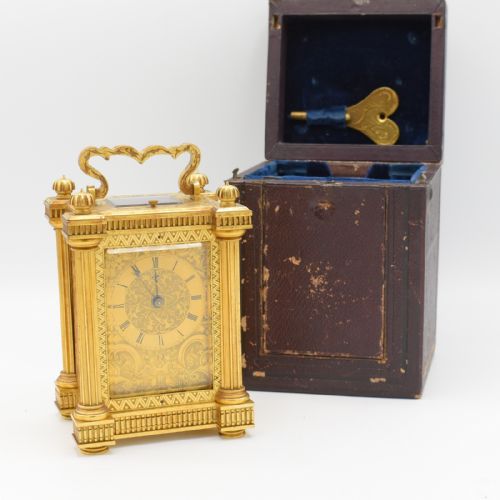


Engraved Brass Dial Clock
An engraved brass dial clock offers precision engineering encased in metal and glass, appealing to collectors who appreciate historic horology.

Engraved Brass Dial Clock
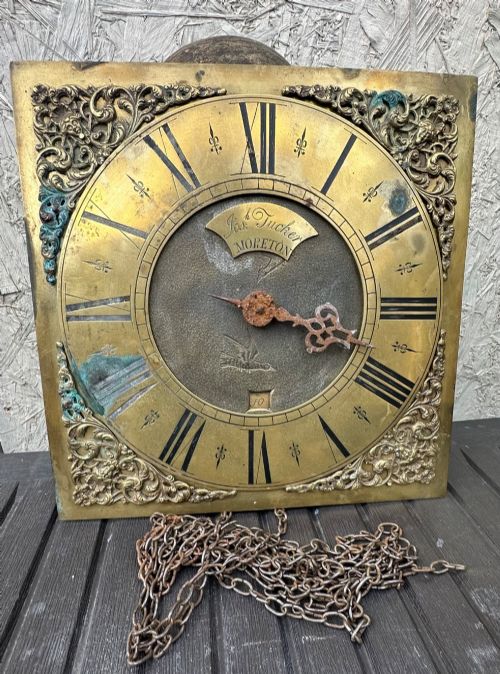
When searching for an engraved brass dial clock, buyers encounter timepieces ranging from eighteenth-century longcase dials and lantern clocks to nineteenth-century carriage clocks and mantel pieces.
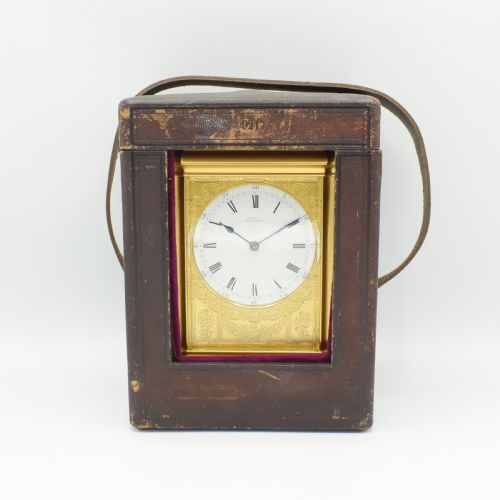
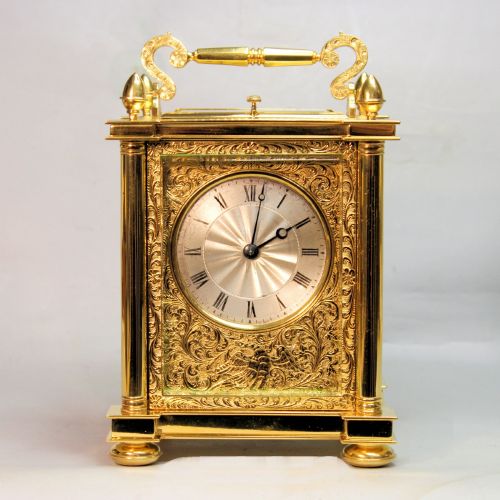
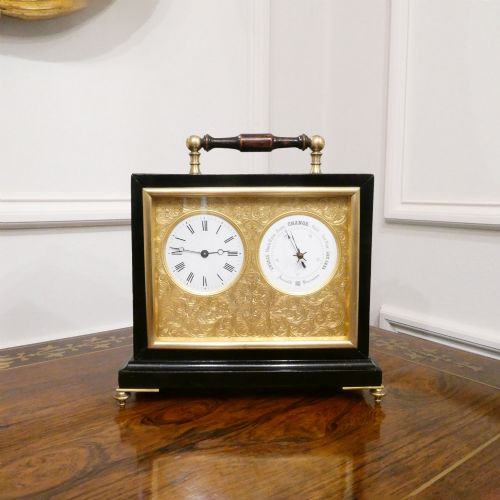
The most frequent examples on this page are French and English carriage clocks and bracket clocks housed in brass, gilt brass, or mahogany cases, often displaying intricate floral or geometric engraving on the dial and surrounding mask.
These items originate predominantly from Georgian, Victorian, and Edwardian periods, reflecting the domestic and travel timekeeping needs of past centuries.
Materials and construction
Clockmakers constructed these pieces using brass for the dials, movements, and frames, frequently pairing them with silvered metal details, glass panels, and steel components.
Cases incorporate timber such as mahogany, oak, and rosewood, alongside gilt brass and leather, whilst dials feature detailed hand engraving and enamel chapter rings.
Certain nineteenth-century French carriage clocks were specially manufactured for export to the Chinese market, featuring sweep seconds hands.
Evaluating craftsmanship and detail
Quality in an engraved brass dial clock rests upon the crispness and depth of the hand engraving across the dial plate and case, distinguishing individual artisan work from mass production.
The refinement of the interior movement, such as fusee mechanisms or platform escapements, and the preservation of original fire gilding or silvering determine the standing of the piece.
Cousens And Whiteside·Howell And James·Mappin And Webb·John Spershott·Margaine Of France·Delépine Barrois·Gontard And Bolviller·John Waller·Arnold And Frodsham·D Munsey·Ganthony·Thomas Cole·James Cole·Hunt And Roskell·Charles Frodsham·Holingue Frères·Drocourt·Paul Garnier·Tiffany·Frodsham And Baker·William Harley·Peerless·Mathias Bauerle·Standring Of Bolton
The Engraved Brass Dial Clock Glossary
- Fusee
- A conical pulley used in older clocks to maintain even power as the mainspring unwinds. This mechanical device ensures consistent timekeeping accuracy throughout the running cycle.
- Carriage clock
- A portable spring-driven timepiece designed for travel during the nineteenth century. These clocks typically feature brass and glass cases with folding handles.
- Lantern clock
- An early domestic brass chamber clock of the seventeenth and eighteenth centuries, driven by weights and cord. They feature distinctive strapped frames and bell tops.
- Escapement
- The mechanism inside a clock that controls the release of gear train energy to regulate the movement. Common variations include platform and anchor designs.
- Bracket clock
- A portable table clock originally built with a sturdy bracket for support. Later examples retained the architectural form without needing wall mounting.
Engraved Brass Dial Clock: Frequently Asked Questions
How do I wind a carriage clock?
Most carriage clocks use a dedicated winding key inserted into the backplate to tension the mainspring barrels. Care must be taken not to overwind the mechanism.
Moving the hands should be done gently and strictly in the direction indicated by the manufacturer to avoid damaging the delicate escapement.
What is a fusee movement?
A fusee is a conical pulley connected to the mainspring by a fine chain or cord. It compensates for the decreasing power of the spring as it unwinds.
This clever mechanical adaptation delivers constant force to the gear train, resulting in superior timekeeping performance across the duration of the run.
Where were carriage clocks used?
Carriage clocks were originally built for wealthy travellers navigating nineteenth-century rail and coach networks. Their robust brass frames and protective leather cases suited transit.
Over time, they transitioned from travel accessories to fashionable mantel ornaments displayed in drawing rooms and libraries.