


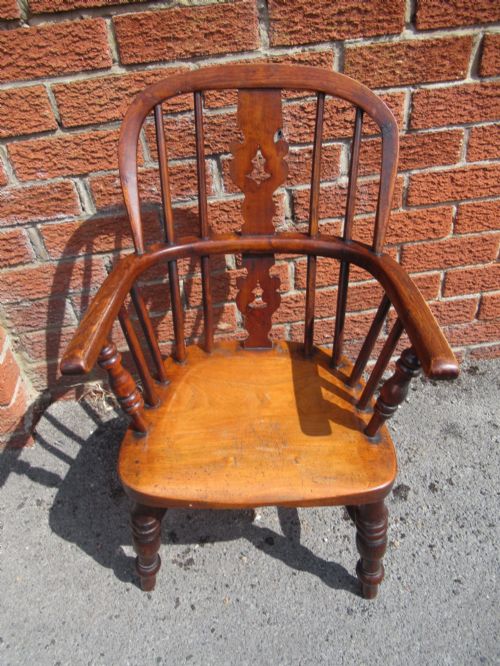
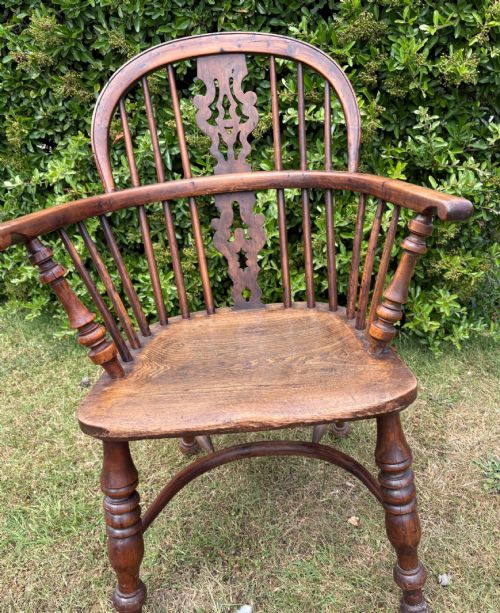
English Yew Wood Armchair
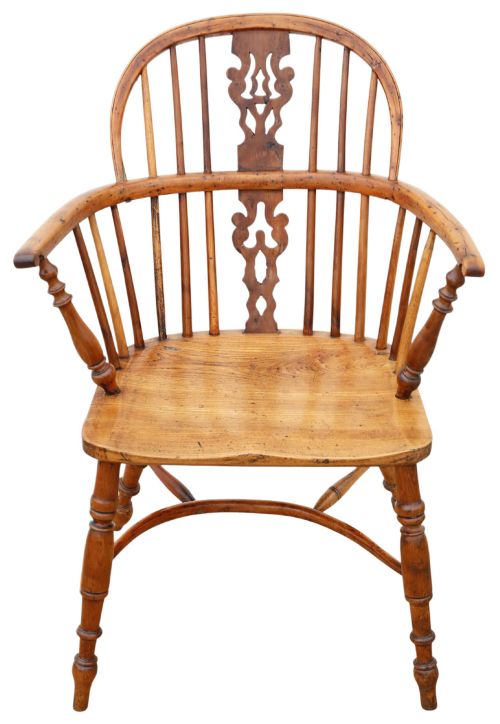
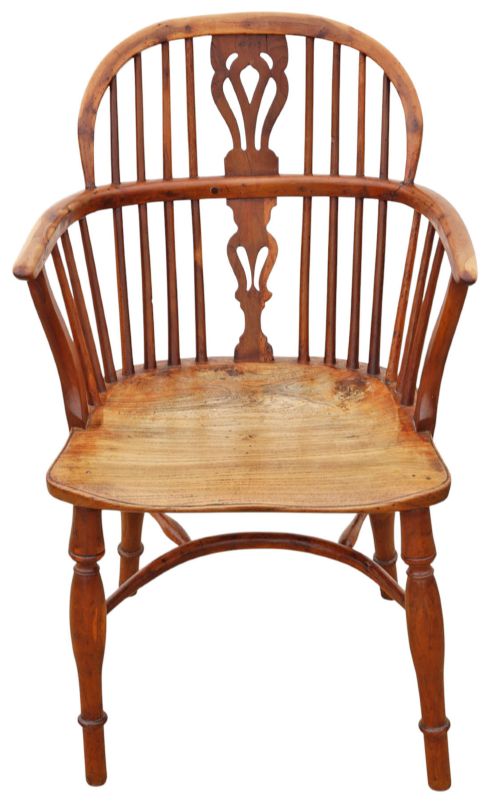
An English yew wood armchair brings the rich grain and sturdy comfort of vernacular seating straight into a modern room.
English Yew Wood Armchair
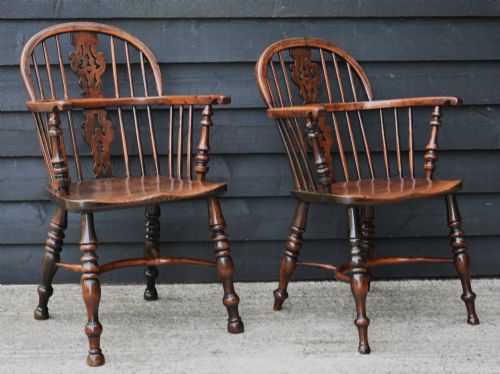
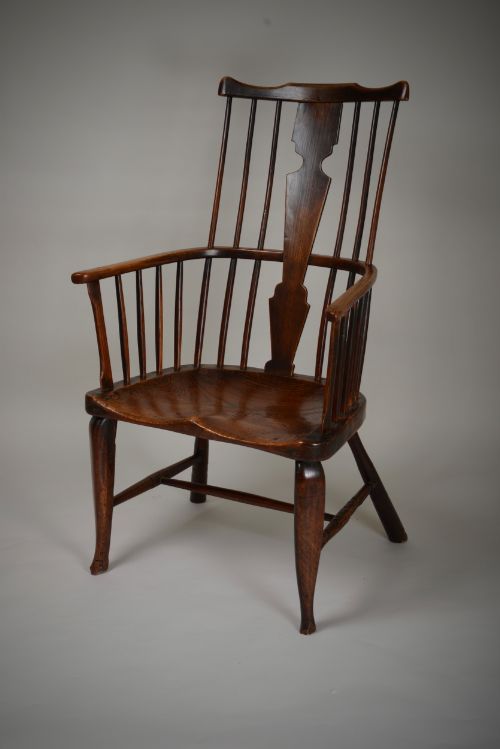
An English yew wood armchair is a traditional form of seating rooted in provincial cabinet making and country house interiors. The pieces gathered here belong predominantly to the nineteenth and eighteenth centuries, spanning Georgian and Victorian eras.
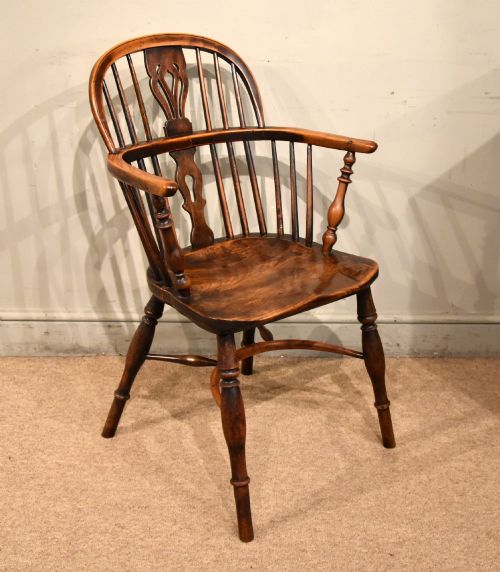
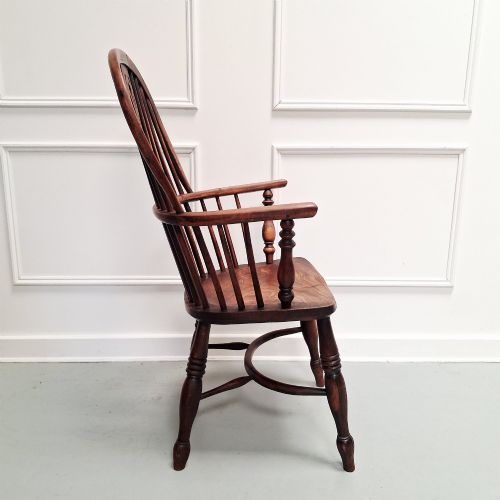
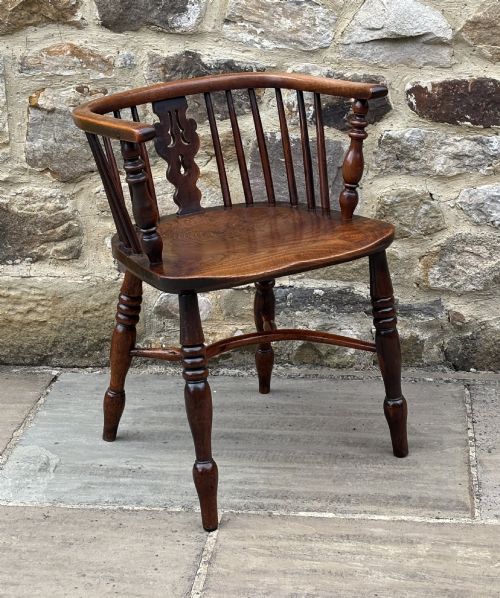
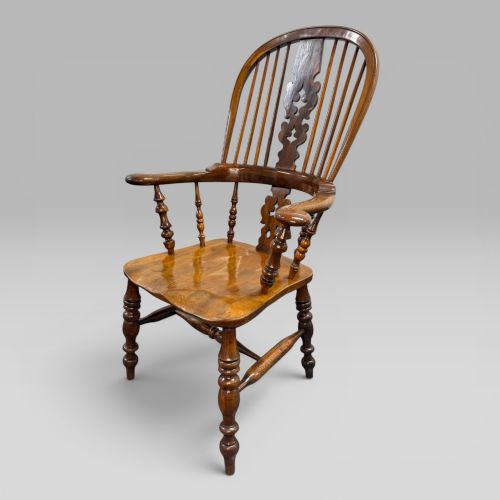
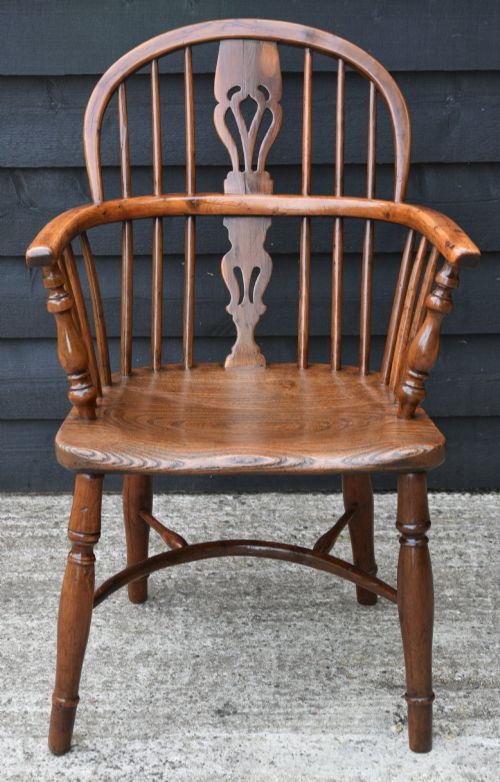
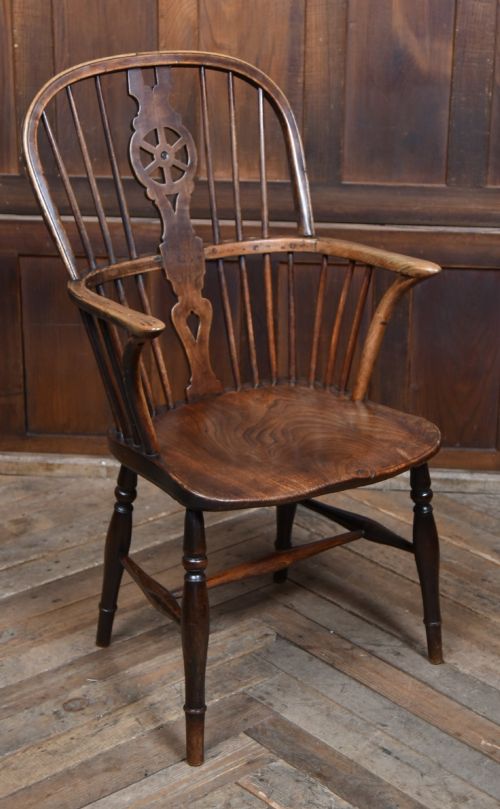
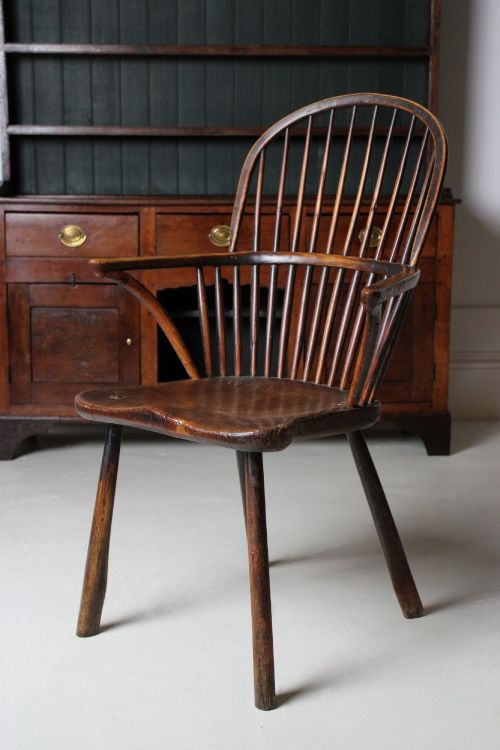
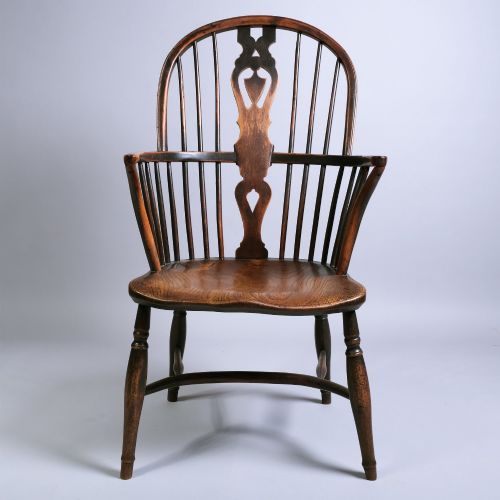
Most examples function as Windsor chairs, incorporating arched hoop backs, comb backs, or low backs alongside sturdy arm rests. Buyers frequently encounter mixed timber constructions where yew meets elm or ash.
Regional styles such as Thames Valley and Worksop types appear among the selections, alongside simpler farmhouse and country vernacular forms. These chairs serve comfortably as desk chairs, fireside seats, or standalone statements.
How They Were Made
Maker's workshops built these chairs using a combination of turned spindles and solid plank seats. Yew wood provides rich figured grain for the upper parts and comb backs, while elm frequently forms the substantial contoured seat.
Additional timbers such as ash, beech, and oak support the structural framework, legs, and crinoline stretchers. Steam bending shapes the distinctive hoop backs and continuous arms into ergonomic curves without joining points.
Materials recorded across the selection include figured yew, elm, ash, beech, and oak, frequently combined within a single Windsor chair.
What Varies in Quality
Quality rests in the choice and figure of the timber, particularly the depth of the yew grain and the width of the elm seat plank. Richly figured burr yew splats and clean turning on the legs distinguish finer workshop output.
Structural integrity and proportions dictate desirability, with balanced hoop backs and crisply turned crinoline stretchers elevating a piece. Stamped maker marks from regional workshops add documentary interest to individual chairs.
J SPENCER·Gabbitass Worksop·John Brand of Sleaford
The English Yew Wood Armchair Glossary
- Windsor chair
- A wooden chair built with a thick solid seat into which the legs and back spindles are separately bored. This construction method defines the vernacular tradition.
- Comb back
- A chair back style where vertical spindles rise through a horizontal crest rail, resembling the teeth of a comb. This form is typical of eighteenth-century examples.
- Hoop back
- A continuous bentwood rail forming the arms and back of an armchair in one sweeping curve. It provides considerable strength through its unbroken grain.
- Broad arm
- A Windsor chair featuring widened, flat wooden armrests designed for writing or comfort. These generous arms are carved directly from solid timber.
English Yew Wood Armchair: Frequently Asked Questions
How do I identify a yew wood armchair?
Look closely at the timber grain, which typically displays rich reddish-brown tones interspersed with dark knots and pale sapwood. Yew possesses a distinct warmth and heavy figure that separates it from standard fruitwood or pine.
Check the construction beneath the seat to confirm mixed timbers, as makers frequently paired yew upper sections with sturdy elm or ash components.
What is a crinoline stretcher?
A crinoline stretcher is a bowed under-framing rail that connects the legs of a chair and arches towards the back. It reinforces the leg joints against lateral movement.
This feature helps date traditional seating, appearing commonly on eighteenth and early nineteenth-century examples.
Are these chairs comfortable for daily use?
These chairs feature sculpted wooden seats shaped to fit the body through deep dishing. Their sturdy vernacular construction makes them practical for sitting at a desk or table.
Adding a loose cushion provides extra padding while preserving the exposed wood grain of the seat.
How do I tell regional styles apart?
Regional variations often appear in the turning of the spindles and the profile of the backrest. Thames Valley examples tend to show refined lines and figured yew backs.
Other variations, such as those from Worksop, display characteristic local turning patterns on the legs and arm supports.