

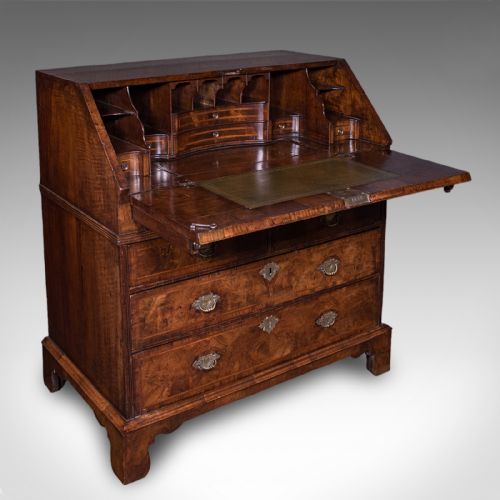


English Walnut Writing Desk
An English walnut writing desk brings deep grain and domestic history to a room, ranging from early bureau bookcases to compact Victorian slopes.
English Walnut Writing Desk
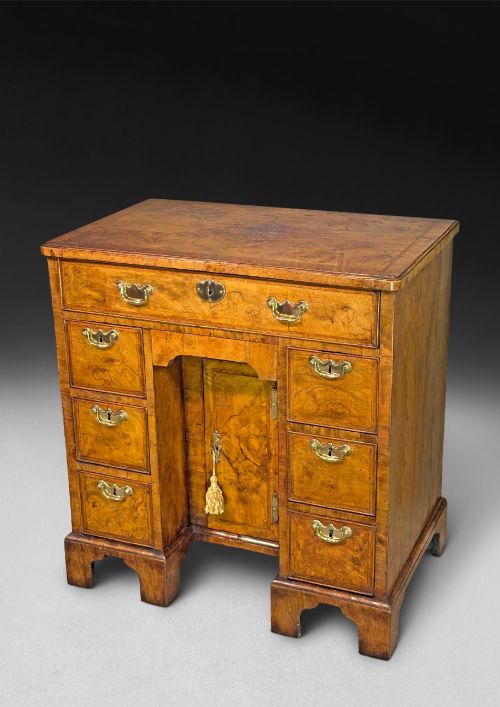
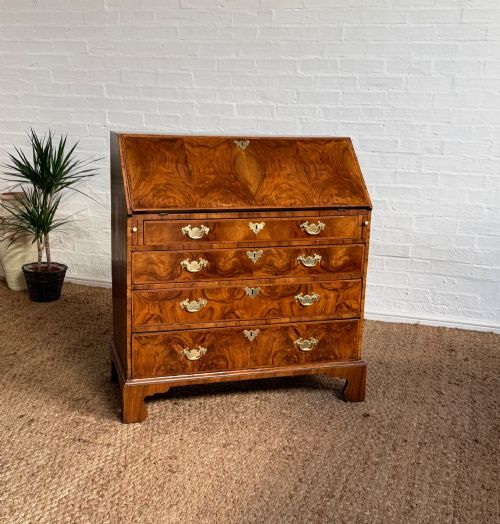
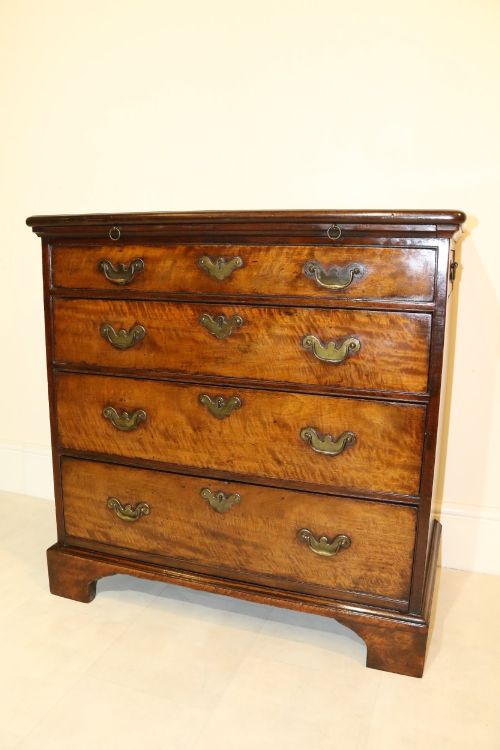
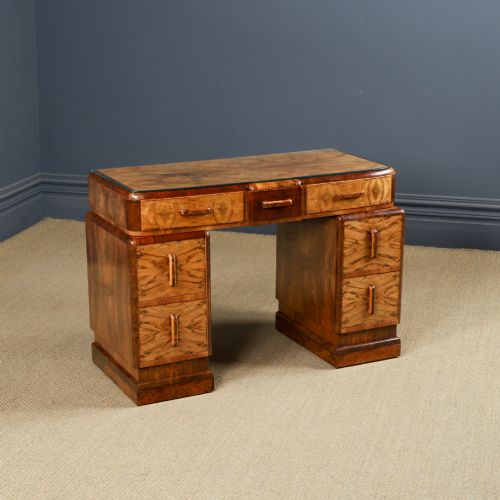
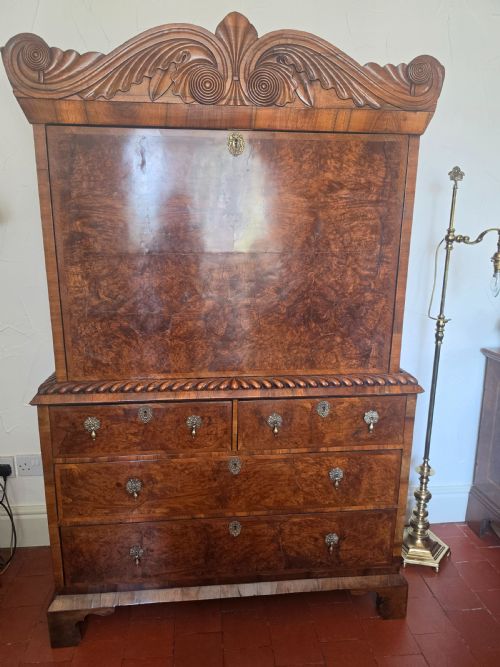
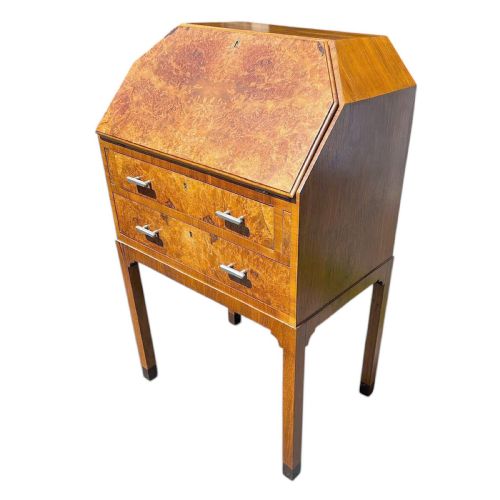
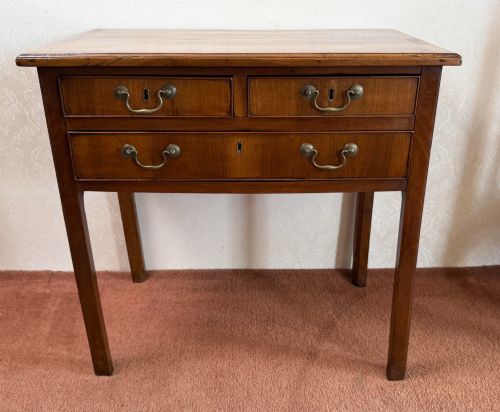
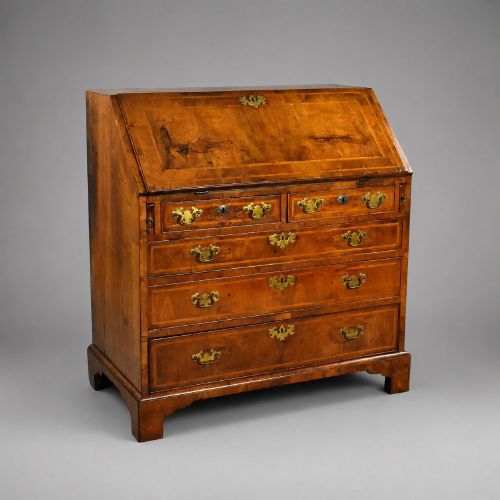
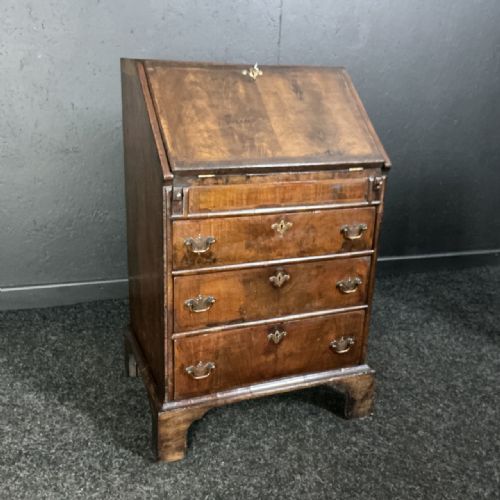
An English walnut writing desk encompasses diverse forms including fall-front bureaux, kneehole desks, pedestal office tables, and portable writing slopes. Buyers seeking an english walnut writing desk will find examples spanning the William and Mary, Queen Anne, Georgian, Victorian, and Art Deco periods.
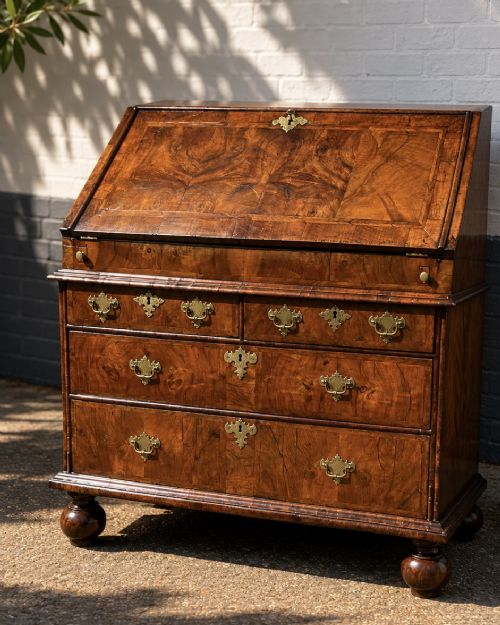
The selection ranges from tall bureau bookcases with fitted interior compartments to lowboys and kidney-shaped library tables. Burr walnut and figured grain veneers dominate the surface appearance across centuries of domestic workspace design.
How They Were Made
Cabinetmakers utilised solid walnut and decorative veneers laid over secondary timbers such as oak, applying brass hardware for hinges, escutcheons, and campaign mounts. Interior writing surfaces frequently incorporated inset panels of leather.
Construction methods evolved from early dovetail joints and fall-front mechanisms on seventeenth and eighteenth-century pieces to pedestal framework and internal stationery compartments in later Victorian and Art Deco editions.
Some nineteenth-century writing slopes conceal secret compartments accessed by lifting hidden floorboards inside the stationery well.
What Varies in Quality
The selection of timber grain defines visual hierarchy, with heavily figured burr walnut commanding attention through complex natural patterning across large expanses. Crispness in cabinetmaking joinery and the survival of original patination separate standard examples from finer commissions.
Internal complexity also marks gradation, where fitted pigeonholes, secret drawers, and coordinated brass mountings indicate the original maker's investment of labour and material quality.
Druce & Co·James Shoolbred·Maple & Co·Mappin & Webb·Angus of London
The English Walnut Writing Desk Glossary
- Burr walnut
- A veneer sliced from the knotty growth of a walnut tree, yielding swirling, highly decorative grain patterns. This material was frequently utilised on the primary surfaces of formal Georgian and Victorian cabinetry.
- Bureau
- A desk featuring a sloping fall-front that opens to reveal internal compartments and a writing surface. Early forms often sit atop a chest of drawers or a kneehole base.
- Kneehole desk
- A compact desk featuring a central recessed space for the user's legs, flanked by pedestals of small drawers. This form is common in George I and Georgian examples.
- Writing slope
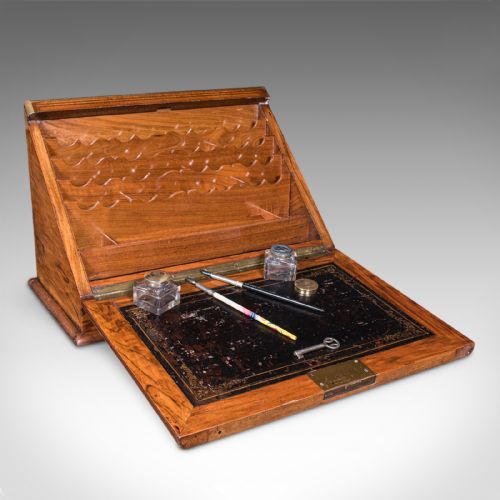
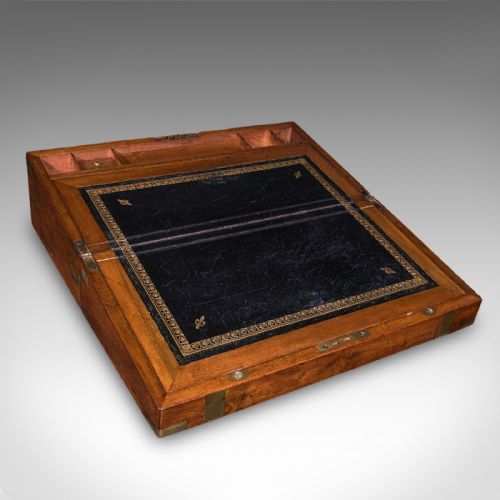
- A portable box with an angled lid that folds flat to provide a writing surface and interior storage for paper and ink. These boxes often feature brass inlays or campaign mounts.
- Escritoire
- A tall cabinet or writing chest with a fall-front writing flap, associated with late seventeenth-century William and Mary design. They provide substantial vertical storage alongside a fold-down desk surface.
English Walnut Writing Desk: Frequently Asked Questions
How do I date a walnut bureau?
Cabinet construction details, such as hand-cut dovetails, secondary oak timbers, and brass hardware styles, provide clear chronological markers for eighteenth and nineteenth-century pieces.
Changes in interior drawer configuration and the presence of crossbanding or burr walnut veneers further distinguish early George I examples from later Victorian revivals.
What is a kneehole desk?
A kneehole desk is a flat-topped writing table with a central recessed opening flanked by banks of small drawers, designed for seated work.
Georgian and Queen Anne versions often feature figured walnut veneers and a concealed central drawer containing a small cupboard door.
How do I care for walnut veneer?
Walnut veneer benefits from stable room humidity and protection from direct sunlight to prevent timber drying and surface fading.
Periodic application of appropriate wax polish maintains the natural patina without sealing the historic wood pores.
What is a writing slope used for?
A writing slope served as a portable desk for correspondence, holding paper, ink wells, and pens within an internal compartment beneath an angled hinged lid.
Victorian and Regency travellers utilised these wooden boxes on tables or while travelling to maintain a firm writing surface.