


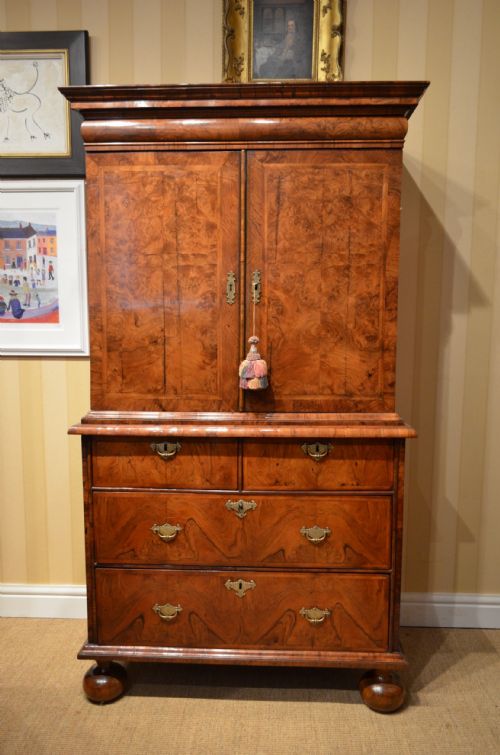


English Walnut Cupboard
When you search for an English walnut cupboard, you enter a world of timber and polish spanning from seventeenth-century masterworks to art deco cocktail units.
English Walnut Cupboard
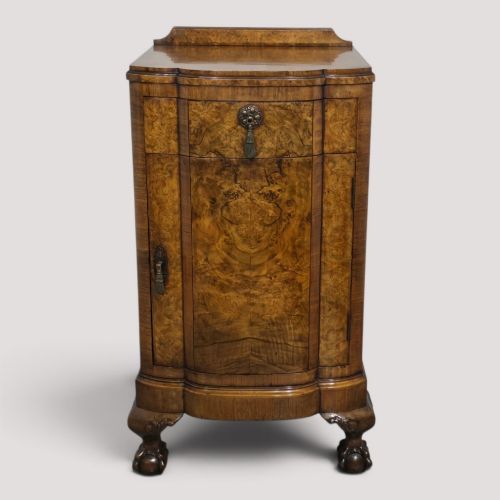
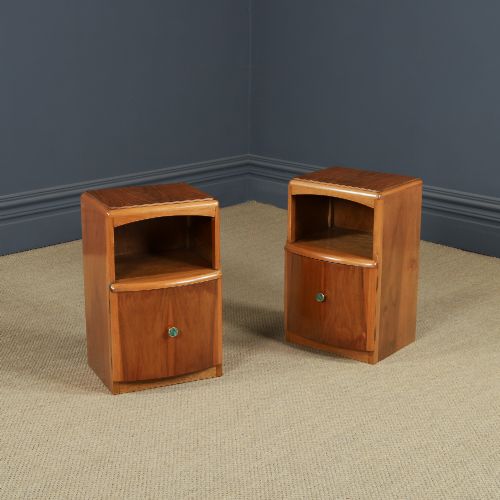
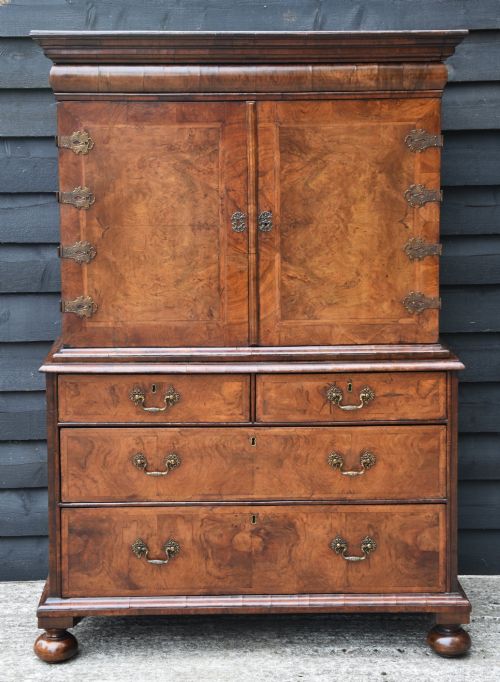
An English walnut cupboard encompasses a broad lineage of domestic storage, ranging from towering seventeenth-century cabinets on chests to compact art deco bedside tables. Walnut serves as the primary medium across these forms, frequently selected for its rich grain and warmth in domestic interiors.
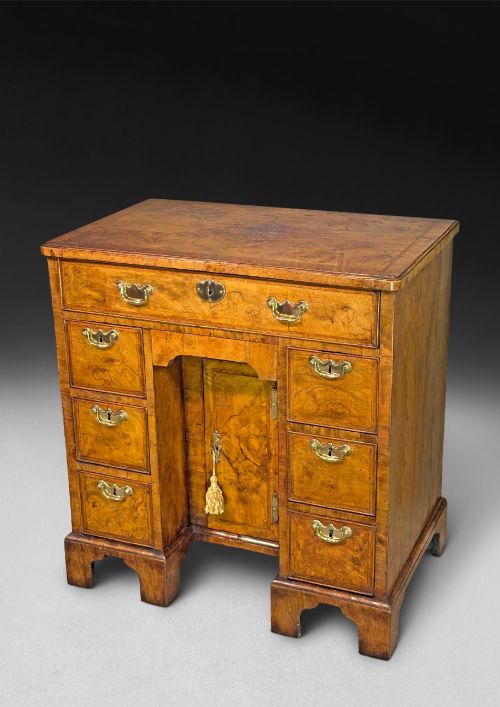
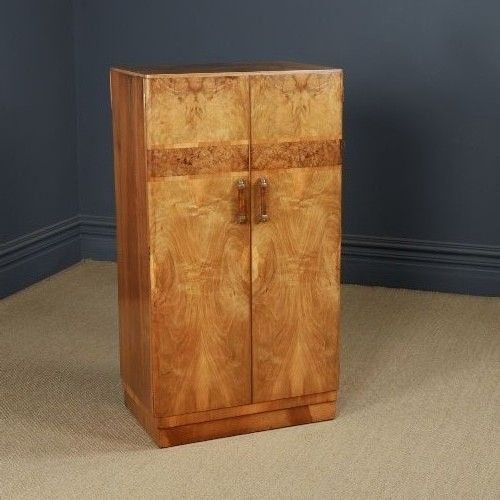
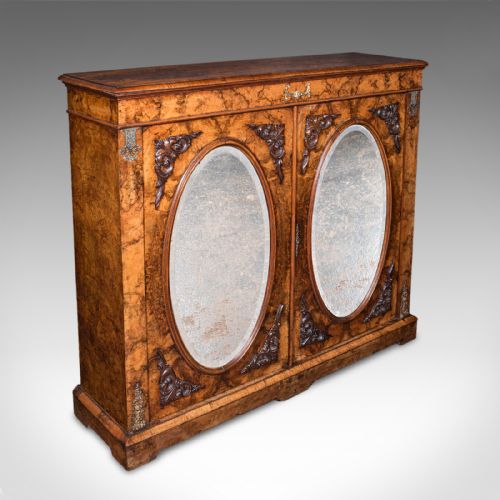
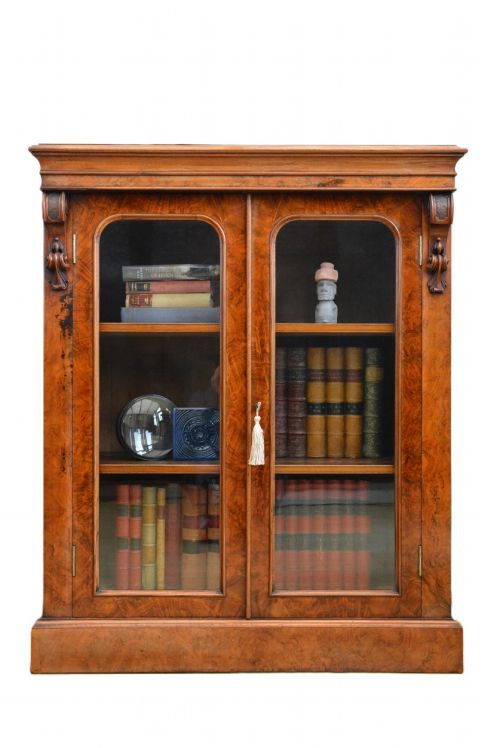
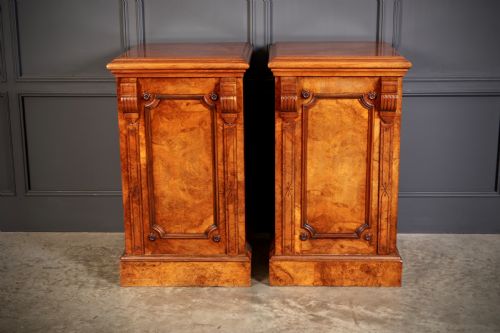
The versions most commonly encountered on this page stretch from early Georgian corner cupboards and kneehole desks to Victorian pier cabinets and glazed bookcases. Makers across the centuries adapted this dense timber into music cabinets, linen presses, and cocktail chests to suit changing household needs.
Materials and Construction
Cabinet makers utilised solid walnut and decorative veneers like burr and figured walnut, often laid over secondary woods such as oak or pine. Brass hardware, glass panels, and occasional ormolu or boxwood inlay completed the construction of these pieces.
Joinery techniques evolved from early joined frameworks and oyster-cut veneers on seventeenth-century stands to the curved lines and smooth surfaces seen on art deco pieces from the nineteen-thirties.
Listings feature walnut furniture spanning from the seventeenth century through the Victorian era to nineteen-thirties art deco designs.
Judging Quality in Walnut
Quality rests in the selection of the timber, where dense, lively burr or figured walnut displays superior depth compared to plain boards. The precision of the veneer work and the integration of secondary timbers dictate the integrity of the piece.
The refinement of original brass fittings, the clarity of glass panels, and the subtlety of boxwood inlay distinguish workshop standards across periods from William and Mary to the twentieth century.
Druce and Co·Thurston·Epstein
The English Walnut Cupboard Glossary
- Burr walnut
- A prized timber harvested from tree growths, yielding intricate, swirling grain patterns. It was heavily utilised on veneers for high-status cabinets.
- Pier cabinet
- A low display cupboard designed to fit the wall space between windows. These pieces often feature glass doors and internal shelving.
- Cabinet on chest
- A tall storage form consisting of an upper enclosed cupboard resting upon a lower chest of drawers. This format dates back to the seventeenth century.
- Kneehole desk
- A compact desk featuring a central recess for the knees flanked by banks of small drawers. Early examples frequently employ figured walnut facades.
English Walnut Cupboard: Frequently Asked Questions
What is an English walnut cupboard?
An English walnut cupboard is a domestic storage piece constructed using walnut timber, spanning forms from seventeenth-century cabinets on stands to nineteen-thirties art deco cocktail chests.
These items range in scale from tall bookcases and linen presses to compact bedside tables and corner cupboards.
How do I date an antique walnut cupboard?
Dating relies on observing structural characteristics, hardware styles, and timber preparation methods specific to eras like the Georgian or Victorian periods.
Joinery techniques and decorative treatments, such as boxwood inlay or oyster veneering, provide clear chronological markers.
Where were these cupboards used in the home?
Walnut cupboards served varied domestic functions, appearing in morning rooms as book cabinets, bedrooms as wardrobes and nightstands, and drawing rooms as pier displays.
Specialist pieces like music cabinets and server units also found places in formal entertaining spaces.
How do I care for antique walnut furniture?
Maintenance involves keeping walnut pieces away from direct heat sources and strong sunlight to prevent the timber and delicate veneers from drying out.
Routine dusting with a dry cloth and occasional application of appropriate wax help preserve the polished finish.