
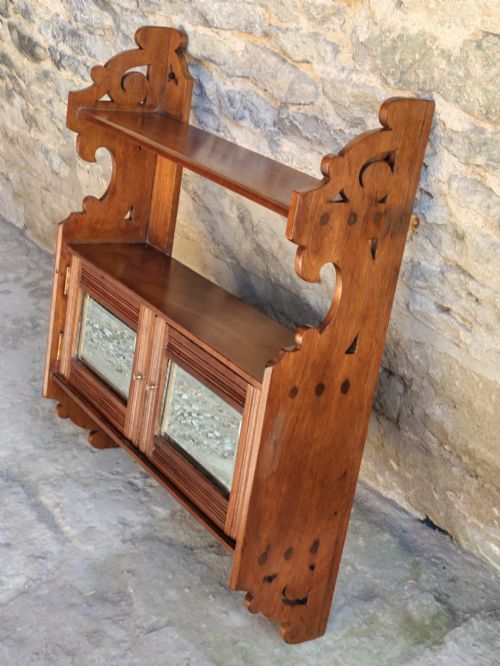


Carved Walnut Wall Cupboard
A carved walnut wall cupboard brings rich timber grain and period character straight to a room, offering compact storage that keeps surfaces clear.
Carved Walnut Wall Cupboard
A carved walnut wall cupboard encompasses hanging cabinets, corner cupboards, and regional panetières spanning the eighteenth century through the Edwardian era. Buyers examining this category will most frequently encounter Victorian examples alongside eighteenth-century French and Georgian forms.
The selection ranges from small lockable burr walnut table cabinets to large Gothic Revival breakfront bookcases and aesthetic movement hanging cabinets. Construction formats vary between single door wall units, two-door configurations, and corner models designed to utilise room angles efficiently.
How they were made
Makers utilised walnut and burr walnut as the primary timber, often combining brass, glass, iron, and metal fittings for hinges, locks, and glazing bars. Carving defines the surface ornamentation, appearing alongside turned finials and serpentine fronts on regional French and English pieces.
Structural integrity relies on traditional joinery suited to wall-mounted or corner furniture, incorporating shelves and lockable doors to secure contents. Glazed panels and open display sections appear alongside solid timber doors depending on whether the piece functions for storage or display.
Several French panetières retain their original turned finials designed centuries ago to keep household baguettes safe from wandering paws.
What varies in quality
Quality rests upon the crispness of the timber carving and the selection of figured walnut or burr walnut veneers. Pieces with pronounced grain patterns and intricate relief work sit at the higher end of the range compared to plain timber surfaces.
The sophistication of original hardware, such as brass hinges and working locks with keys, distinguishes finer examples. Proportions and the integration of regional decorative elements, like turned finials or serpentine shaping, determine the overall refinement of the cabinet.
The Carved Walnut Wall Cupboard Glossary
- Panetière
- A traditional French food storage cabinet, specifically designed for bread, featuring turned spindles or pillars. These pieces originate most commonly from the eighteenth century.
- Burr walnut
- A timber harvested from the burl growth of a walnut tree, highly prized for its swirling, mottled grain patterns. It is frequently utilised for decorative veneer on cabinet doors.
- Breakfront
- A cabinet design where the central section projects forward from the flanking wings. This architectural form appears on larger bookcases and display units.
- Serpentine front
- A furniture front surface curved in a wave-like shape with a convex centre flanked by concave ends. This contour adds movement and visual depth to eighteenth-century designs.
- Gothic Revival
- A nineteenth-century architectural and decorative style drawing inspiration from medieval forms. Pieces display characteristic pointed arches, tracery, and heavy carved details.
Carved Walnut Wall Cupboard: Frequently Asked Questions
Were all walnut wall cupboards used for bread?
Only specific regional French forms, known as panetières, served primarily for storing bread away from household pests. Other variations functioned as general display cabinets, corner storage units, or bookcase wall cabinets.
Examining the door construction and interior shelving helps determine the original intended purpose of the specific cabinet. Spindled or ventilated panels typically indicate food storage use, while glazed doors signal display.
How do I tell an 18th-century piece from a Victorian one?
Eighteenth-century examples often feature regional French or Georgian vernacular styles with hand-carved details and distinctive serpentine shaping. Victorian pieces frequently display heavier revival styles, machine-assisted construction elements, or aesthetic movement influences.
Timber preparation, patination, and secondary woods used in the interior carcass also provide clear indicators of period origin. Comparing the hardware style against known historical periods confirms the dating.
Can I store heavy books in a wall cabinet?
Wall cabinets are generally built for lighter display items, small ornaments, or tableware rather than heavy libraries. Checking the depth of the shelves and the strength of the interior supports is essential before loading heavy objects.
Breakfront bookcases and larger cabinets offer greater structural capacity than small hanging wall cupboards. Overloading antique shelving can cause sagging or damage to historic timber fixings.