



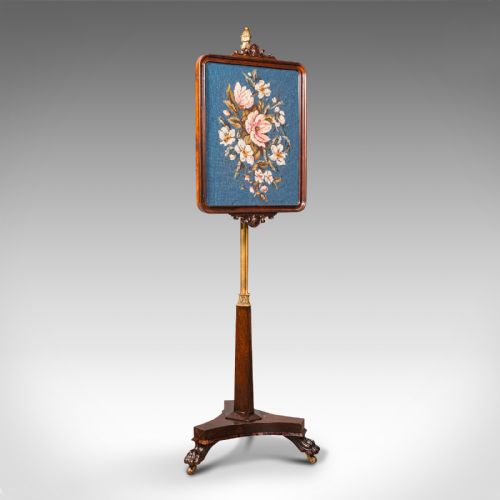

English Victorian Screen
These english victorian screen pieces are decorative domestic furnishings designed to shield inhabitants from hearth heat or partition rooms.
English Victorian Screen
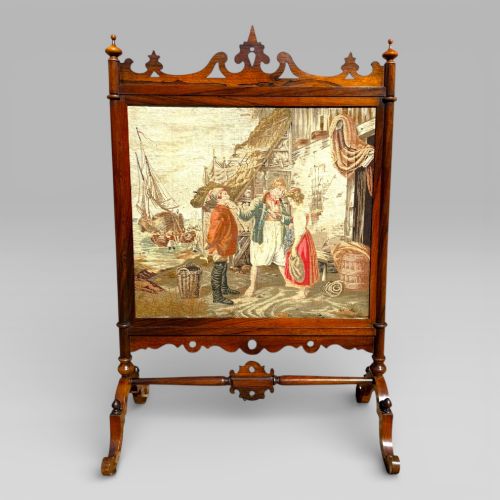
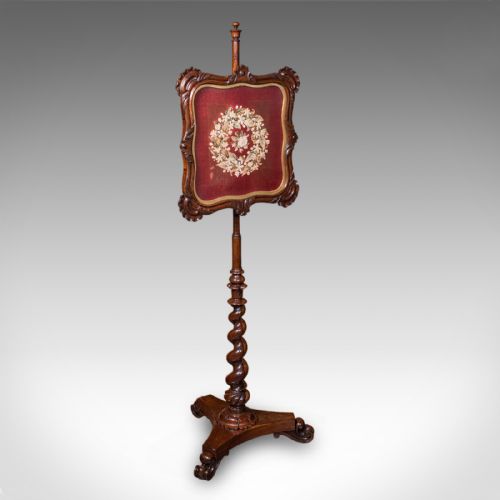
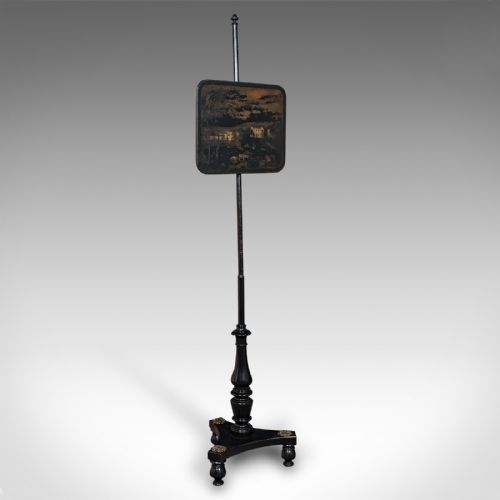
An english victorian screen encompasses fireside pole screens, cheval frames, and multi-panel room dividers originating across the nineteenth century. Buyers seeking an english victorian screen frequently encounter adjustable needlework panels mounted on tripod bases alongside folding privacy partitions.
The selection includes fireplace screens, brass nursery guards, and occasional table combinations spanning Victorian, Regency, and William IV periods. Form follows function closely, moving from hearth heat reflectors to expansive multi-panel room dividers.
Materials and Construction
Cabinetmakers utilised dense timbers including rosewood, mahogany, and walnut for structural frames, pole stands, and folding panels. Joinery and turning support adjustable mechanisms, tripod feet, and hinged multi-panel configurations.
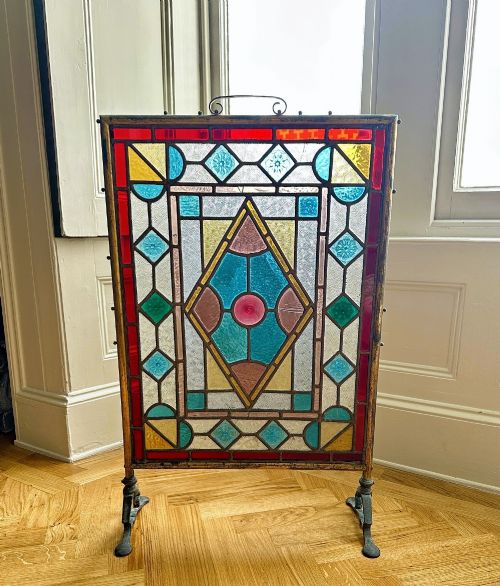
Textile panels incorporate needlepoint, wool tapestry, embroidered silkwork, and textile inserts framed within wood or mounted on iron stands. Additional elements utilise brass framework, glass, and stained glass panels.
English Victorian Screen Retail Price Guide 2026
Typical asking prices for english victorian screen among the pieces listed under this phrase on Sellingantiques today, from the lower quarter to the upper quarter. They describe what is for sale here now, not the wider market.
The listings encompass nineteenth-century items utilising rosewood, mahogany, brass, and hand-worked needlepoint across Victorian, Regency, and William IV periods.
Quality Markers
The distinction between tiers rests upon the density of the timber, the complexity of the turned woodwork, and the execution of the needlework. Finely rendered floral tapestries and intricate handpainted details separate superior examples from standard utility pieces.
Structural integrity of the adjusting mechanism in pole screens and the condition of original hinges on multi-panel dividers determine longevity and execution standard.
The English Victorian Screen Glossary
- Pole screen
- A vertical fireside screen with an adjustable panel sliding up and down a central wooden post. This design allowed occupants to deflect radiant heat from their faces.
- Cheval screen
- A freestanding floor screen supported by two pillars or feet, permitting the central panel to tilt or remain fixed. It provides a wider barrier than a pole screen.
- Needlepoint
- Stitched yarn worked through a stiff open-weave canvas foundation. It forms the decorative pictorial or floral panels central to many fire screens.
- Nursery guard
- A low protective metal barrier placed around a hearth to keep children away from open flames. They typically utilise brass construction.
- Decoupage
- The art of decorating a surface by applying cut-out paper pieces and varnishing them. It appears on multi-panel room dividers in the selection.
English Victorian Screen: Frequently Asked Questions
What was the main purpose of a pole screen?
Pole screens served to protect a person's face from the intense radiant heat of an open coal fire. The adjustable panel could be raised or angled as needed.
They stood near the hearth in grand reception rooms and allowed sitters to shield their complexions from excessive warmth.
How do you distinguish a pole screen from a room divider?
Pole screens consist of a single panel mounted on a central vertical shaft with a tripod or weighted base. They are designed for individual hearth use.
Room dividers feature multiple folding panels connected by hinges to partition a larger space or create privacy.
What woods were commonly used for these screens?
Cabinetmakers primarily worked with dense hardwoods such as rosewood, mahogany, and walnut. These timbers provided the weight needed for stable bases.
Secondary woods supported internal framing while primary display surfaces showcased figured veneers and polished grains.
Are the needlework panels usually original?
Many examples retain their period wool tapestry or needlepoint panels worked by hand during the nineteenth century. The tightness of the stitch and wear patterns help indicate period execution.
Some pieces integrate later textile insertions where the original fabric degraded from hearth smoke and age.
How do you adjust the height on a pole screen?
The central panel typically includes a brass thumb screw or a frictional collar mechanism at the back. Loosening this grip allows the frame to slide along the wooden pole.
Once the desired height is reached, tightening the collar secures the panel in place.