



Victorian Cheval Screen
These Victorian cheval screen examples combine practical warmth control with intricate needlework, offering a decorative focal point for period interiors.
Victorian Cheval Screen
A victorian cheval screen is a movable fireplace guard designed to shield occupants from excessive radiant heat while adding ornamental textile art to a room. These pieces typically feature a wooden frame supported on legs that houses a sliding or fixed panel.
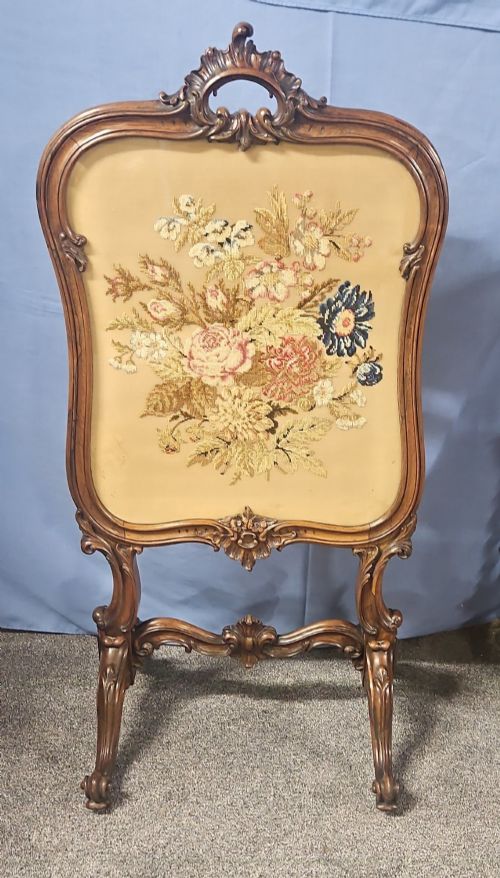
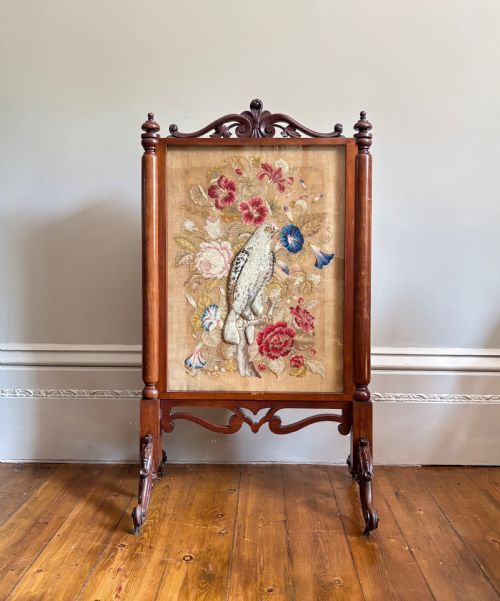
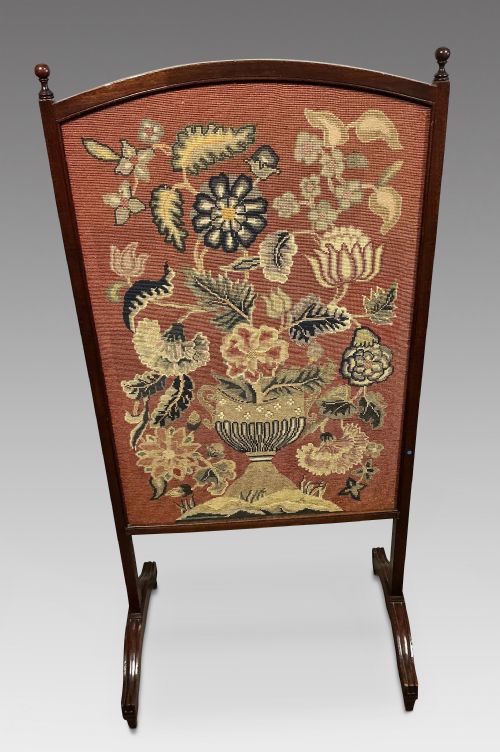
Visitors to this selection will most frequently encounter walnut and rosewood frames housing hand-stitched needlepoint, Berlin work, or tapestry panels. The designs range from pastoral scenes to floral motifs set within nineteenth century frameworks.
How they were made
Cabinetmakers utilised dense timbers such as walnut, mahogany, and rosewood to construct the sturdy freestanding frames, often adding carved details in revival styles. These woods provided the structural weight needed to support the vertical panel without tipping.
The decorative inserts rely on textile craft, specifically wool and canvas worked into needlepoint, Berlin work, and hand-woven tapestry pictures. Artisans mounted these textile panels securely within the wooden framework to withstand the ambient heat of a coal fire.
What varies in quality
The fineness of the carved woodwork distinguishes standard production from finer pieces, particularly where elaborate rococo revival scrolls or baronial detailing appear on the uprights. Heavier, richly grained hardwoods indicate superior workshop selection.
Needlework intricacy and wool condition dictate the visual appeal of the central panel, with densely stitched pictorial scenes representing higher artisanal input than simpler geometric patterns. The preservation of the original textile tension within the frame remains central to the integrity of the piece.
The Victorian Cheval Screen Glossary
- Cheval screen
- A freestanding fire screen with a vertically pivoting or sliding panel mounted within a supporting frame. This design allows the screen to be adjusted against radiant heat.
- Berlin work
- A popular mid-nineteenth century style of counted-thread embroidery worked on canvas using brightly coloured wools. It often produced detailed pictorial panels for home furnishings.
- Needlepoint
- A type of canvas work embroidery where yarn is stitched through a stiff open-weave mesh. It forms a dense, durable surface well suited to domestic use.
- Rococo revival
- A nineteenth century decorative style drawing on eighteenth century french motifs characterised by asymmetrical scrollwork and naturalistic floral carving. This style frequently appears on Victorian frames.
Victorian Cheval Screen: Frequently Asked Questions
What is a victorian cheval screen?
A victorian cheval screen is a movable wooden frame holding a decorative textile panel, historically placed before a fireplace to block intense heat. These items served both a practical domestic function and a display purpose for needlework skills.
Today, they function primarily as decorative room dividers or ornamental furniture pieces that introduce period textile art and rich timber tones into living spaces.
How were these screens used?
Households positioned these screens between seating areas and open fireplaces to protect individuals from the harsh glare and heat of coal or wood fires. The adjustable panels allowed occupants to angle the shield precisely where needed.
In modern rooms, they work well placed in empty hearths or corners where their tapestry panels and carved wooden frames can be appreciated without heat exposure.
What materials are typical?
The frames are constructed from nineteenth century hardwoods, most commonly walnut, mahogany, and rosewood, chosen for their strength and rich grain. Carved hardwood variations also appear in baronial and revival styles.
The central panels utilise wool textiles, canvas, and needlepoint to create pictorial or floral designs that reflect Victorian domestic arts.
How do I identify the style?
Identification relies on observing the timber choice, carving motifs, and textile technique characteristic of the nineteenth century. Details like rococo revival scrolls and wool tapestry work point directly to Victorian production methods.
Comparing the frame construction and needlework style against dated examples helps place a piece within the broader Victorian and Georgian transitional periods.