





English Regency Sideboard Cabinet
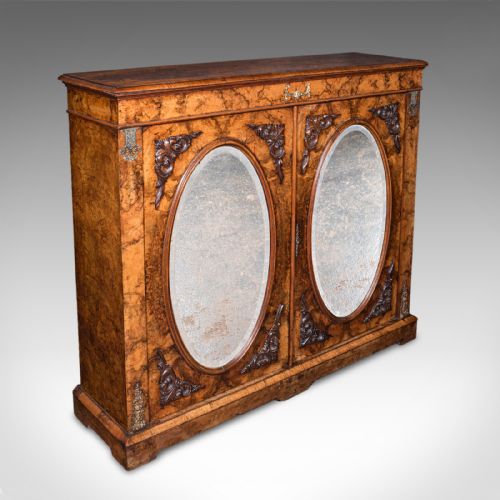
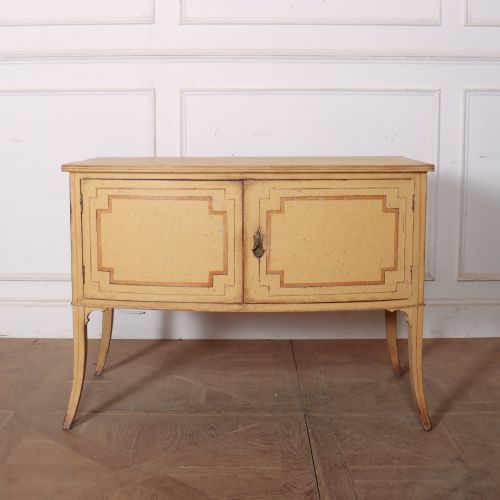
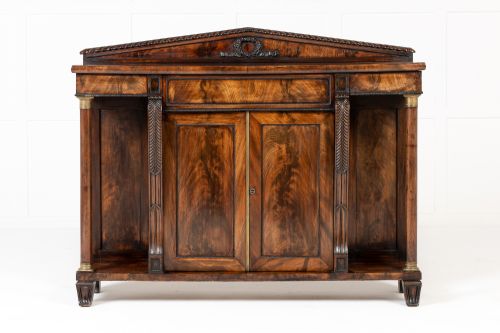
An English regency sideboard cabinet brings architectural restraint and fine timbers like rosewood or flame mahogany into a dining room or hall.
English Regency Sideboard Cabinet
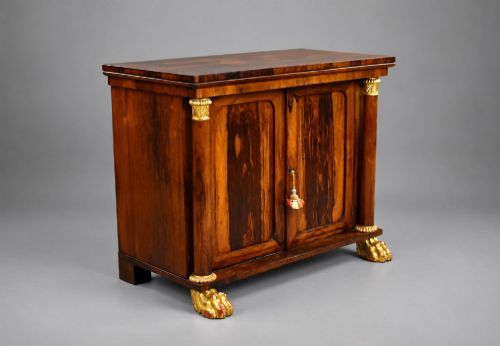
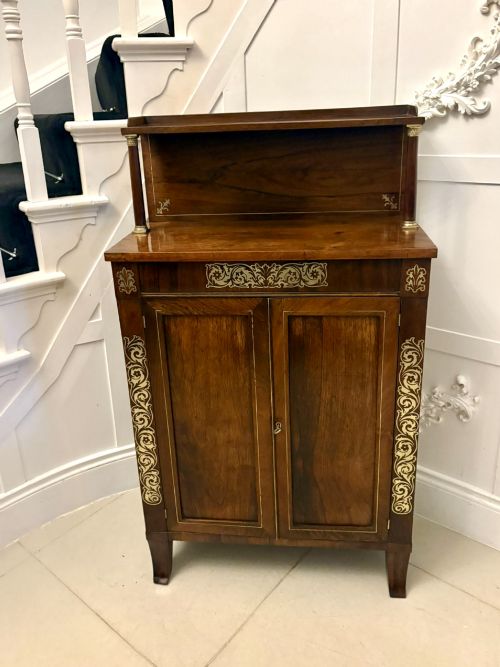
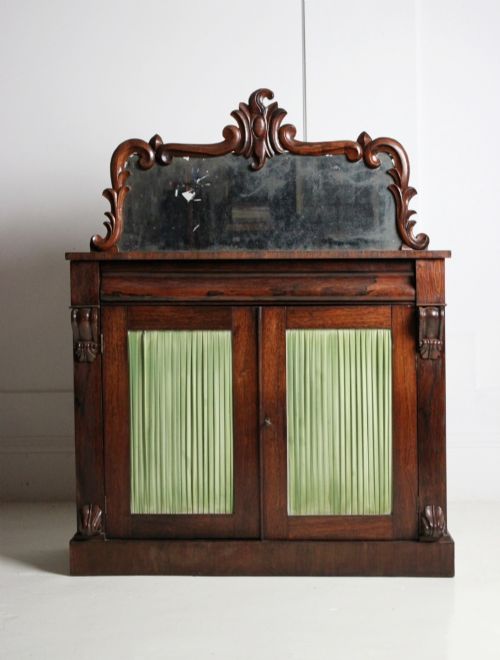
Makers and workshops of the early nineteenth century shaped these pieces with low, linear profiles, often incorporating brass grilles, mirror plates, or silk panels behind doors. While the true Regency pieces anchor the core of the selection, nineteenth-century revival items and later Victorian interpretations also appear.
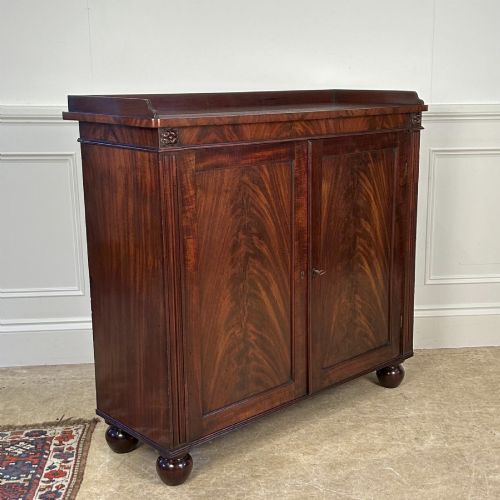
The layout typically involves pedestals, cupboards, or open shelving designed to serve dining spaces and libraries. Buyers find both compact chiffoniers and large breakfront sideboard cabinets reflecting classical architectural restraint.
Distinctions in construction and material grade
Quality rests in the selection of timber veneers and the crispness of brass detailing. Superior examples display perfectly matched flame mahogany or highly figured rosewood across wide expanses, whereas lesser pieces rely on simpler, unfigured grain.
Joinery standards separate standard production from exceptional cabinet work, particularly in the fit of doors and the dovetailing of internal drawers. The presence of documented workshop attributions or signatures elevates the standing of an individual piece.
English Regency Sideboard Cabinet Retail Price Guide 2026
Typical asking prices for english regency sideboard cabinet among the pieces listed under this phrase on Sellingantiques today, from the lower quarter to the upper quarter. They describe what is for sale here now, not the wider market.
The listings span the Regency, William IV, and Victorian periods, with rosewood and mahogany emerging as the dominant primary materials.
Gillows·S.Jamar·John McLean
The English Regency Sideboard Cabinet Glossary
- Chiffonier
- A low cabinet featuring cupboards beneath, often surmounted by a raised shelf with a mirrored or panelled back. This form developed during the early nineteenth century for dining and drawing rooms.
- Breakfront
- A piece of furniture where the central section projects forward from the flanking outer sections. This architectural arrangement creates depth and shadow on large sideboard cabinets.
- Goncalo Alves
- A dense exotic hardwood with distinct dark brown and yellowish-brown figuring, utilised for high-status cabinet work. It provides striking contrast in Regency surfaces.
- Pollard Oak
- Timber taken from trees that were pruned close to the trunk to produce dense, gnarled growth rings. Cabinetmakers prized this wood for its mottled decorative patterns.
English Regency Sideboard Cabinet: Frequently Asked Questions
What distinguishes a chiffonier from a standard sideboard?
A chiffonier is typically more compact and frequently includes a raised superstructure with a shelf or mirror at the back. Sideboards focus on extended serving surfaces and pedestal storage.
Chiffoniers served smaller reception rooms, while larger sideboard cabinets remained anchored in formal dining spaces.
How do I identify a true Regency piece from a revival?
True Regency items date from the early nineteenth century, displaying period construction methods, native secondary woods, and hand-cut dovetailing. Revival pieces from later decades often use machine-sawn timbers and heavier hardware.
Examining internal drawer linings and timber shrinkage helps confirm the original period of manufacture.
Where were these cabinets placed in a home?
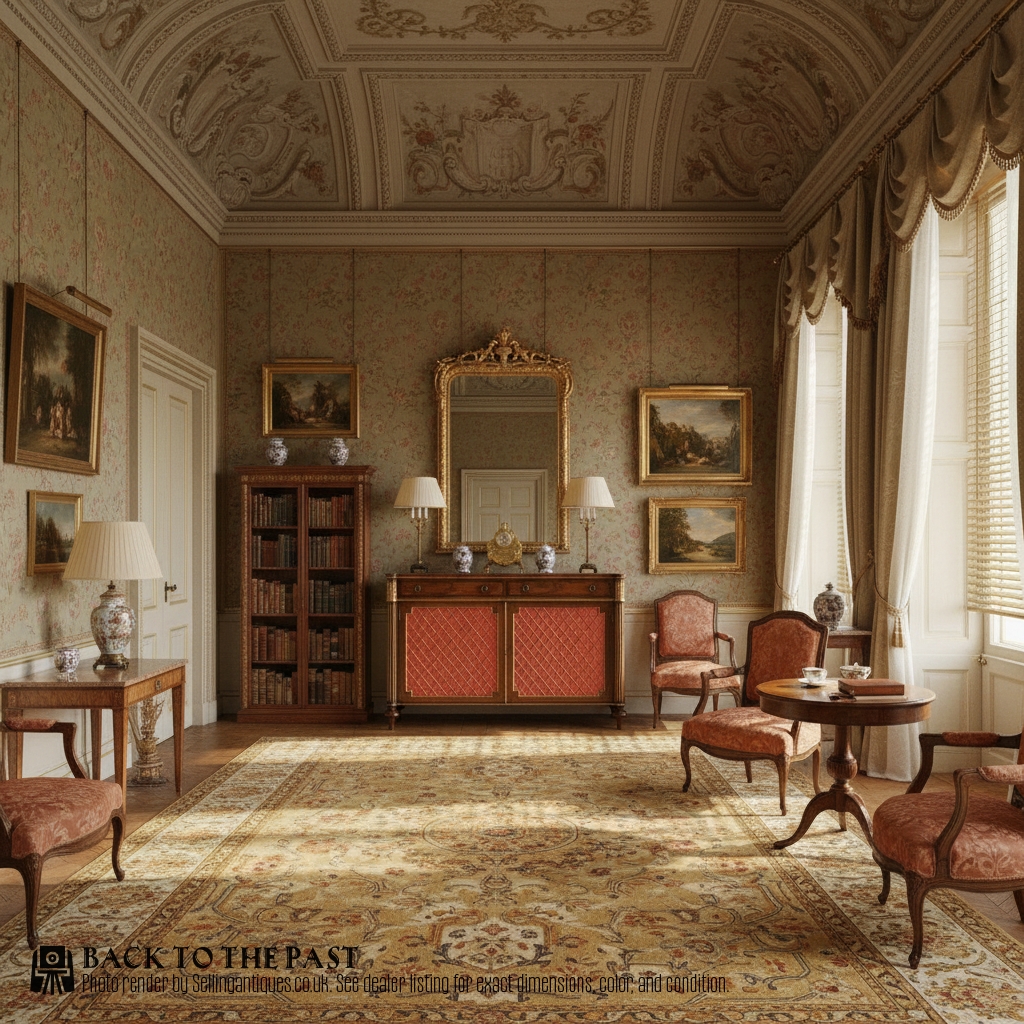
These cabinets stood primarily in dining rooms to store plate, linen, and glassware, or in morning rooms and libraries for books and display. Breakfront versions anchored the main walls of formal reception rooms.
Their shallow depths allowed them to fit neatly along hallways and corridors without blocking circulation.
What timber finishes are most common?
Mahogany and rosewood dominate the selection, often finished with a high-gloss French polish that emphasises the natural grain. Lighter exotic woods like pollard oak and goncalo Alves appear on select decorative items.
Brass inlays and boxwood stringing frequently accent these dark timber surfaces.