
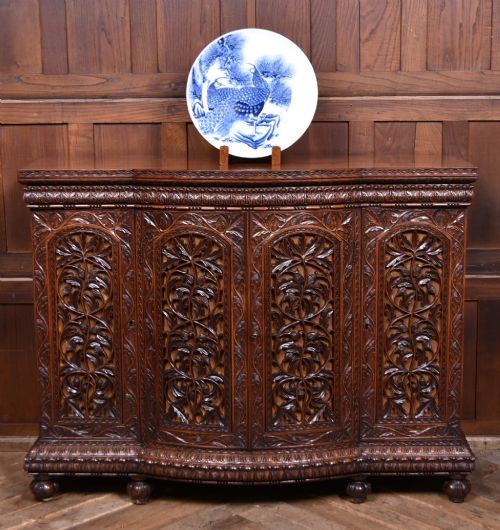
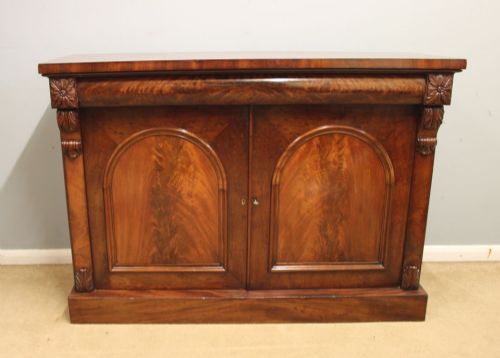
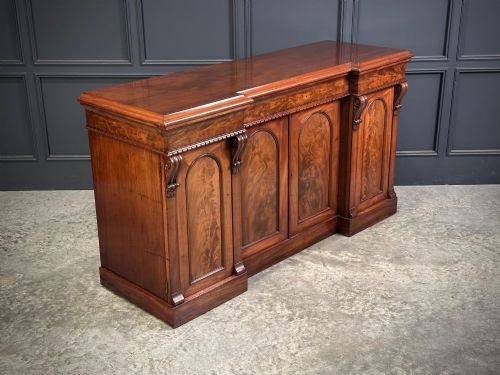
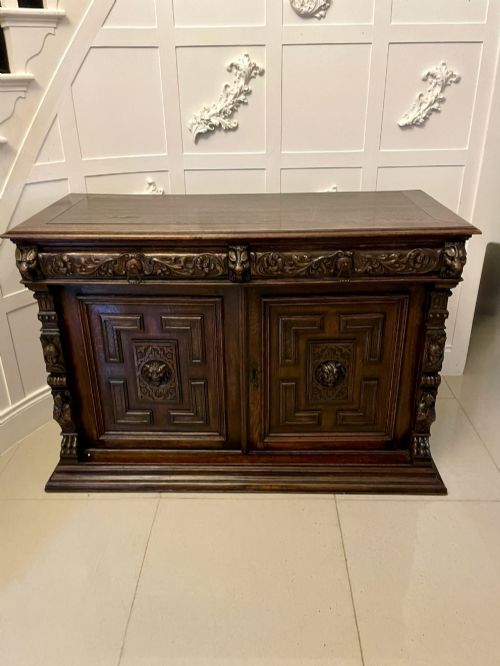
Dark Wood Buffet Sideboard
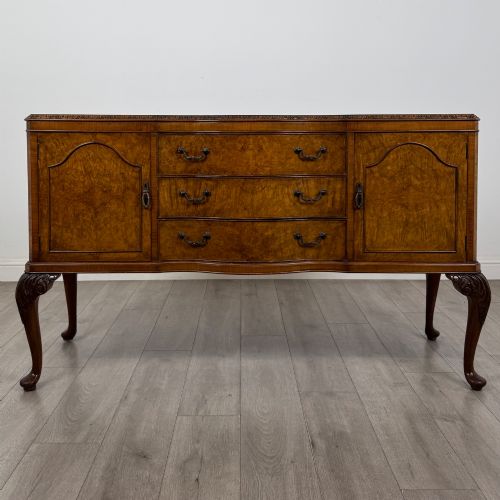
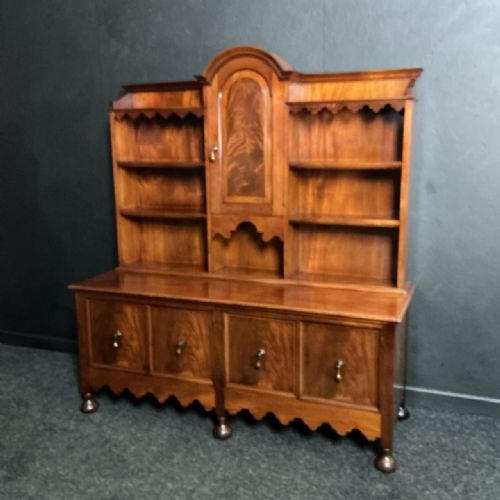
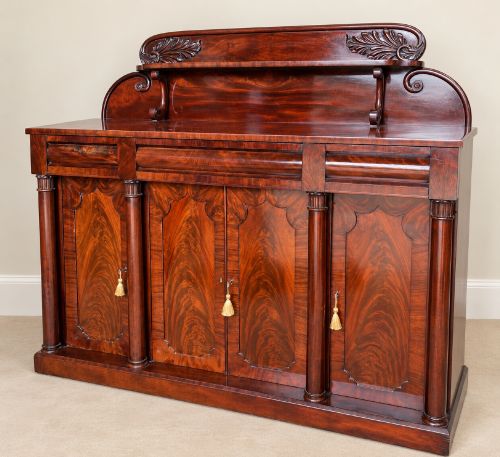
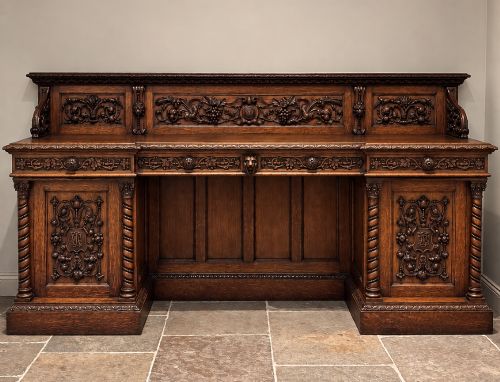
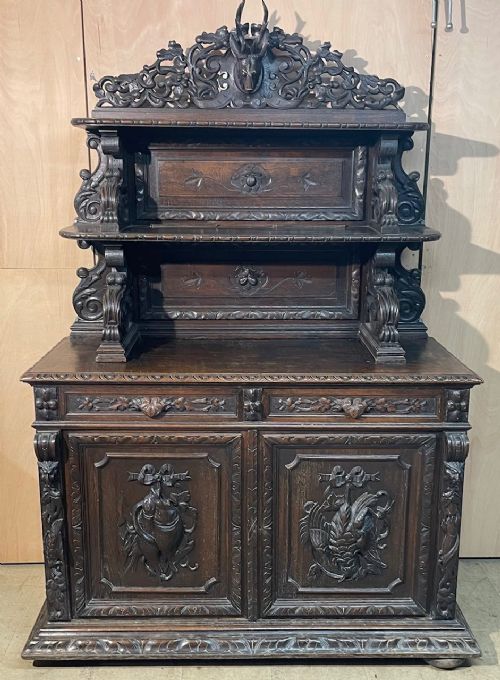
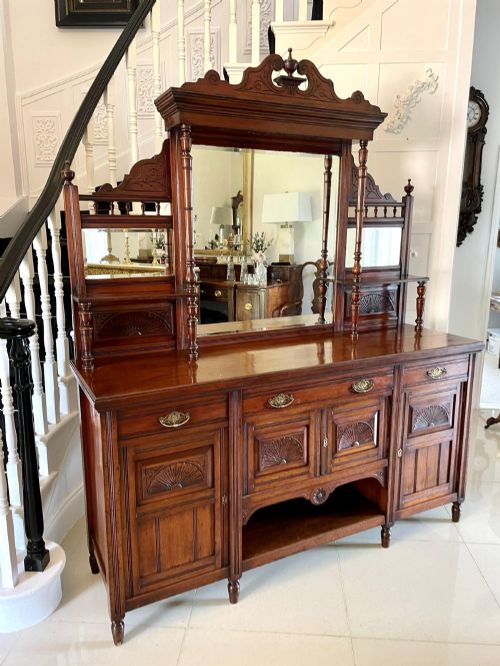
These dark wood buffet sideboard examples combine substantial timber and practical storage, offering period character and a commanding presence for a dining room.
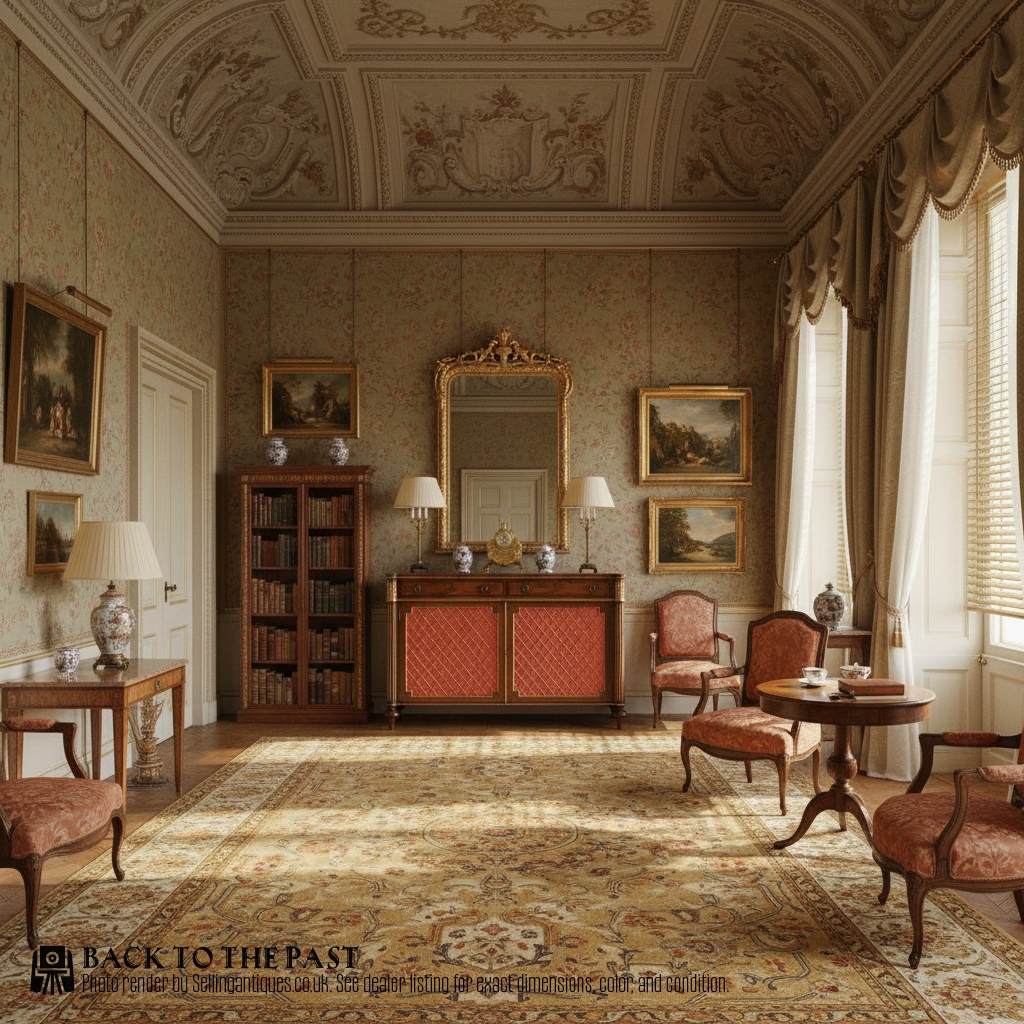
Dark Wood Buffet Sideboard
A dark wood buffet sideboard serves as a functional storage piece for dining rooms, originating from periods such as the Georgian, Victorian, and Edwardian eras. Buyers search this phrase to find large serving surfaces and substantial cupboards designed for tableware and dining accessories.
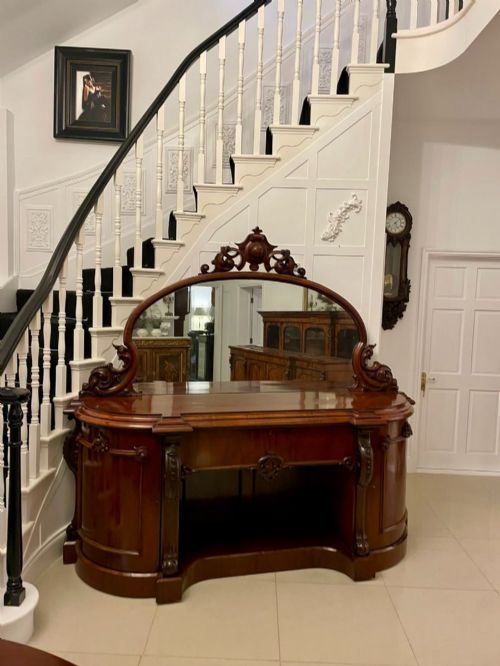
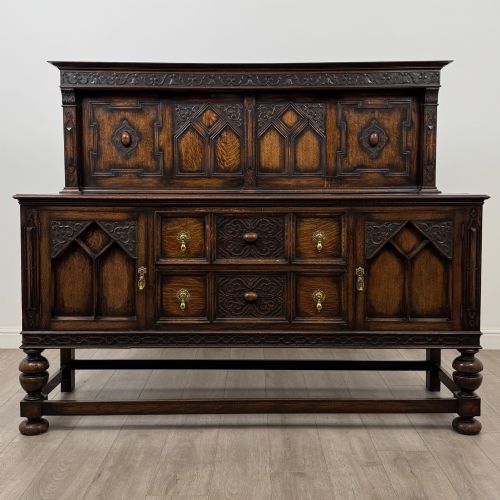
The selection on this page encompasses diverse forms including mirror-back servers, bow-front cabinets, and heavily carved oak or mahogany sideboards. These pieces range from restrained Georgian proportion to elaborate Victorian and Edwardian revival styles.
Originating from British, French, and Scottish workshops, these items utilise timber to create deep, dark tones. They function as both central display furniture and practical storage units within traditional and eclectic interiors.
Assessing quality and craftsmanship
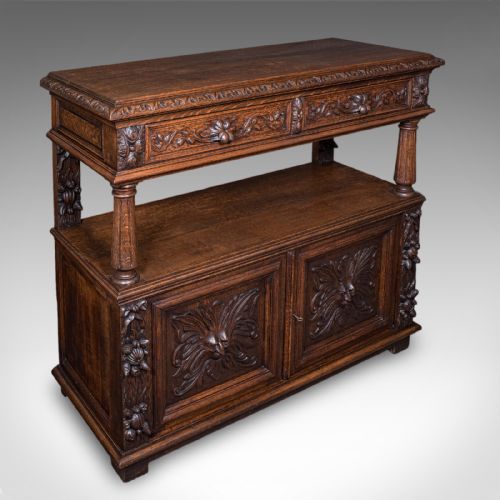
The standard of a dark wood buffet sideboard rests upon the choice of timber and the precision of its carving. Superior examples exhibit finely figured mahogany veneer or deep, crisp hand-carving in solid oak, rather than mechanical replication.
Proportion and detailing separate standard utilitarian items from exhibition pieces. High-quality versions integrate architectural elements like mirror backs, lion paw feet, or delicate inlaid banding harmoniously into the primary structure.
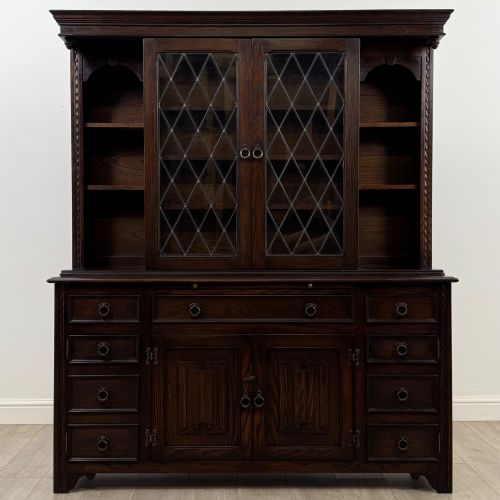
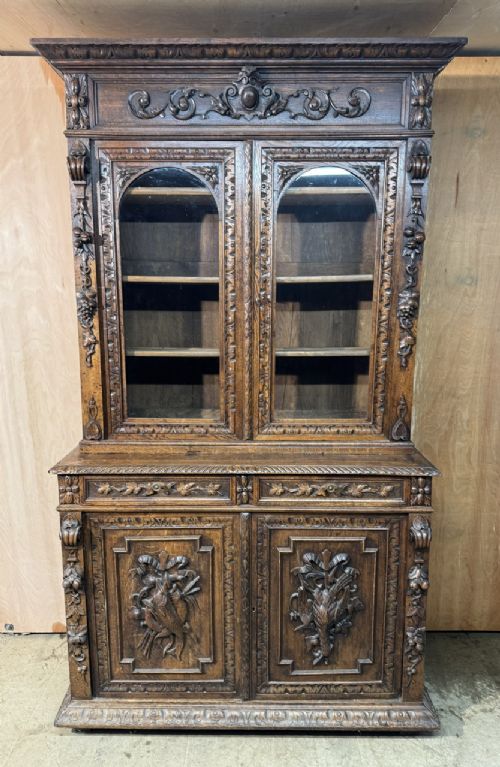
Several heavy oak sideboards proudly carry the French hunting moniker, complete with deeply carved game motifs.
The Dark Wood Buffet Sideboard Glossary
- Chiffonier
- A low sideboard or cabinet, typically equipped with drawers and enclosed shelves below, popular during the Victorian period for serving and storage.
- Flame mahogany
- Mahogany timber cut at the branch junction to produce a distinctive, flamelike grain pattern used prominently on high-grade cabinet doors.
- Mirror back
- An upright superstructure attached to the rear of a sideboard, incorporating a glass mirror and decorative carved wooden framing.
- Barley twist
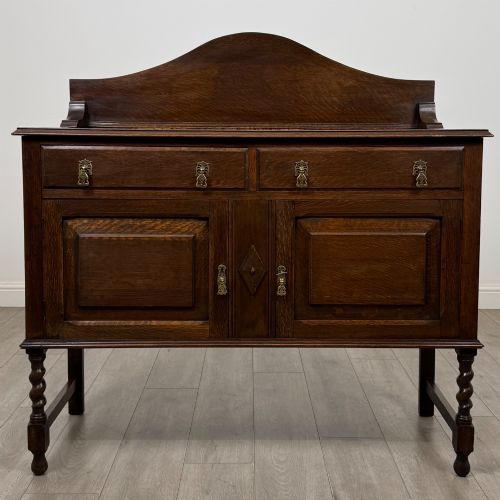
- A turned wooden furniture leg or column resembling the helical shape of twisted barley sugar, common in Edwardian oak furniture.
- Breakfront
- A cabinet or sideboard whose central section projects forward from the recessed flanking sections, creating architectural depth.
Dark Wood Buffet Sideboard: Frequently Asked Questions
How do I care for dark wood surfaces?
Maintain the finish by dusting regularly with a soft, dry cloth and avoiding placement near direct heat sources or strong sunlight.
Apply high-quality beeswax periodically to nourish the timber and preserve the rich colour without building up heavy chemical residues.
What is the difference between a sideboard and a buffet?
Sideboards traditionally focus on flat serving surfaces and enclosed cupboard storage for dining room essentials.
Buffets often emphasise display capability and serving space, sometimes incorporating upper shelving, glass cabinets, or mirror backs.
Can I use these sideboards in modern rooms?
These robust wooden pieces anchor contemporary dining spaces by introducing rich texture, history, and functional surface area.
Their dark tones contrast effectively against neutral walls, serving as focal points that balance modern minimalist interior design.