

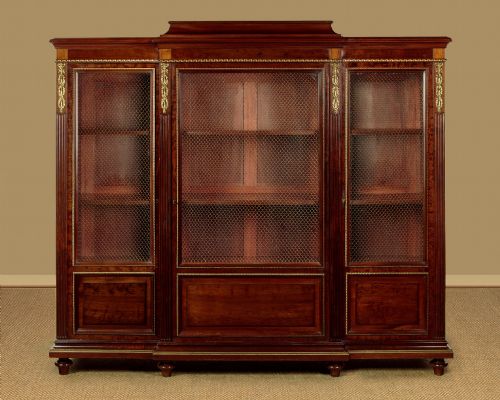
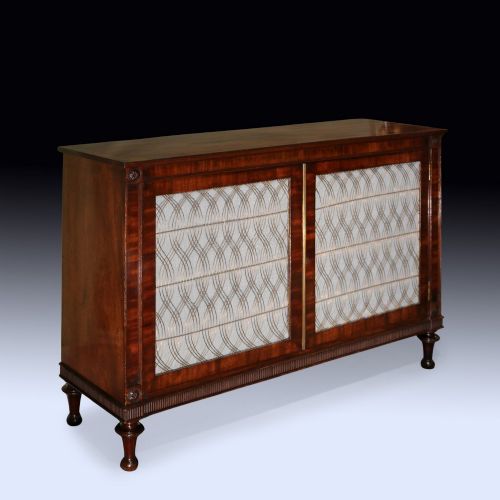


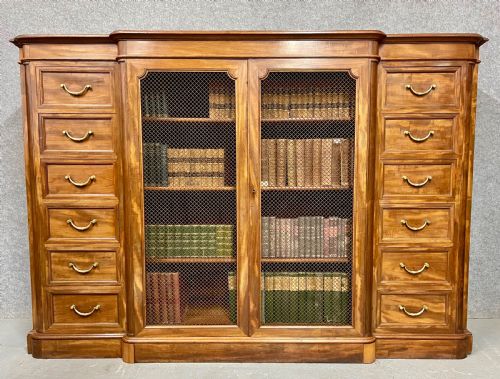


Antique Brass Wire Cabinet
An antique brass wire cabinet brings warmth and secure display to a room, uniting rich timbers with delicate metal grilles.
Antique Brass Wire Cabinet
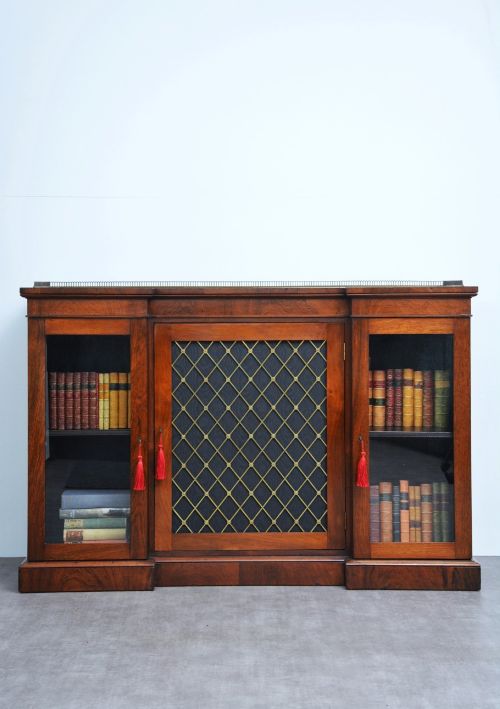
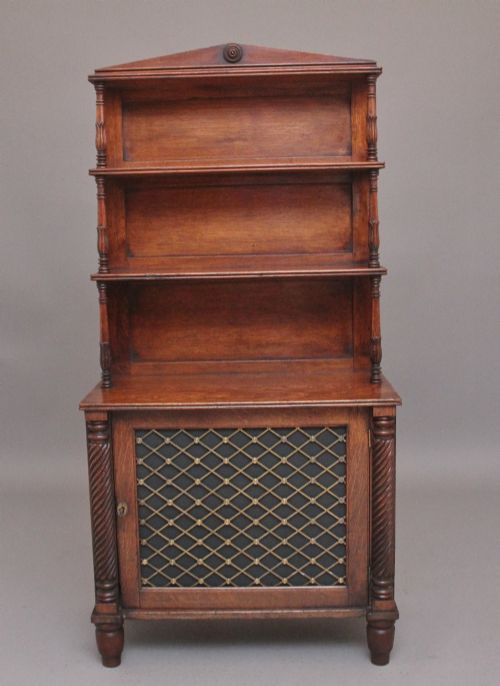
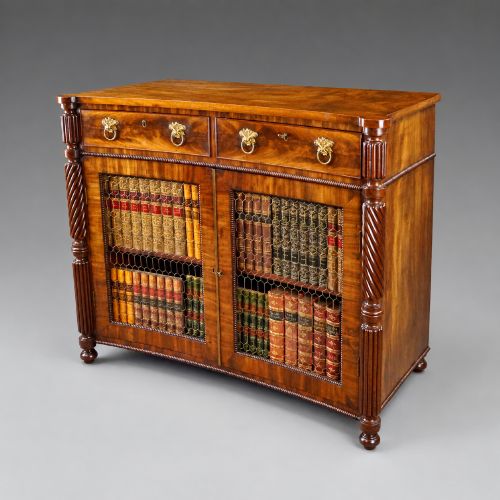
An antique brass wire cabinet combines timber framework with fine metal mesh panels, traditionally designed to protect books or display precious objects while permitting ventilation. Buyers seeking an antique brass wire cabinet will encounter pieces primarily from the Regency and Georgian periods, alongside later nineteenth century interpretations.
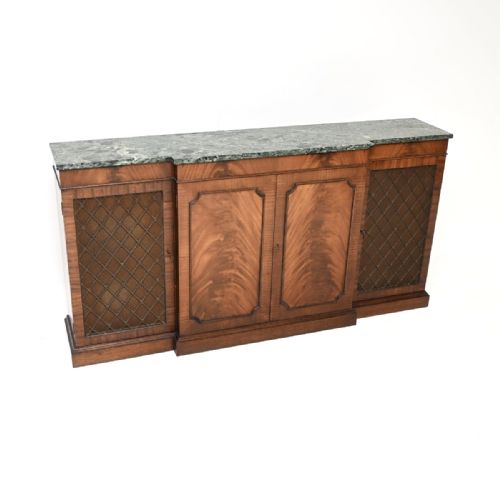
The selections on this page span substantial bookcases, side cabinets, and chiffoniers rather than dedicated small cupboards. Mahogany and rosewood form the main body of these pieces, often fitted with brass grilles or wire mesh fronts that reveal the contents within.
How they were made
Cabinetmakers utilised dense hardwoods such as mahogany, rosewood, and walnut for the structural carcase, applying fine veneers and boxwood inlay for decorative contrast. The defining feature relies on woven brass wire or fine metal grilles fitted neatly into wooden door frames.
Internal elements often include adjustable wooden shelving and fabric linings behind the wire mesh. Brass mounts, inlays, and gallery rails complete the construction, demonstrating disciplined joinery suited to domestic and library settings.
Antique Brass Wire Cabinet Retail Price Guide 2026
Typical asking prices for brass wire cabinet among the pieces listed under this phrase on Sellingantiques today, from the lower quarter to the upper quarter. They describe what is for sale here now, not the wider market.
Listings feature woods like mahogany, rosewood, and satinwood, paired with glass, marble, and silk backing behind brass wire.
What varies in quality
Quality rests in the crispness of the timber selection, the finesse of the brass inlay work, and the integrity of the wire mesh itself. Superior examples display carefully matched wood grain across large surfaces and robust internal framing that supports heavy volumes without sagging.
The distinction between standard utility pieces and exhibition work lies in the hand-finished details, such as finely chased brass mounts, intricate boxwood stringing, and well-proportioned breakfront forms that hold the eye.
Paul Sormani·John McLean
The Antique Brass Wire Cabinet Glossary
- Grille
- A lattice of metal wire fitted into cabinet doors to allow ventilation and visibility. This element defines the character of the piece.
- Chiffonier
- A compact sideboard or cabinet featuring shelves or enclosed cupboards below. These often include fabric-backed brass wire doors.
- Breakfront
- A piece of furniture where the central section projects forward from the flanking wings. This architectural arrangement adds depth to large bookcases.
- Inlay
- Contrasting timber, brass, or metal set flush into the surface of the wood. Craftsmen use this technique to create geometric and floral patterns.
Antique Brass Wire Cabinet: Frequently Asked Questions
What are antique brass wire cabinets used for?
These pieces function primarily as bookcases, side cabinets, and display units for keeping collections visible yet secure behind metal mesh.
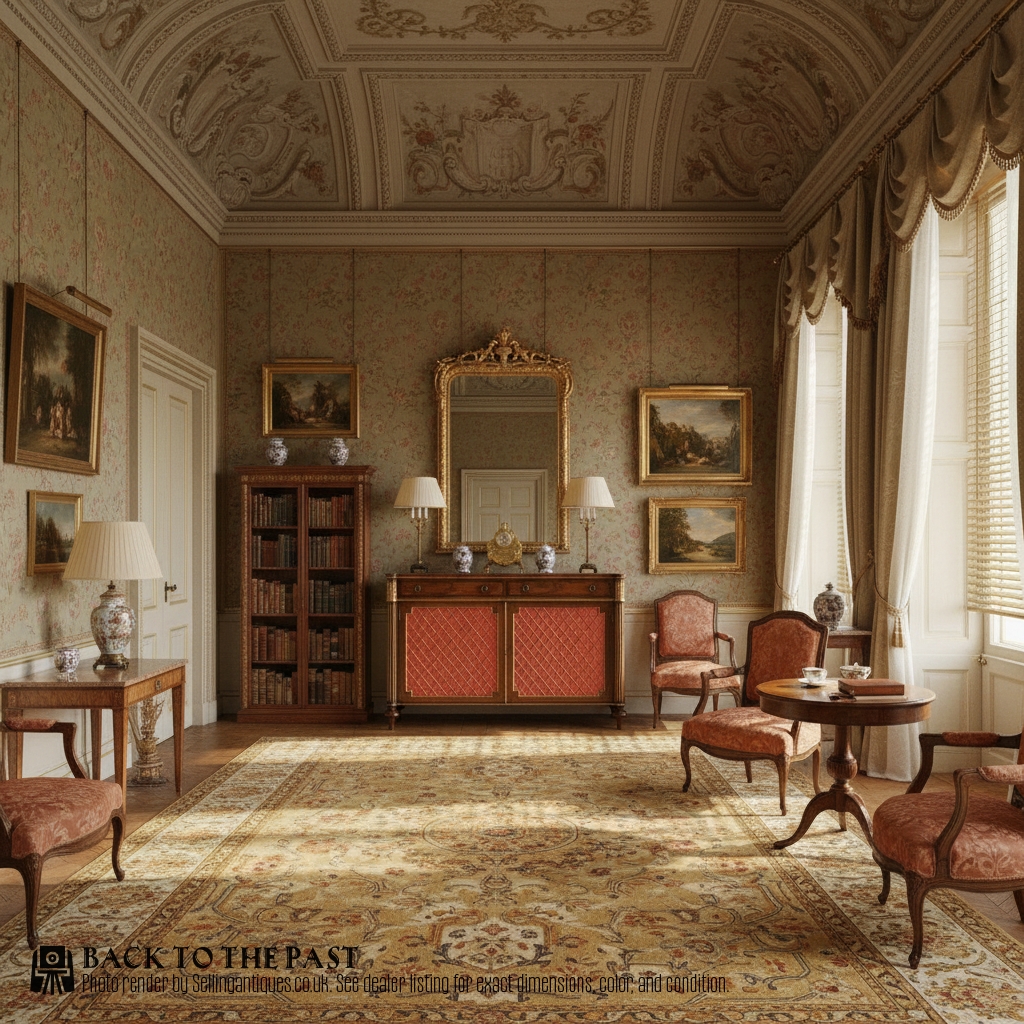
In modern interiors, they suit living rooms and studies for storing books, ceramics, or glassware while adding period character.
How do I tell Regency cabinets apart from later styles?
Regency pieces typically feature cleaner architectural lines, rosewood or mahogany timbers, and precise brass inlay or grille work.
Later nineteenth century and Edwardian adaptations often incorporate heavier proportions or regional variations in the timber.
Are the wire meshes original?
Many pieces retain their original woven brass wire or fine metal grilles, which show gentle patination and consistent ageing.
Replacement mesh does occur during restoration, though skilled makers match the gauge and tension of the historical wire.
How should I care for the wood and brass?
Maintain the timber with appropriate wax polish applied sparingly to preserve the natural grain and historical finish.
Clean the brass wire gently with a dry brush to remove dust without disturbing the delicate metal mesh.