

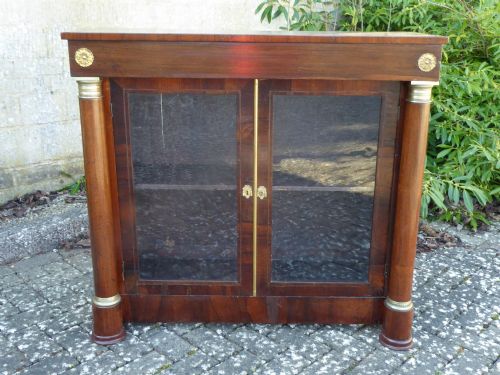


Rosewood Low Credenza
These pieces for a rosewood low credenza deliver rich grain and practical low storage, suited to rooms needing a refined surface.
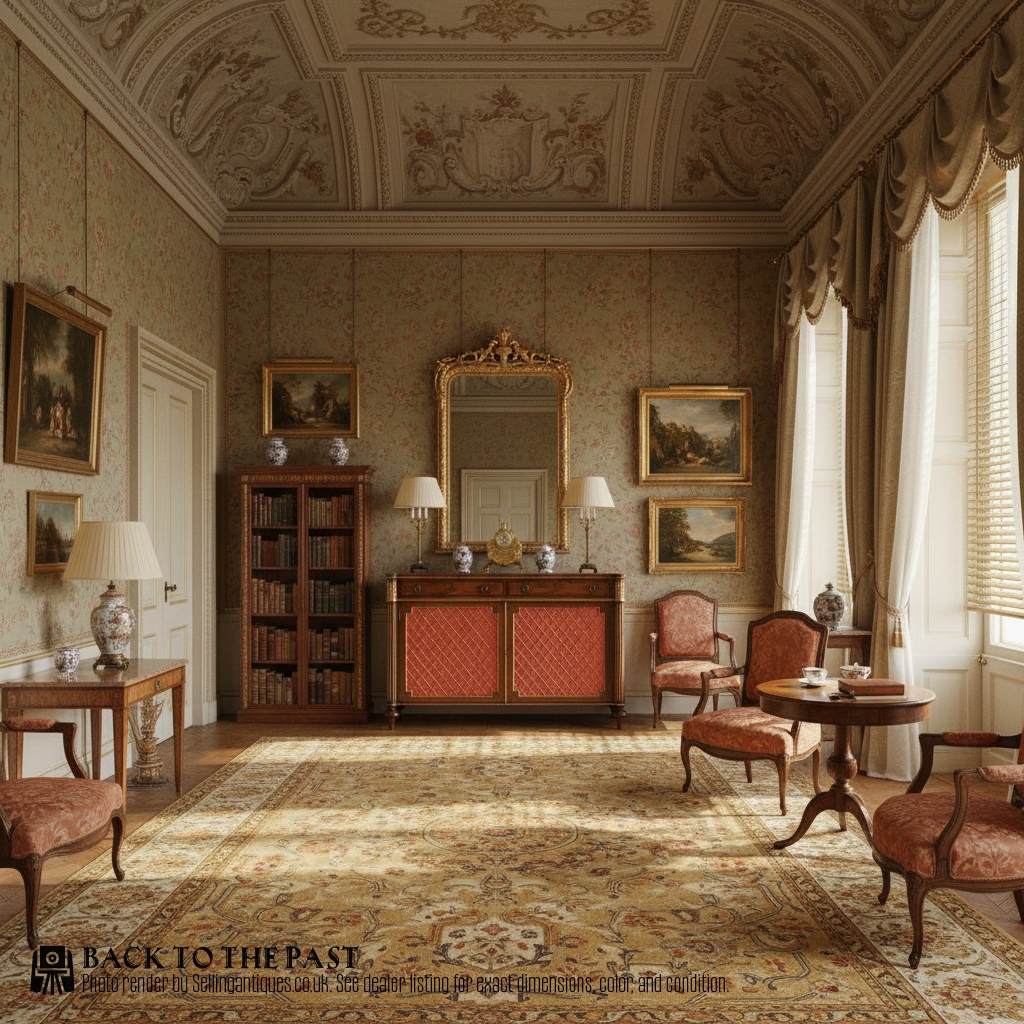
Rosewood Low Credenza
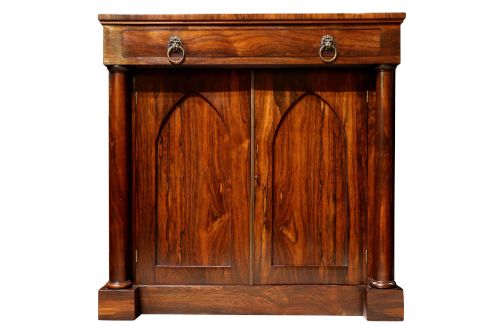
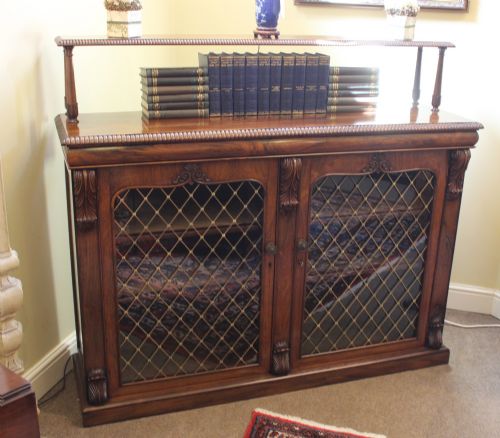
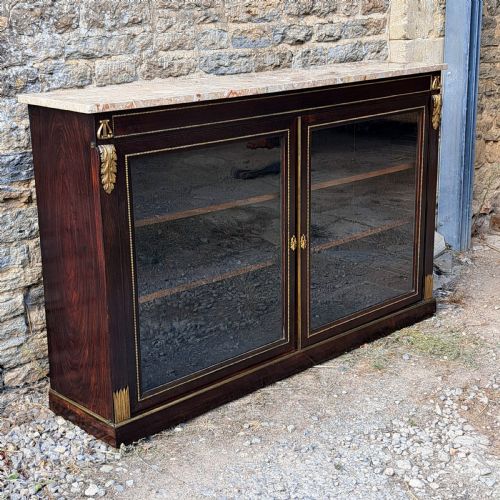
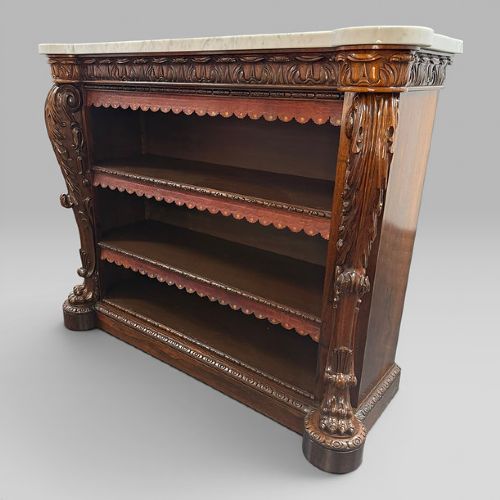
A rosewood low credenza brings together low cabinetry, sideboards, and chiffoniers from periods including the Regency, Georgian, and Victorian eras. These forms range from open bookcases and glass-fronted pier cabinets to breakfront four-door storage units designed to sit flat against a wall.
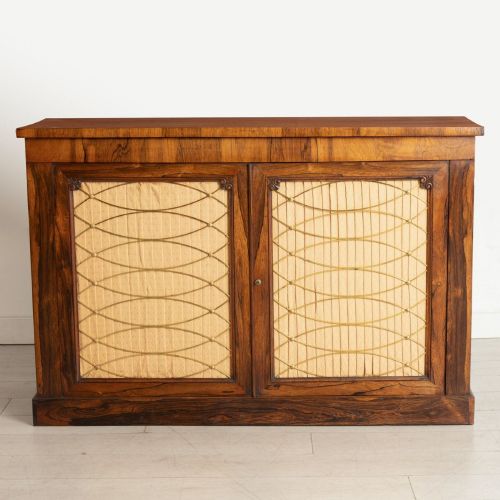
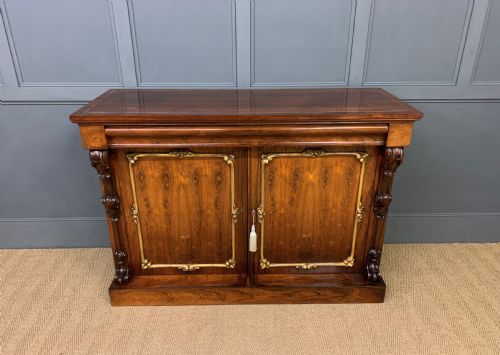
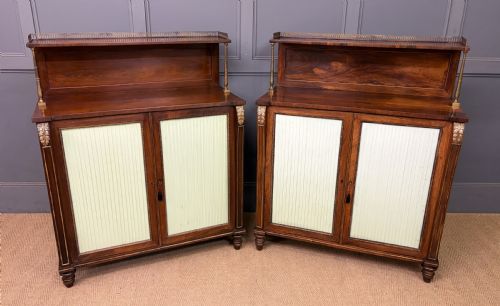
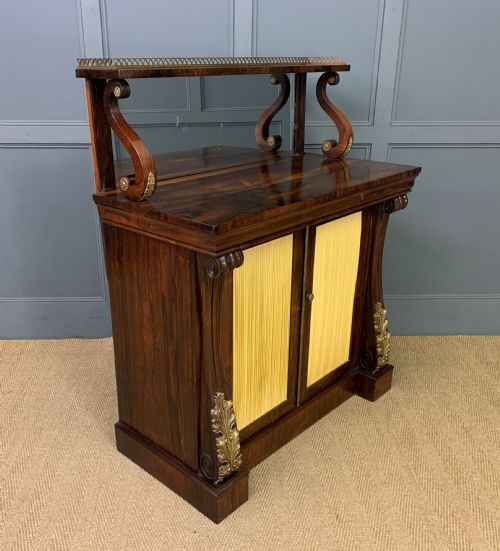
The pieces appearing on this page span the early nineteenth century up to later revivals, uniting dense timber with brass mounts, marble tops, and silk or pleated chiffon panels. Buyers encounter both compact side cabinets of neat proportions and larger breakfront configurations.
Makers and workshops of the period, such as Gillows, contributed specific interpretations including mahogany-lined interiors and brass inlay, grounding the search phrase in verified historical cabinet-making.
Materials and technique
Construction relies heavily on solid and veneered rosewood, often paired with contrasting timbers such as goncalo alves, palisander, or parcel gilding. Cabinet makers laid figured veneers across carcases of mahogany or secondary woods to create striking grain patterns.
Decoration involved meticulous brass inlay, brass mounts, and gilt bronze details set directly into the timber surface. Interiors frequently incorporated marble tops, glass panels, mirrored backs, leather dummy books, and fabric or silk linings behind Gothic-panelled or grilled doors.
Listings feature rosewood alongside materials like marble, brass, silk, and glass across Regency, Georgian, and Victorian periods.
Judging the work
Quality rests on the depth of the rosewood grain, the precision of the brass inlay, and the crispness of any carved parcel gilt details. Superior examples maintain original timber surfaces and sound structural proportions without heavy restoration.
Internal elements distinguish finer pieces, such as secondary mahogany linings, original marble or glass components, and intact fabric panels. The integration of maker attributions further elevates a cabinet's standing within the category.
Gillows·Gillow
The Rosewood Low Credenza Glossary
- Chiffonier
- A compact sideboard or cabinet popular in the nineteenth century, commonly fitted with drawers or shelves beneath enclosed doors. Many examples include a raised shelf or mirrored superstructure.
- Breakfront
- A piece of furniture where the central section projects forward from the flanking outer sections. This arrangement creates visual depth in large cabinets and sideboards.
- Goncalo alves
- A dense exotic hardwood with striking contrasting dark brown and golden stripes, utilised as an alternative timber in fine cabinet-making.
- Palisander
- A term applied to rich, dark tropical timbers from the rosewood family, known for strong figuring and oily lustre.
Rosewood Low Credenza: Frequently Asked Questions
What is a rosewood low credenza?
A rosewood low credenza is a low-profile storage unit constructed from dense, figured rosewood timber. These pieces typically feature enclosed cupboards, shelving, or brass-inlaid details suited for living spaces.
Such cabinets often double as display surfaces, accommodating marble tops or open bookcase sections alongside traditional cupboard doors.
How do I identify a Regency period piece?
Regency pieces often display classical restraint, clean architectural lines, and precise brass inlay or mounts. They frequently utilise mahogany linings and elegant proportions.
Looking for specific construction traits, such as Gothic-panelled doors and simulated grain finishes, helps confirm the Regency origin.
Were these cabinets used for books?
Many low credenzas and side cabinets incorporated open shelving or glass fronts specifically designed to house libraries. Some examples even featured decorative leather dummy books on their shelves.
This dual purpose allowed dining rooms and drawing rooms to combine book storage with surface display.
What distinguishes a chiffonier from a credenza?
A chiffonier is typically a more compact cabinet, often incorporating a small raised shelf or mirrored back above the main surface. Credenzas tend to be longer, lower, and symmetrical.
Both forms utilise similar rosewood veneers and brass mounts but serve slightly different roles within nineteenth-century interior arrangements.