

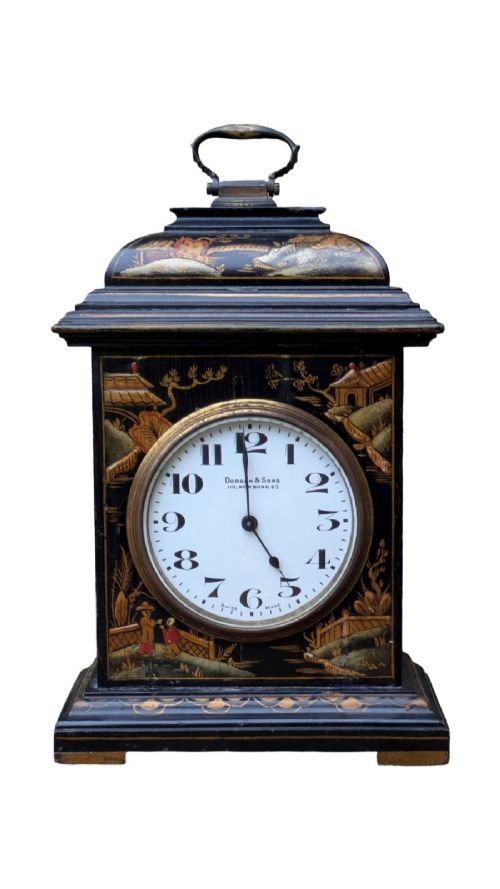
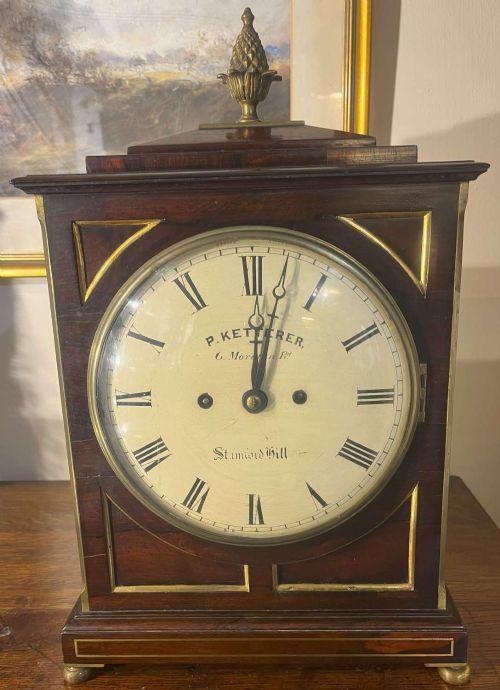
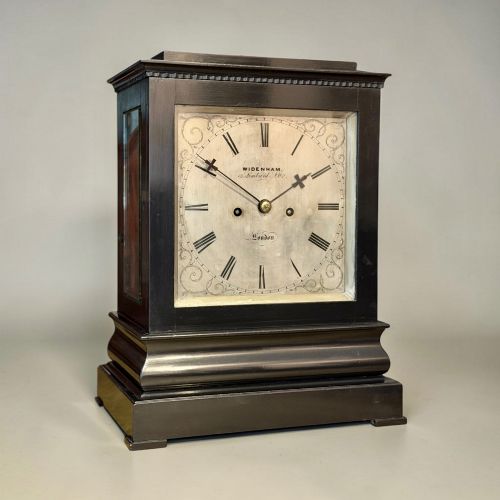
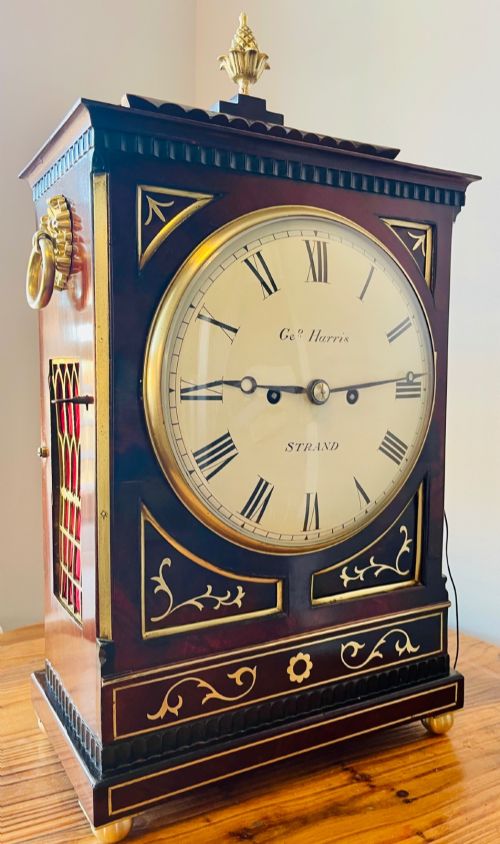




English Regency Bracket Clock
An English regency bracket clock brings precision timekeeping and architectural timber forms into a room, driven by a fusee movement.
English Regency Bracket Clock
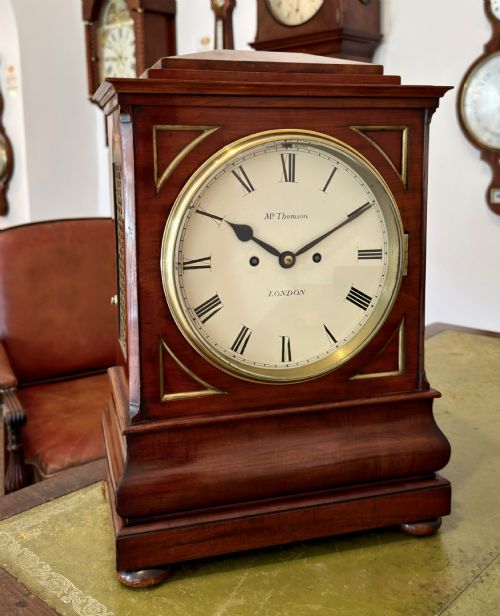
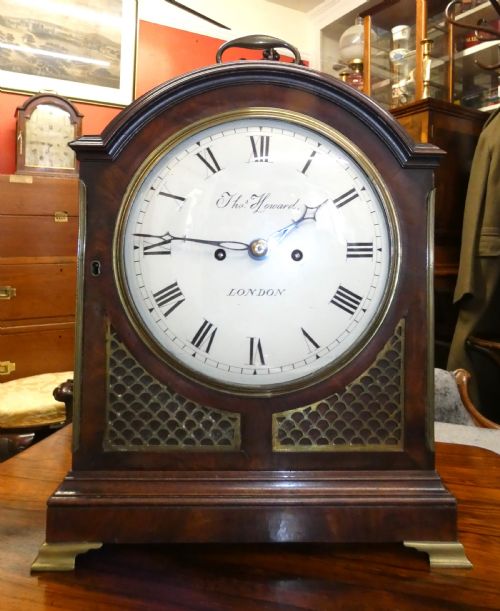
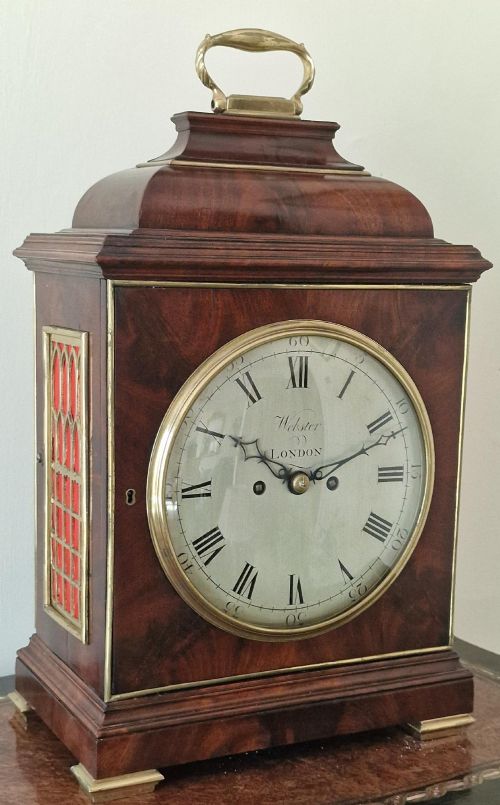
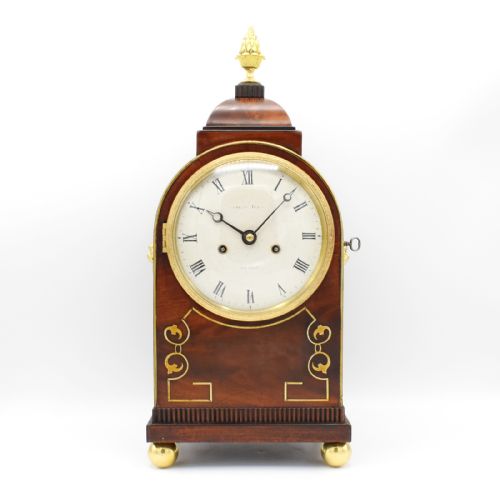
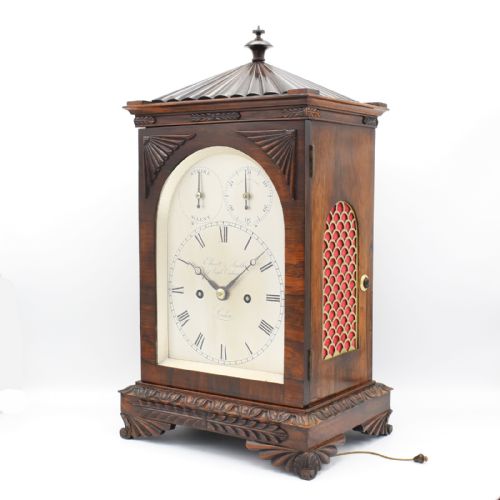
An English regency bracket clock is a table or mantel timepiece or striking clock housed in a timber case, dating primarily from the Regency, Georgian, and 19th Century periods. These pieces take various forms including library clocks, carriage timepieces, and mantel clocks with architectural top shapes.
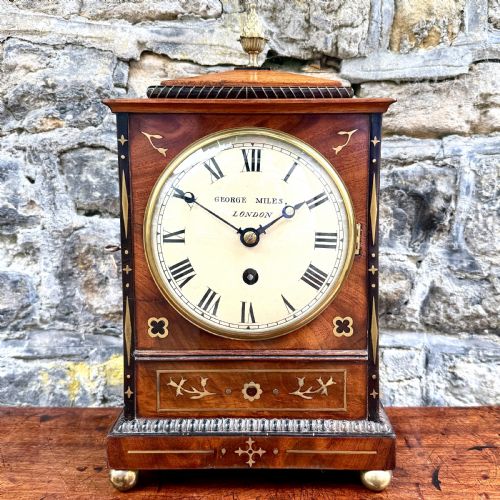
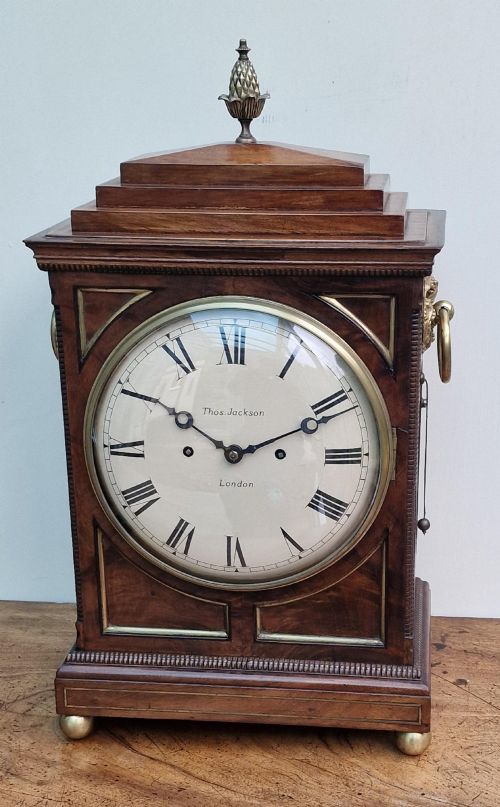
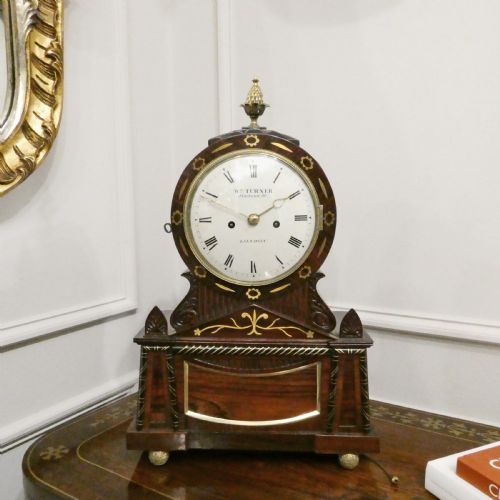
The version most commonly met on this page is the mahogany bracket clock with a fusee movement, often featuring brass inlay or brass mounts. Cases span stylistic variants such as Regency Egyptian Revival, Regency Gothic Revival, and standard Regency and Georgian designs.
How They Were Made
Cases utilise dense hardwoods such as mahogany, rosewood, and ebonised wood, frequently decorated with brass inlay or ebony stringing. Movement power comes from a fusee mechanism driving either a timepiece or a striking mechanism.
Dials combine silvered metal or enamel with protective glass bezels, while structural elements shape the timber into pad tops, chamfer tops, pagoda tops, and lancet forms.
English Regency Bracket Clock Retail Price Guide 2026
Typical asking prices for english regency bracket clock among the pieces listed under this phrase on Sellingantiques today, from the lower quarter to the upper quarter. They describe what is for sale here now, not the wider market.
Fusee movements appear in single and twin fusee configurations alongside simpler timepiece mechanisms.
What Varies in Quality
The standard of timber selection and cabinetmaking distinguishes examples, particularly the precision of brass inlay and the harmony of proportion in architectural case details like pad or pagoda tops. Movement execution, evidenced by signed brass backplates and refined engraving, marks the distinction between provincial work and master London production.
Dial legibility and the integration of specialised movements, such as twin fusee striking configurations, separate basic timepieces from higher tier horological pieces.
Thomson of London·Widenham of London·Webster·Barwise·Charles Pratt London·Ellicott & Smith·Turner of London·Thomas Jackson·George Orpwood·Bush of London·L. Vick of Stroud·Spurge Dunmow·Seller of Reading·Thomas Moss·Cording of London·John Bull of Bedford·Des Granges of London·Arnold and Frodsham·Barrett London·J Kingerley Manchester·Paul Philip Barraud·Thomas Connold of Alysham·Hyde of Salisbury·Taylor of London·Grimaldi and Johnson
The English Regency Bracket Clock Glossary
- Fusee
- A conical pulley used in clock movements to maintain an even pull on the gear train as the mainspring unwinds. This mechanism ensures consistent timekeeping across the winding cycle.
- Bracket Clock
- A portable clock designed to sit on a table, shelf, or dedicated wall bracket. Despite the name, many examples stand directly on furniture surfaces.
- Silvered Metal
- A metal dial plate treated to achieve a silver finish, typically engraved with numerals and maker details. This surface provides high contrast for reading the time.
- Chamfer Top
- A case top featuring bevelled edges that slope toward the centre. This architectural detail is frequent in Regency and Georgian designs.
- Timepiece
- A clock that indicates the time without including a striking or chiming mechanism. These movements focus solely on going power.
English Regency Bracket Clock: Frequently Asked Questions
Where should a bracket clock be placed?
These clocks sit securely on mantelpieces, tables, or dedicated wall brackets where the movement can operate level and undisturbed. Placing them away from direct sunlight and heat sources protects the timber case and dial materials.
Ensure the surface is stable to allow the pendulum or balance to beat evenly without interference.
How do fusee movements work?
A fusee movement uses a conical pulley connected to the mainspring via a cord or chain to regulate power delivery. As the spring unwinds and loses tension, the chain moves to a wider part of the cone, maintaining constant force on the gear train.
This system distinguishes better antique timepieces by supporting more consistent accuracy throughout the running period.
How are Regency and Victorian clocks told apart?
Regency clocks typically display cleaner classical proportions, architectural timber forms like pad or chamfer tops, and restrained brass inlay. Victorian pieces often introduce heavier proportions, varied revival styles, and altered dial signatures.
Examining the casework timber, such as rosewood or figured mahogany, alongside the signature style helps indicate the period of production.
Did bracket clocks hang on walls?
Despite the name, most bracket clocks rest on tables or mantelpieces rather than hanging. When wall placement occurred, owners utilised a matching wooden wall bracket to support the heavy timber case.
Portable design allowed these clocks to move between rooms while retaining reliable mechanical performance.