
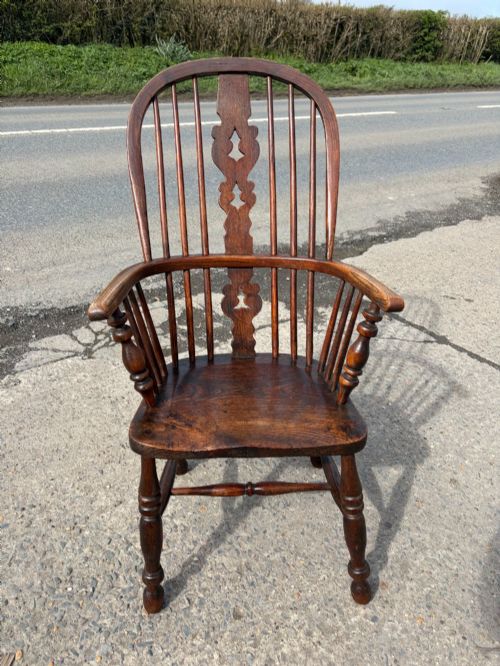


English Provincial Chairs
English provincial chairs are honest country seating built for everyday utility, offering rural character and sturdy construction.
English Provincial Chairs
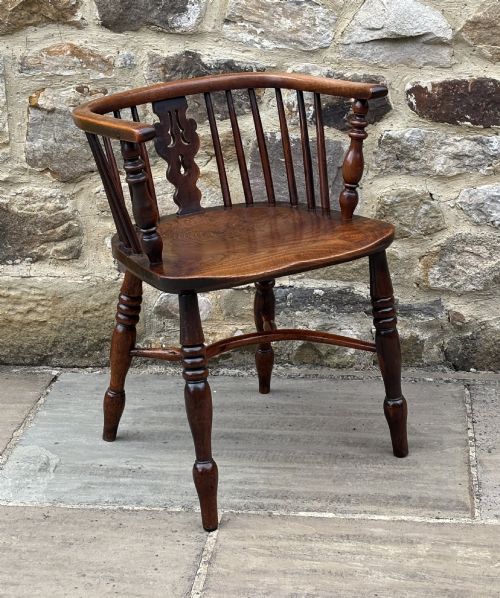
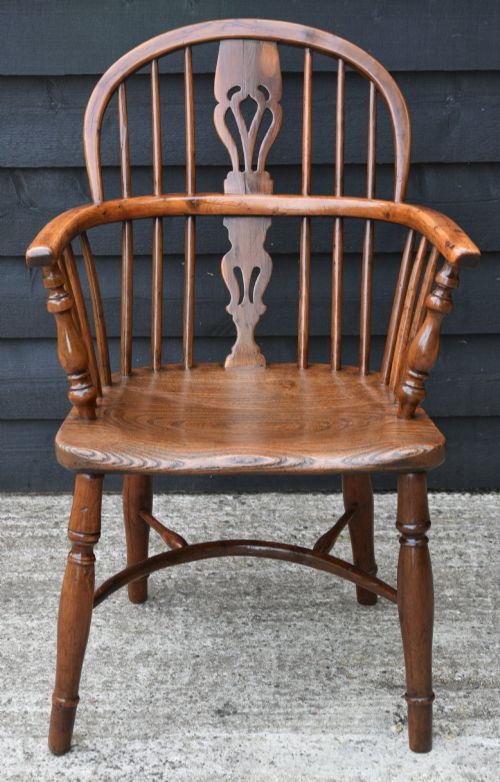
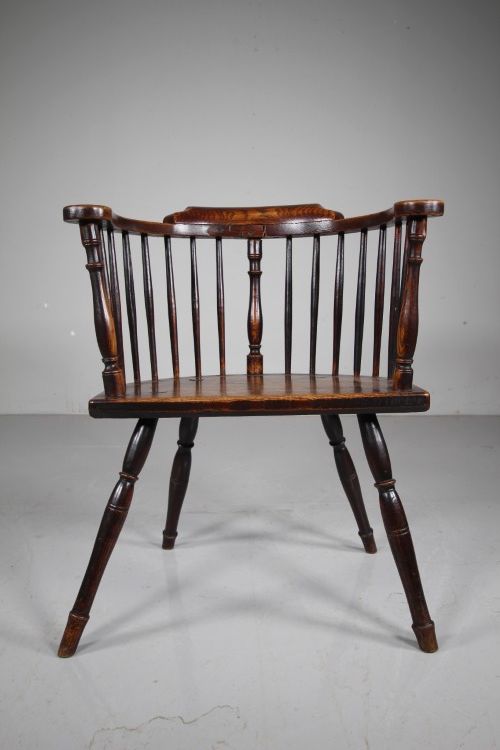
English provincial chairs comprise utilitarian seating made outside London, predominantly taking the form of Windsor armchairs, smokers bows, and country dining chairs. The pieces found here span from the 18th century through to the early 20th century, capturing the evolution of regional rural joinery. Buyers searching for English provincial chairs typically encounter sturdy timber frames shaped for daily domestic use rather than formal urban drawing rooms.
How They Were Made
Maker-joiners utilised locally sourced native timbers such as elm for solid saddle seats, yew for striking grain patterns, and ash or beech for resilient spindles and legs. Windsor chairs relied on a distinctive construction where turned legs and back spindles were wedged directly into a thick, sculpted wooden seat.
Regional variants incorporated steam-bent wooden hoops for backs, splat backs, or ladder backs, alongside traditional rush seating woven directly onto wooden frames. Artisans focused on structural integrity, combining multiple wood types within a single chair to utilise the specific mechanical strengths of each timber.
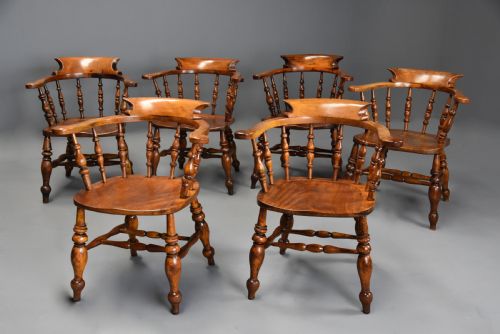
Captain's chairs and smokers bows ensure that even a quiet kitchen corner feels ready for a pipe and a long rural afternoon.
What Varies in Quality
Quality in English provincial chairs rests upon the selection of timber and the complexity of the turning and shaping. Chairs featuring highly figured yew wood or deep, comfortable elm saddle seats stand apart from plainer utility seating made purely of beech or ash.
The preservation of original surface patination and the integrity of matched sets, such as groups of six or seven dining chairs, dictate the standing of a piece. Finer examples retain balanced proportions in their spindles and arms, showing the confident hand of a skilled regional craftsman.
The English Provincial Chairs Glossary
- Windsor chair
- A wooden chair built with a thick solid seat into which the legs and back spindles are driven directly. This design developed deep roots in English rural workshops.
- Splat back
- A chair back incorporating a central vertical wooden slat, often shaped or pierced, positioned between the top rail and the seat. This form appears frequently in country dining chairs.
- Rush seat
- A seating surface woven from dried marsh rushes twisted into cords and patterned across a wooden frame. It provides a resilient, traditional texture found on provincial dining chairs.
- Carver
- An armchair, usually designed to match a set of smaller dining chairs and placed at the head of a table. These pieces often exhibit more elaborate turning or arm details.
English Provincial Chairs: Frequently Asked Questions
What defines English provincial chairs?
English provincial chairs are rural seating forms created outside major urban centres, utilising local hardwoods and practical construction methods.
They reflect the distinct tastes and resourcefulness of regional makers, ranging from heavy Windsor armchairs to simple rush-seated dining chairs.
Where were these chairs used?
These chairs served in farmhouses, country cottages, provincial inns, and country houses for everyday dining and fireside seating.
Their robust construction was intended to withstand rigorous daily use by families and working people.
How do I care for rush seats?
Rush seats require a dry environment and gentle cleaning to prevent the natural plant fibres from becoming brittle or damp.
Avoiding excess moisture helps preserve the woven structure over decades of domestic use.
How are different periods identified?
Periods are distinguished through timber selection, turning profiles on legs, and construction techniques that evolved from the 18th century onward.
Earlier pieces often display broader elm seats and simpler joinery, while Victorian and later examples introduce varied spindle shapes and multi-wood construction.