
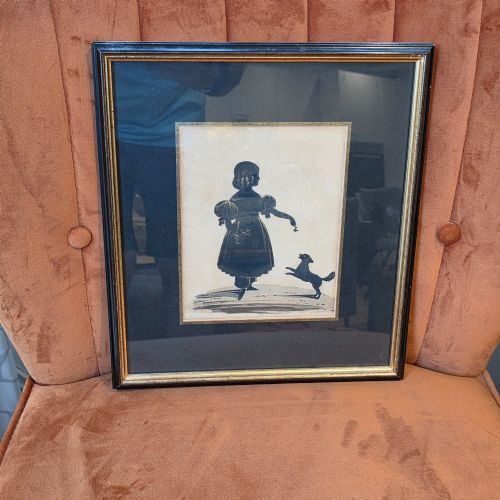
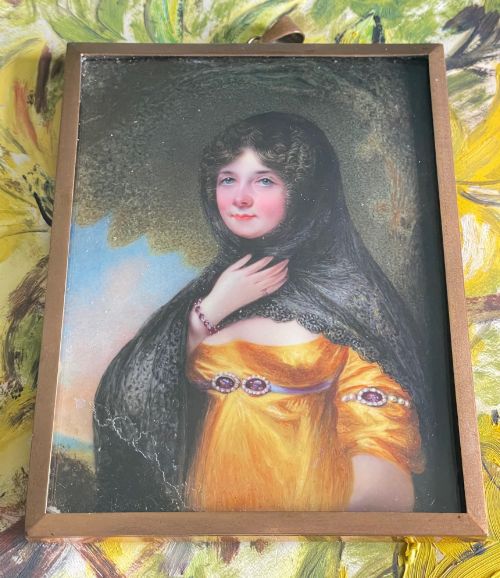


English Portrait Miniature
An English portrait miniature packs a living face into the palm of your hand, capturing centuries of private likenesses on ivory, paper, and copper.
English Portrait Miniature
The English portrait miniature encompasses intimate likenesses created across the seventeenth, eighteenth, and nineteenth centuries, spanning Georgian elegance and Regency refinement. You encounter delicate watercolours on paper, detailed oil paintings on copper, and brilliant enamels mounted in frames, pendants, or brooches.
Most examples on this page date from the nineteenth and eighteenth centuries, reflecting a period when skilled artists painted sitters with astonishing precision on a small scale. These portable works served as tokens of affection, memorials, or private displays of status for families and nobility.
The formats range from framed watercolours and wall plaques to wearable jewellery such as brooches and pendants. Regional variations and revival styles, including Tudor and Georgian revivals, also appear among the selections.
Materials and construction
Makers applied watercolour or oil paint to specialised surfaces such as paper, copper, and ivory, relying on fine sable brushes to capture microscopic detail in hair, lace, and eyes. Enamel works involved fusing powdered glass pigments to metal plaques like copper in a kiln to achieve permanent, luminous colour.
Protective elements such as glass fronts, gold leaf accents, and fine wooden or papier-mâché frames safeguarded these fragile pigments from dust and moisture. Silver mounts and novelties later housed small portraits designed to be worn on clothing or carried close to the person.
Listings feature works spanning the seventeenth century through to the nineteen-thirties, incorporating watercolour, enamel, and oil paint.
Measures of quality
Quality rests in the draughtsmanship and the artist's ability to render the psychology and lifelike gaze of the sitter within a very small compass. Superior examples display confident, unhesitating brushwork that defines facial bone structure and textile textures without muddying the pigments.
The integrity of the original housing - whether an enamel plaque, a gold-accented frame, or a silver brooch mount - complements the painting and preserves its condition over centuries. Works bearing clear signatures or attributions to recorded artists carry distinct archival weight.
William James Hubard·Henry Bone·Horace Hone·William Egley·Thomas Woolnoth·Jeremiah Steele·George Perfect Harding·George Clint
The English Portrait Miniature Glossary
- Portrait Miniature
- A small-scale painting depicting a specific person, traditionally executed with meticulous detail for intimate personal use.
- Enamel
- A glassy substance fused to a metal base through firing, used by artists to create durable, highly vibrant miniature portraits.
- Watercolour
- A paint consisting of pigment suspended in a water-based solution, frequently applied to paper or vellum in British miniatures.
- Copper
- A metallic sheet used as a stable, smooth painting support for oil miniatures, particularly favoured in the seventeenth century.
- Regency
- A British stylistic period spanning the early nineteenth century, known in miniatures for refined classical restraint and delicate palettes.
English Portrait Miniature: Frequently Asked Questions
How were portrait miniatures worn?
Owners frequently wore these small paintings as brooches, lockets, or pendants close to the heart, keeping the likeness of a spouse, child, or monarch private and portable.
Craftsmen set the delicate painted surfaces within gold, silver, or pinchbeck housings fitted with glass covers to protect the pigments from daily wear.
Why are some painted on copper?
Artists utilised copper plates because the smooth, non-porous metal provided an ideal ground for capturing exceptionally fine oil details without absorbing the pigment.
This technique proved especially popular during the seventeenth century for producing durable, luminous portraits that resisted the warping or cracking associated with wood panels.
How do I date a miniature?
Clothing styles, hairstyles, and frame designs offer the most reliable clues for determining the decade in which a portrait was painted.
Written inscriptions on the reverse, artist signatures, and recorded biographical dates of the sitter further narrow the chronology of the piece.
What is an enamel plaque?
An enamel plaque is a rigid metal base fused with coloured glass powders in a high-temperature kiln, creating a glossy, permanent image surface.
South Staffordshire workshops and master enamellers produced these vibrant works to withstand fading far better than traditional watercolours on paper.