
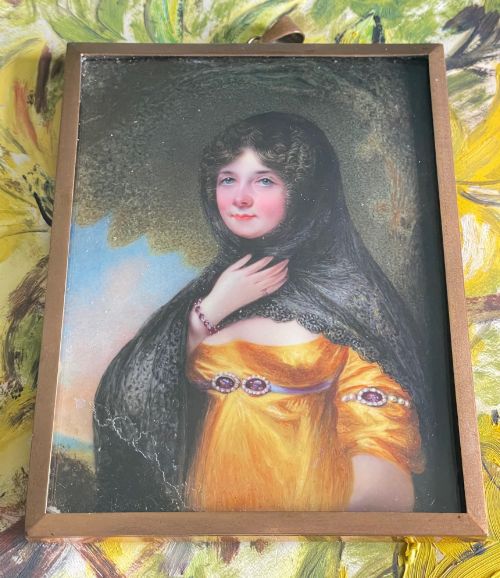
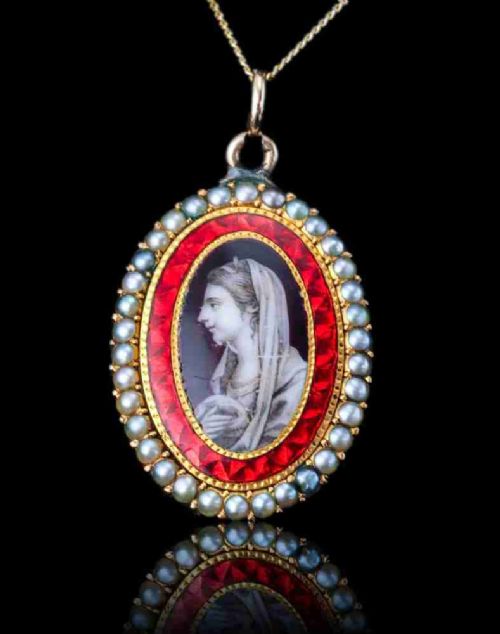


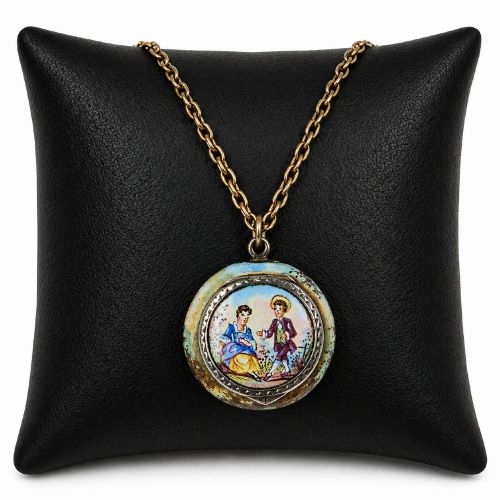


Georgian Enamel Portrait
These georgian enamel portrait pieces capture the intense likeness of an era through fused vitreous colour on copper, gold, or metal bases.
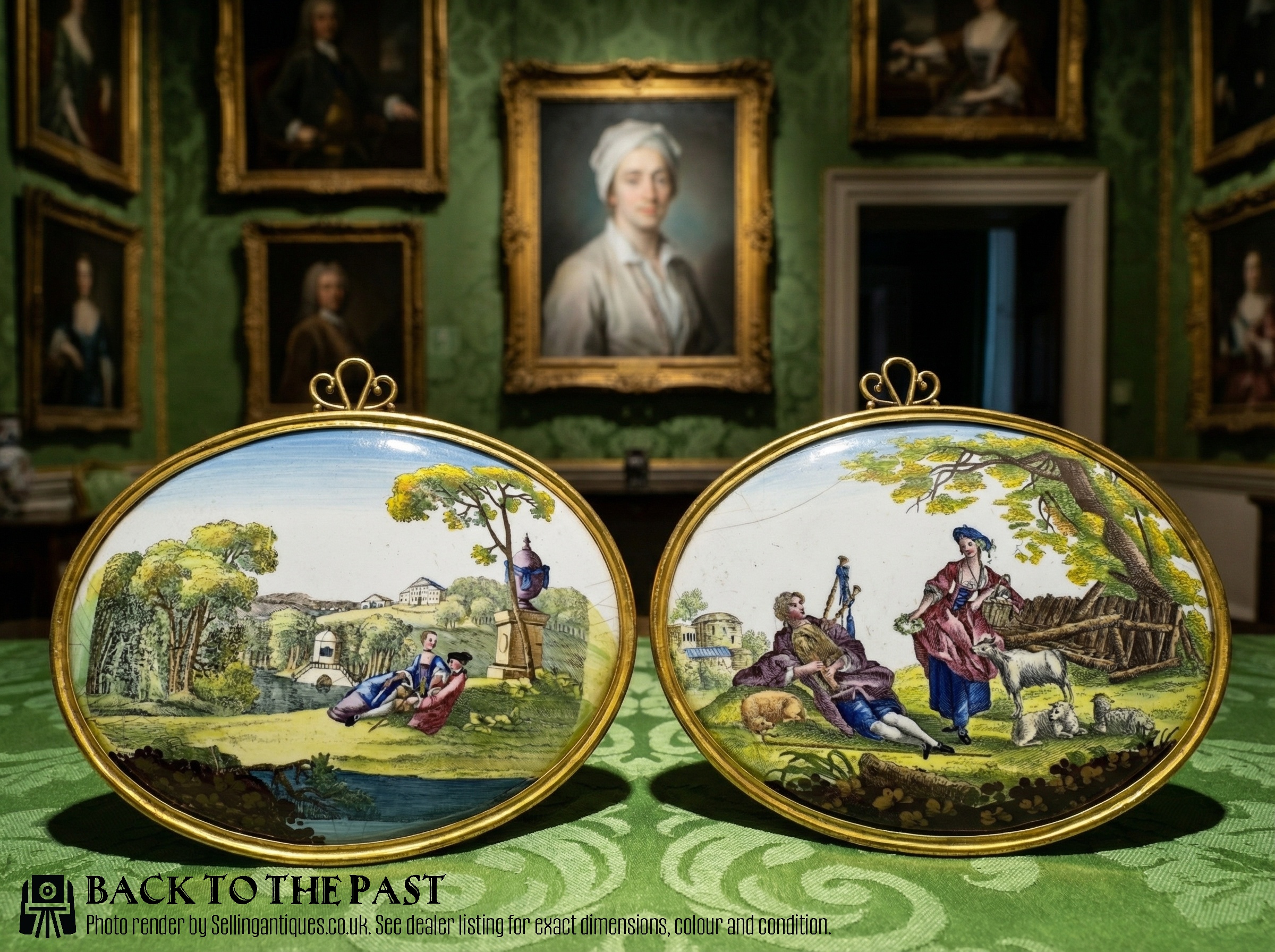
Georgian Enamel Portrait
When you search for a georgian enamel portrait, you encounter miniature likenesses painted on vitreous enamel surfaces. These works capture subjects from the eighteenth century through the regency and victorian periods.
The objects take diverse physical forms across the listings. You find pendant necklaces, portrait miniatures, brooches, wall plaques, rings, and even curtain tie backs.
Most examples originate from the eighteenth century and the regency era, alongside nineteenth century pieces. Makers include named artists working in miniature on enamel.
How they were made
Makers fused vitreous enamel onto copper, gold, or gilt metal substrates by firing them at high temperatures. This created a durable, glossy ground for delicate miniature painting.
Artists applied fine pigments to the enamel surface, often using sepia tones or full polychrome palettes before subsequent firings to fix the image. Mounts in nine-carat or eighteen-carat gold, glass, and pearls frequently encase these portraits.
What varies in quality
The quality of the surrounding metalwork also distinguishes the pieces. Substantial gold frames, intricate pendant structures, and original glass coverings elevate the overall object far above simple stamped gilt metal mounts.
Horace Hone·Christian Friedrich Zincke·Henry Bone ARA·Henry Pierce Bone
The Georgian Enamel Portrait Glossary
- Enamel
- A glassy substance fused to a metal base through kiln firing. This technique provides a permanent, luminous surface for portraiture.
- Portrait Miniature
- A small-scale painting designed for intimate viewing or personal wear. These works often fit inside lockets, rings, or pendant necklaces.
- Sepia
- A brownish pigment derived from cuttlefish ink, frequently utilised in monochrome eighteenth century portraits. It creates warm, tonal depth without full colour.
- Plaque
- A flat ornamental plate intended for wall hanging or mounting into furniture and decor. Eighteenth century examples frequently depict named or untitled subjects.
- Gilt Metal
- Base metal treated with a thin layer of gold wash or leaf. This material offers the appearance of solid gold at a lower cost.
Georgian Enamel Portrait: Frequently Asked Questions
How were portrait miniatures worn?
Owners typically wore these pieces as pendant necklaces, rings, or brooches close to the heart. Sentimental love tokens often doubled as hidden keepsakes containing hair or ciphers beneath glass.
Their intimate scale allowed sitters to be carried during travel or displayed privately within domestic interiors.
What materials make up the mounts?
Surrounding frames utilise copper, nine-carat gold, eighteen-carat gold, gilt metal, and glass. Pearls occasionally border the miniature to enhance the decorative impact.
The metal backing often protects the vulnerable enamelled copper plaque from flexing or moisture damage.
How do you date an enamel portrait?
Stylistic clues within the costume, wig, and hair fashion provide the primary dating evidence. Costume changes between the eighteenth century, regency, and victorian periods are distinct.
Inscriptions on the reverse or accompanying documentation sometimes name the artist and the precise year of execution.
Are all sitters identified?
Many portraits depict named gentlemen, royals such as Prince Charlotte, or specific family members. Others remain anonymous representations of a gentleman or lady.
Contemporary handwritten paper labels or engraved signatures on the reverse frequently record the true identity of the sitter.