



English Porcelain Vegetable Dish
An English porcelain vegetable dish brings Regency and Victorian dining tables alive with hand-painted enamels, gilt handles and ironstone body.
English Porcelain Vegetable Dish
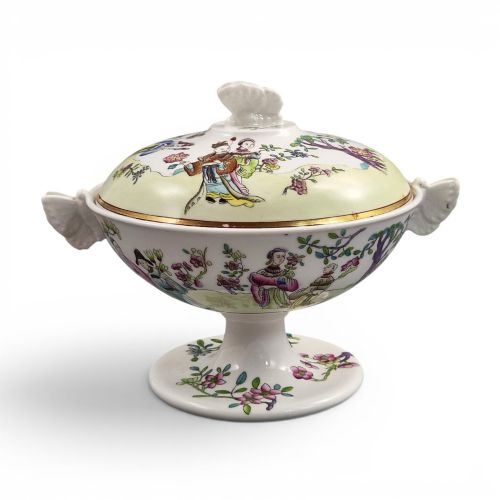
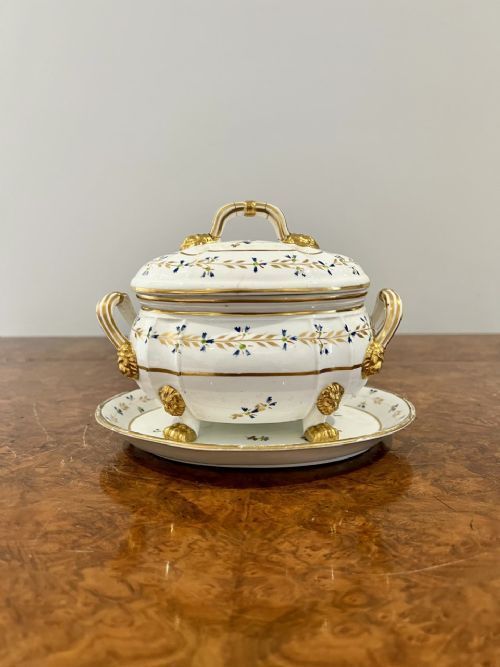
An English porcelain vegetable dish takes the form of a covered tureen, entrée dish or centerpiece bowl designed for grand dining service. These serving pieces emerge from the Georgian, Regency and Victorian periods, often arriving with matching covers or ladles.
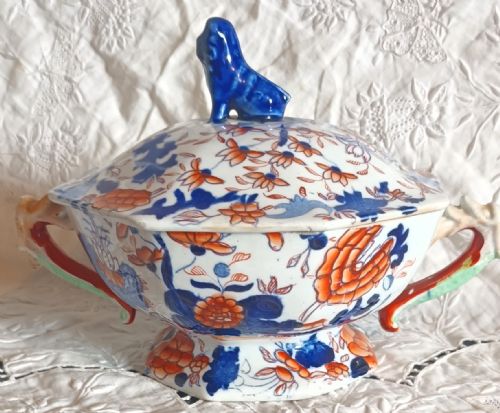
The objects seen here span delicate felspar porcelain to robust ironstone and earthenware, covering forms from sauce tureens to large cabbage tureens. Makers utilise distinct patterns such as the Green Mandarin design and Imari palettes to decorate the surface.
Buyers encounter forms produced across various potteries from the early nineteenth century through to the late Victorian era, reflecting shifting dining habits. Each piece serves as a functional serving vessel that defined formal tables during the Regency and 1890s.
Materials and construction
Potters shape these vessels using porcelain, felspar porcelain, ironstone and earthenware, firing the clay to create durable servingware. Enamel colours and gold leaf application complete the decoration, often highlighting handles and rims with hand-painted gilt accents.
Workshops construct pieces with integrated butterfly or gilt handles, securing tight-fitting covers to keep contents warm at the table. Ironstone bodies provide extra weight and strength, while refined porcelain allows for intricate moulded details and smooth glazed surfaces.
English Porcelain Vegetable Dish Retail Price Guide 2026
Typical asking prices for english porcelain vegetable dish among the pieces listed under this phrase on Sellingantiques today, from the lower quarter to the upper quarter. They describe what is for sale here now, not the wider market.
Butterflies perch permanently on handles and lids, ready to take flight from the dining table.
Assessing quality in the range
The excellence of a piece rests in the crispness of the moulding and the precision of the hand-painted enamel work. Pieces featuring rich gilding, gold leaf, and specific named crests sit firmly at the upper end of the selection.
Design complexity also separates standard service items from exceptional productions, such as specialised cabbage tureens or pieces from notable Worcester and Derby periods. The survival of matching covers, stands and ladles elevates the integrity of the object.
Spode·Mason's Ironstone·Coalport·Crown Derby·Flight Barr and Barr·Chamberlain Worcester·Turner
The English Porcelain Vegetable Dish Glossary
- Tureen
- A deep covered dish used for serving soups, sauces or vegetables at the dining table. These vessels typically include matching lids and sometimes integrated stands.
- Ironstone
- A heavy, durable type of earthenware patented in the nineteenth century to rival true porcelain. It resists chipping while accepting vibrant enamels.
- Felspar porcelain
- A refined ceramic body containing felspar, developed in the early nineteenth century for improved whiteness and translucency. Spode notably utilised this composition.
- Gilt
- A thin application of gold leaf or gold paint used to decorate handles, rims and borders. It adds reflective contrast to the white porcelain or coloured enamel ground.
- Imari
- A decorative style employing deep blue, iron red and gold, inspired by Japanese export wares. English factories frequently adopted this palette during the Regency period.
English Porcelain Vegetable Dish: Frequently Asked Questions
What is an English porcelain vegetable dish?
It is a covered serving vessel made in England during the Georgian, Regency or Victorian periods to hold vegetables, soups or sauces at formal meals.
These pieces range from delicate felspar porcelain bowls to robust ironstone tureens decorated with hand-painted enamels and gold leaf.
How were these tureens used originally?
Dining tables of the nineteenth century featured these covered dishes filled with hot vegetables or sauces, kept warm with matching lids until service.
Servants presented them during multi-course dinners, utilising ladles to portion contents directly onto plates at the table.
How do I date a Regency vegetable dish?
Dating relies on identifying factory marks, material types like felspar porcelain, and stylistic indicators such as Imari palettes or specific handle forms.
Periods like the Regency era display characteristic neoclassical influences and rich gilding that distinguish them from later Victorian productions.
Can I use antique ironstone for serving food?
Many collectors use sturdy ironstone and earthenware tureens for modern dining, though delicate porcelain pieces often find a place as decorative centerpieces.
Careful hand washing preserves the fragile enamel decorations, gold leaf and historical glaze integrity over time.