


Regency Imari Tableware
Regency Imari tableware brings vibrant Eastern palette patterns to formal British dining through robust porcelain, ironstone, and earthenware pieces.
Regency Imari Tableware
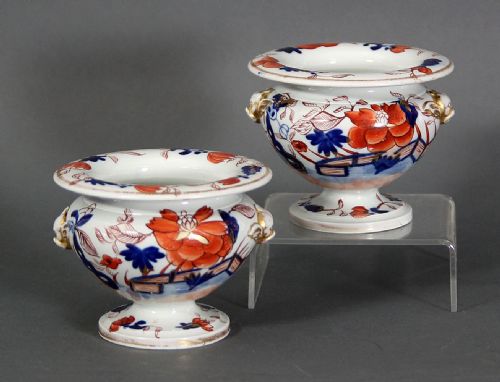
Regency Imari tableware comprises serving pieces, dinnerware, and decorative dishes created during the early nineteenth century and the Georgian and Regency periods. When searching for regency imari tableware, collectors encounter sauceboats, tureens, dessert dishes, and butter dishes decorated in distinct styles including Regency Chinoiserie and Kakiemon adaptations. These items reflect the period fascination with Japanese and Chinese decorative motifs, combining traditional British forms with dense blue, iron-red, and gold leaf enrichment.
The objects on this page centre upon nineteenth-century production from notable British factories operating circa eighteen hundred to eighteen twenty. Pieces range from formal porcelain tureens bearing family crests to durable ironstone dessert services decorated with animal and plant patterns such as the Japan Basket or Two Quails design. Sauceboats and serving dishes dominate the available forms, designed originally for the affluent dining table and preserved today as decorative antiques.
Materials and manufacture
Makers utilised porcelain, soft-paste porcelain, and patent ironstone ceramic as the primary body materials for these services. Ironstone provided a heavy, durable fabric suitable for large dinner and dessert services, whilst porcelain and soft-paste bodies allowed for refined translucent tableware.
Decoration relied upon hand-applied glaze, enamel colours, and gold leaf highlights. Artisans painted cobalt blue under the glaze before applying iron-red enamel and gilt details over the glaze, often firing the pieces multiple times to fix the complex palette.
Regency Imari Tableware Retail Price Guide 2026
Typical asking prices for regency imari tableware among the pieces listed under this phrase on Sellingantiques today, from the lower quarter to the upper quarter. They describe what is for sale here now, not the wider market.
Markers of distinction
Quality in these ceramics rests upon the crispness of the underglaze transfer or hand-painted design and the precision of the gilding. Superior examples retain thick gold leaf application and sharp definition in multi-coloured enamel work without blurring at the edges of the pattern.
The weight and refinement of the ceramic body also distinguish factory output, ranging from heavy patent ironstone bodies designed for practical service to delicate porcelain bodies intended for display. Factory attribution and specific pattern numbers further elevate the standing of individual sauce tureens and dessert services.
Minton Porcelain·Flight Barr And Barr·Masons Patent Ironstone·Chamberlain Worcester·Old Derby
The Regency Imari Tableware Glossary
- Imari
- A style of ceramic decoration originating in Japan, characterised by a palette of cobalt blue, iron-red, and gilt highlights. British factories adapted these vibrant patterns extensively during the Regency period.
- Ironstone
- A patented ceramic body invented in the nineteenth century offering high durability and strength. It served as a robust alternative to porcelain for heavy-use dinner services.
- Sauce tureen
- A small covered serving vessel designed for holding gravies and sauces at the dining table. They frequently appeared in matched pairs alongside larger serving dishes.
- Soft-paste porcelain
- An artificial porcelain composition fired at lower temperatures than hard-paste porcelain. It produced a warm, slightly creamy body favoured by early nineteenth-century English potteries.
- Kakiemon
- An asymmetric style of Japanese enamel decoration featuring delicate floral, bird, and quail motifs. Regency potteries frequently borrowed these Japanese designs for butter dishes and dessert services.
Regency Imari Tableware: Frequently Asked Questions
What is Regency Imari tableware?
Regency Imari tableware consists of ceramic serving vessels and dinnerware produced in Britain during the early nineteenth century. These pieces combine traditional British forms like sauceboats and tureens with Japanese-inspired blue, red, and gold decorative patterns.
Items range from durable ironstone dessert services to refined porcelain vases and tureens made by prominent factories of the period.
How were these ceramic pieces used?
These items served functional roles in formal dining rooms during the Georgian and Regency eras. Sauce tureens, butter dishes, and serving dishes held food and sauces at the table.
Today, collectors value them both as historic examples of nineteenth-century dining culture and as decorative display pieces.
How can I tell different periods apart?
Dating relies upon material composition, factory marks, and stylistic traits typical of the early nineteenth century. Ironstone pieces often bear patent stamps from the second decade of the century, whilst porcelain bodies reflect earlier soft-paste or refined porcelain techniques.
Design motifs also shift from classical Regency styles toward dense Chinoiserie and Kakiemon patterns as the period progresses.
Are these items suitable for daily use?
Most pieces from this era feature delicate enamel painting and gold leaf enrichment that can wear down with frequent washing. Historic ceramics often develop hairline fractures or crazing in the glaze over centuries of existence.
Collectors generally preserve them as display objects or use them with care on special occasions rather than as everyday tableware.