





Imari Pattern Tureen
An imari pattern tureen brings rich, eastern-inspired palettes and heavy-bodied ceramics to the table, and collectors prize them for their striking cobalt and iron-red decoration.
Imari Pattern Tureen
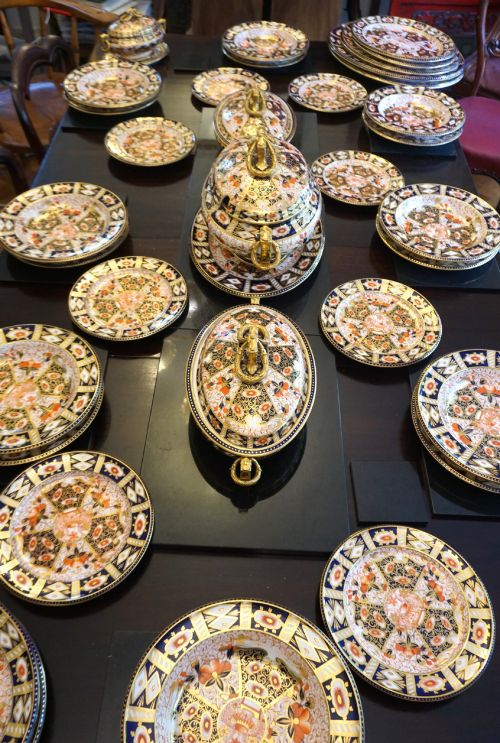
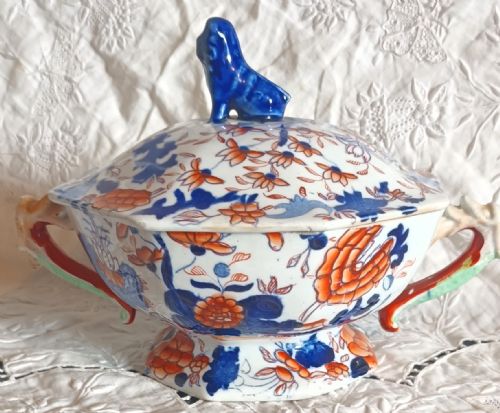
An imari pattern tureen combines large-scale serving vessels with vibrant Japanese-inspired motifs executed by English and European makers. Buyers searching this phrase will find soup tureens, vegetable tureens, and smaller sauce tureens designed for formal dining tables.
The pieces appearing on this page span the Georgian, Regency, and Victorian periods, with ironstone ceramic and porcelain forming the primary body materials. Mason's ironstone and English factories dominate the selection, offering robust service pieces decorated in rich enamels and gold leaf.
Materials and manufacture
Potters shaped these tureens using durable ironstone ceramic and fine porcelain, firing them to create dense, heavy-walled vessels capable of retaining heat for broth and vegetables. Earthenware bodies also appear among the earlier pieces.
Hand-applied cobalt blue underglaze works alongside iron-red enamel and gold leaf highlights to achieve the characteristic imari palette. Glaze seals the surfaces while gilt handles and borders add formal definition to the finished vessels.
Imari Pattern Tureen Retail Price Guide 2026
Typical asking prices for imari pattern tureen among the pieces listed under this phrase on Sellingantiques today, from the lower quarter to the upper quarter. They describe what is for sale here now, not the wider market.
Listings feature ironstone ceramic and porcelain bodies decorated with gold leaf, enamel, and glaze across the 19th Century, Regency, and Georgian periods.
Judging quality and character
The crispness of the underglaze transfer and the richness of the hand-painted enamel separation determine the visual impact of an imari pattern tureen. Strong definition in the floral and Chinoiserie motifs distinguishes superior examples from simpler production pieces.
The presence of matching covers, stands, ladles, and original gilding elevates the integrity of a service. Intact handles and unblemished glaze surfaces preserve the intended decorative ambition of the maker.
Mason's Ironstone·Wedgwood·Flight Barr And Barr·Richard Ginori·Chamberlain Worcester
The Imari Pattern Tureen Glossary
- Ironstone ceramic
- A dense, heavy-bodied earthenware patented in the nineteenth century for its durability and resistance to chipping. It provided an ideal surface for transfer-printed and hand-painted imari designs.
- Chinoiserie
- European artistic interpretation of Chinese and Japanese decorative motifs. This style heavily influenced the landscape and floral patterns found on nineteenth-century serving vessels.
- Enamel
- Opaque coloured glass fused to the ceramic surface during secondary low-temperature firings. It provides the bright reds and greens characteristic of imari palettes.
- Gilt
- A thin application of gold leaf or gold paint used to accent handles, rims, and borders. It signals the higher tier of nineteenth-century tablewares.
Imari Pattern Tureen: Frequently Asked Questions
What were imari pattern tureens used for?
These covered vessels served soups, broths, and vegetables at formal nineteenth-century dining tables. The heavy ceramic body helped maintain the temperature of the contents during long meals.
Hosts used matching sauce tureens alongside larger soup vessels to serve gravies and accompaniments. Their decorative presence also allowed them to sit prominently on sideboards when not in active use.
How do I care for an antique tureen?
Wash antique ironstone and porcelain by hand using warm water and mild soap. Avoid soaking pieces with historic gilding or iron-red enamel to protect the fragile surface decoration.
Store covers separately from bases or place linen between them to prevent chipping the rims. Keep these vessels away from modern dishwashers and sudden temperature changes.
How do I distinguish Georgian from Victorian pieces?
Georgian and Regency examples typically feature heavier ironstone bodies with deep cobalt blues and early Chinoiserie interpretations. Makers often marked these pieces with impressed or printed stamps specific to the early nineteenth century.
Victorian pieces frequently display brighter enamels and larger service sets produced by industrial potteries. The stylistic transition moves from restrained Regency elegance to busier decorative compositions by the late nineteenth century.
What defines the imari pattern?
The pattern draws inspiration from Japanese export porcelain, utilising a distinct colour scheme of deep cobalt blue, iron-red enamel, and gold leaf. Motifs often combine floral panels with stylized landscapes and basket designs.
English and European factories adapted these eastern aesthetics to suit domestic dining tables. The resulting style maintains high contrast between the dark underglaze blue and the warm gilt highlights.