


Antique Porcelain Centre Bowl
An antique porcelain centre bowl anchors a dining table or sideboard with bold presence, offering a grand vessel for fruit or floral arrangements.
Antique Porcelain Centre Bowl
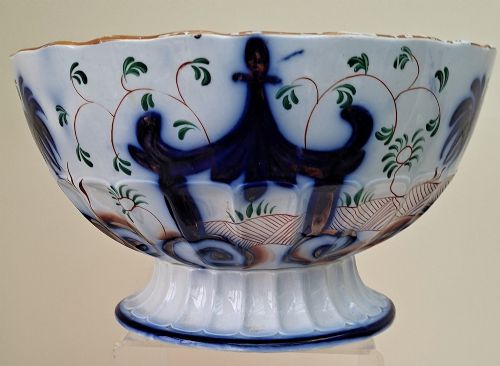
An antique porcelain centre bowl serves as a striking decorative vessel designed to command attention in the middle of a formal table or sideboard. These statement pieces appear across various forms, including footed bowls, comports, punch bowls, and elaborate figural centrepieces supported by cherubs or shells.
The selections available here span multiple eras and origins, uniting English factories, continental European ateliers, and Qing Dynasty Chinese export workshops. Buyers most frequently encounter nineteenth-century expressions, alongside Georgian tableware and turn-of-the-century continental porcelain.
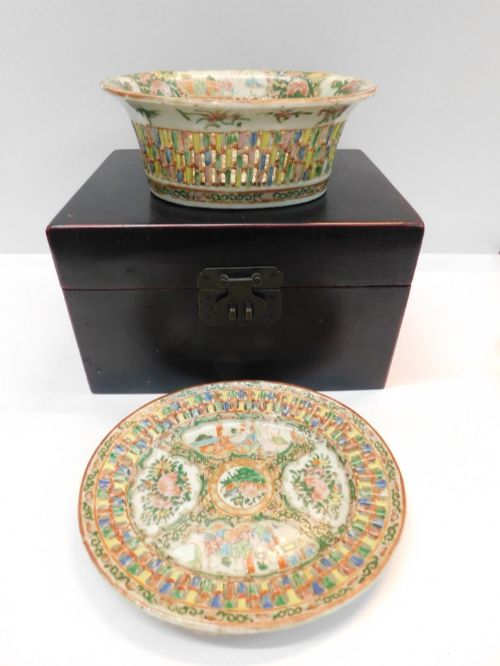
Many examples arrive accompanied by specialised stands, ormolu mounts, or matching trays, emphasising their historical role as elite dining room showpieces. Whether shaped as a reticulated chestnut basket or a painted fruit bowl, each antique porcelain centre bowl reflects the distinct aesthetic priorities of its period.
How they were made
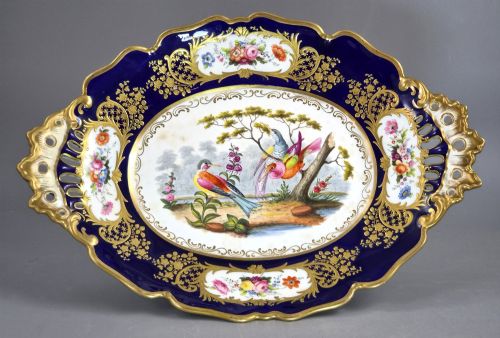
Potters shaped these vessels using porcelain, ironstone, earthenware, and bisque porcelain, often applying intricate glazes and colourful enamel work to build depth in the decoration. Artisans hand-painted complex motifs, including birds, floral sprays, and figures, onto the ceramic body before firing.
Gilding and gold leaf detailing frequently accentuate the rims, handles, and footed bases, catching the light and highlighting the sculptural qualities of the bowl. Metal mounts in ormolu provide structural support and opulent framing for select French and continental pieces.
Materials across the selection include porcelain, bisque porcelain, earthenware, ironstone, enamel, glaze, gold leaf, and gilding.
What varies in quality
The standard of painting sets the finest examples apart, where individual brushwork on subjects like painted fruit or figural groups displays exceptional control and artistic confidence. Artisans who executed detailed patterns and precise gilding produced objects with lasting visual resonance.
The complexity of the form itself dictates the level of craftsmanship, separating straightforward footed bowls from ambitious reticulated baskets and multi-figure centrepieces with ormolu mounts. The inclusion of matching stands or trays enhances the integrity of the ensemble.
Coalport·Mason·Chamberlain Worcester·Flight Barr And Barr·Royal Worcester·Royal Dux
The Antique Porcelain Centre Bowl Glossary
- Comport
- A raised dish or bowl on a foot, traditionally used for serving fruit or sweetmeats at the end of a meal. These pieces sit higher than standard bowls to create tiered table settings.
- Bisque porcelain
- Unglazed white porcelain fired to a matte, stone-like finish that resembles marble. It appears frequently on nineteenth-century figural centrepieces and sculptural groups.
- Ormolu
- Gilded bronze mounts applied to furniture and porcelain vessels for decorative and structural enhancement. This technique gained wide popularity in French and continental workshops.
- Famille rose
- A Chinese porcelain palette dominated by opaque pink enamel, introduced during the Qing Dynasty. This style adorns numerous export punch bowls and decorative vessels.
- Reticulated
- Describes ceramic work featuring an openwork or pierced lattice design, common in decorative baskets and chestnut stands. This intricate technique required careful shaping before firing.
Antique Porcelain Centre Bowl: Frequently Asked Questions
How were centre bowls used originally?
Dining rooms during the Georgian and Victorian eras utilised these large vessels as the focal point of the table, often filled with seasonal fruit, flowers, or sweetmeats during formal meals.
Servants placed them directly in the middle of the table layout, where their elevated footed designs or accompanying trays allowed guests to admire the painted porcelain and gilding.
Can I use an antique bowl for food?
Most collectors choose to display these pieces as decorative objects rather than utilising them for active dining or serving. Historic glazes and painted enamel work can react to modern foods or cleaning methods.
Gentle dry dusting or careful washing by hand preserves the fragile porcelain body, ormolu mounts, and delicate gold leaf details over time.
How do I identify a nineteenth-century piece?
Examining the paste, glaze characteristics, and decorative style provides strong clues to a piece's manufacturing period. Victorian and Georgian examples often display specific factory marks, hand-painted pattern names, or typical Rococo Revival and Chinoiserie motifs.
Subtle variations in the weight of the ironstone or porcelain, alongside the application of cobalt blue and enamel, help distinguish earlier production runs from later revivals.