


English Porcelain Tea Set
An English porcelain tea set brings tactile grace to the table, offering finely painted floral motifs and gilded handles that elevate everyday tea drinking.
What these sets are
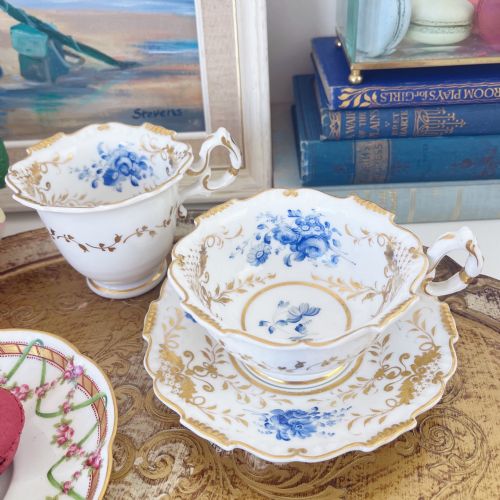
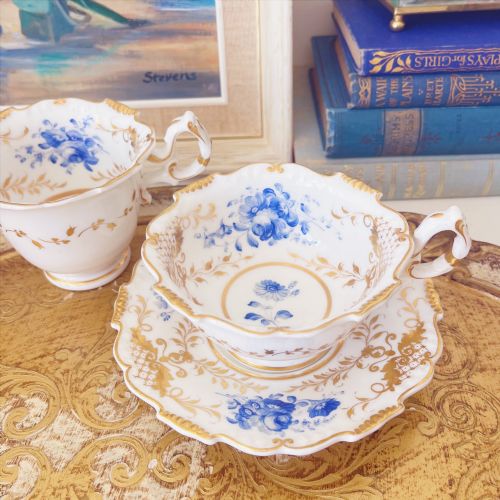
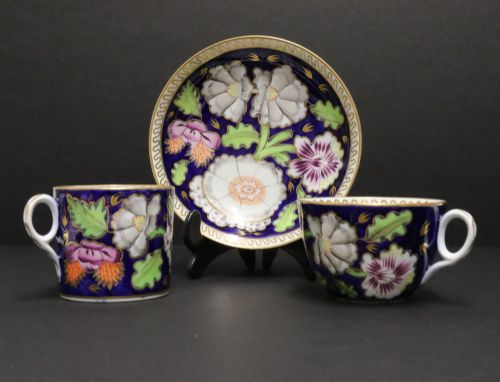
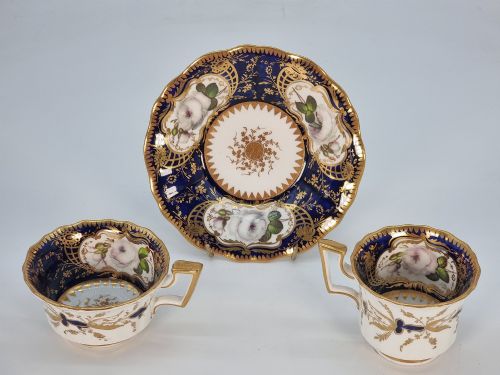
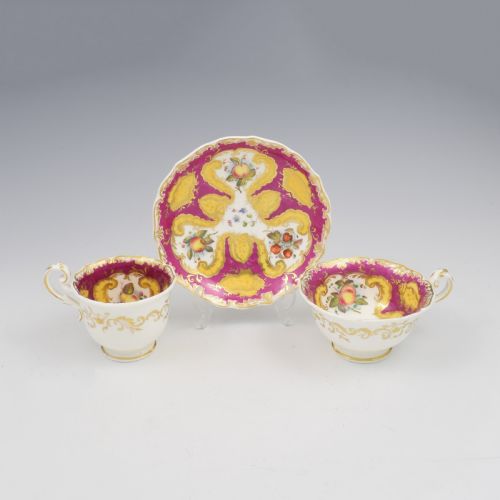
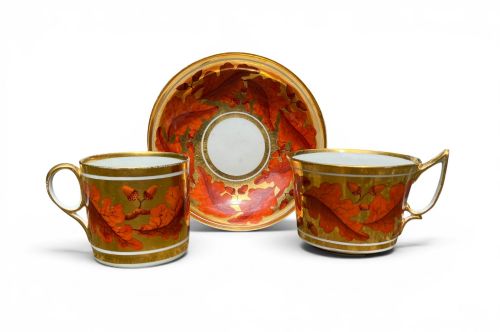
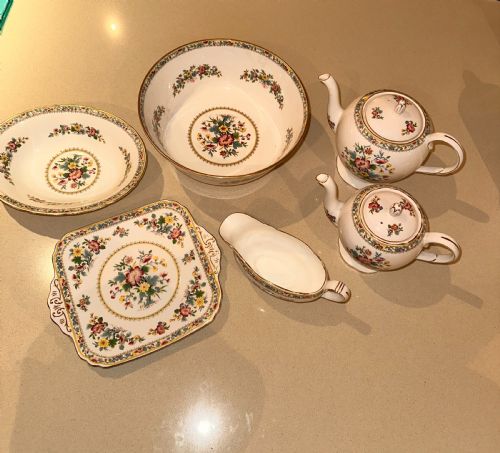
An English porcelain tea set comprises matching vessels for serving and drinking tea, spanning periods from the nineteenth century through the mid-twentieth century. Surviving examples range from intimate trios of cups, saucers, and plates to larger services intended for six people.
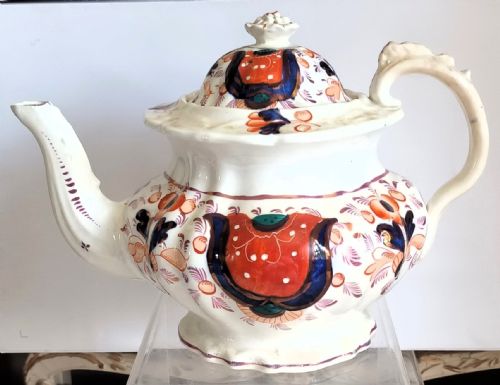
The pieces listed on this page showcase distinct stylistic shifts, moving from Regency and Rococo Revival elegance to Edwardian patterns and mid-century English Traditional designs. Collectors frequently encounter forms such as the Minton Q shape or Coalport Bat Wing pattern alongside comprehensive tea and coffee services.
Materials and construction
These items rely on traditional ceramic manufacture using porcelain and bone china as the primary body. Artisans shaped these materials into delicate vessels capable of holding hot liquids while maintaining a translucent appearance.
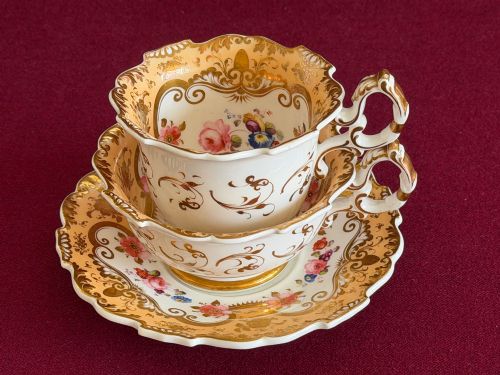
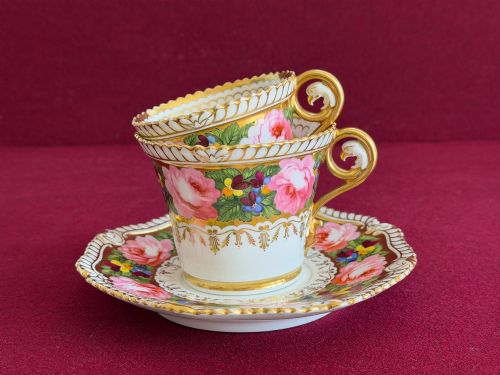
Decoration involved skilled handpainting with enamel colours, complemented by gold gilding, gold leaf, and gold gilt applied to rims and handles. Such ornamentation required precise kiln firing to bond the metallic and enamel pigments to the glazed ceramic surface.
Retail Price Guide 2026
Typical UK retail prices for english porcelain tea set, calculated from the Sellingantiques database of over a million retail prices indexed since 2003. This retail price guide relies exclusively on Sellingantiques data; no external sources or auction records are used, so the figures do not describe the wider market.
Listings feature periods spanning the nineteenth century, nineteen-ten, and nineteen-sixty, utilising porcelain and bone china.
Judgements of quality
Superior quality in an English porcelain tea set rests upon the delicacy of the ceramic body and the precision of the handpainting. Finer examples display meticulous brushwork in floral details and crisp, unblemished gilding that remains intact across every component.
The distinction between standard production and exceptional work lies in the artistry of the maker, evident in specialised mould shapes like the H & R Daniel Shrewsbury trio or Davenport cabinet pieces. The harmony of the matching components and the retention of original gold leaf elevate certain services above simpler utilitarian wares.
H & R Daniel·Minton·Coalport·Royal Worcester·Davenport
The English Porcelain Tea Set Glossary
- Porcelain
- A white, vitrified ceramic material fired at high temperatures to create a hard, non-porous body. It is valued for its delicate appearance and strength.
- Bone China
- A type of porcelain incorporating bone ash, developed to increase durability and whiteness. It allows for thinner, more translucent walls in teacups.
- Gilding
- The application of gold leaf or gold paint to ceramic surfaces for decorative effect. It typically highlights rims, handles, and painted motifs.
- Enamel
- Opaque glass-like pigments fused to the ceramic surface during firing. This technique provides the vibrant colours seen in handpainted floral designs.
- Trio
- A matched set comprising a teacup, a saucer, and a matching tea plate. These were common configurations for individual service.
Frequently Asked Questions
What is an English porcelain tea set?
An English porcelain tea set is a matched collection of ceramic vessels designed for serving and drinking tea, produced by historic English potteries.
These sets typically include teacups, saucers, and serving pieces decorated with handpainted enamels and gilding.
Can I use antique tea sets daily?
Using antique tea sets requires caution due to the delicate nature of nineteenth-century porcelain and fragile gold gilding.
Handwashing in warm water without harsh detergents helps preserve the enamel and metallic decoration over time.
What is a tea and coffee service?
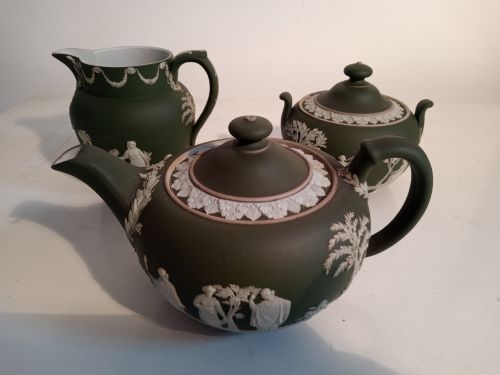
A tea and coffee service is an expanded set that includes vessels for both hot beverages, often featuring matching pots alongside cups and saucers.
These larger services were intended for formal entertaining in grand domestic settings.