





Gilt Porcelain Tea Trio
These gilt porcelain tea trio sets bring cabinet-ready colour and Regency refinement straight to the breakfast table.
Gilt Porcelain Tea Trio
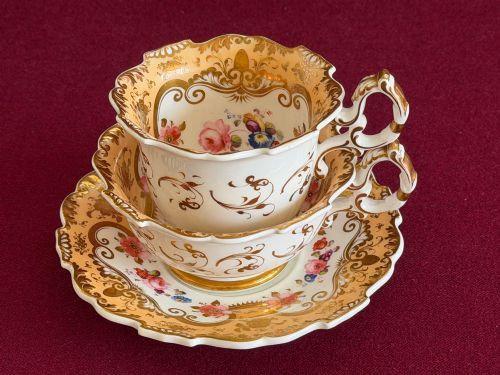
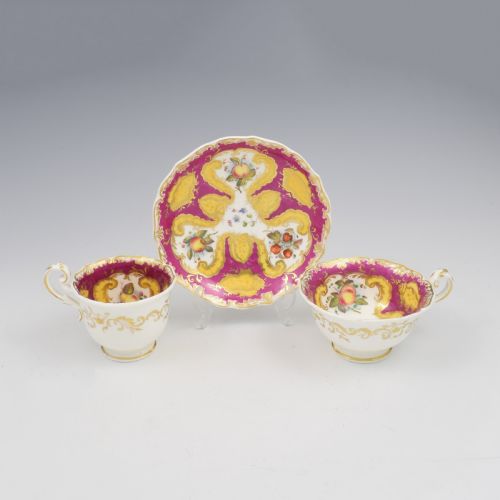
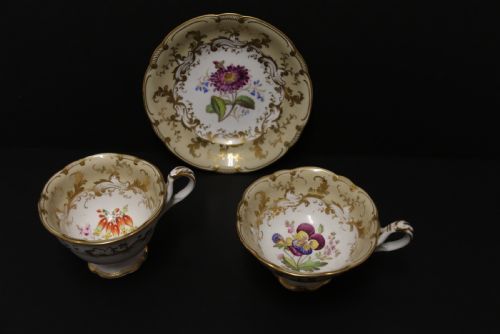
A gilt porcelain tea trio comprises a matching teacup, coffee cup, and saucer, created for the formal dining rooms and parlours of the eighteenth and nineteenth centuries. These matched groupings allow collectors to admire matching motifs and gilding across three distinct drinking vessels.
Most examples found here date from the nineteenth century, moving through Regency, Victorian, and Edwardian periods. Makers such as Daniel, Coalport, Derby, Davenport, and Spode dominate the offerings, showcasing standard British ceramic bodies of the era.
Forms vary from the early Shrewsbury shape to cabinet cups designed purely for display. Buyers will encounter handpainted florals, fruit patterns, and blush ivory bodies finished with rich gold leaf.
How they were made
Potters utilised fine porcelain and bone china bodies, shaping them by hand or wheel before applying a smooth porcelain glaze. These white ceramic surfaces provided an ideal canvas for subsequent enamel decoration and gold gilding.
Artisans applied enamel colours by hand, painting botanical and fruit subjects before firing the pieces in kilns to fix the pigments. Gold leaf and liquid gilding were then added to rims, handles, and borders, requiring a final low-temperature firing to bond the precious metal permanently to the glaze.
Gilt Porcelain Tea Trio Retail Price Guide 2026
Typical asking prices for gilt porcelain tea trio among the pieces listed under this phrase on Sellingantiques today, from the lower quarter to the upper quarter. They describe what is for sale here now, not the wider market.
Some nineteenth-century drinkers apparently needed both tea and coffee simultaneously, which explains why these little saucers had to carry two cups at once.
What varies in quality
The precision of the handpainting dictates much of the distinction between standard wares and exceptional cabinet pieces. Fine brushwork on botanical or fruit patterns, combined with raised or chased gold gilding, separates masterworks from simpler production.
The integrity of the porcelain body and the crispness of the moulded shape also signal higher execution. Pieces that retain unrubbed, bright gold leaf and smooth glazes without firing faults represent the finest tier of surviving sets.
H and R Daniel·Coalport Porcelain·Derby Porcelain·Davenport Pottery·Royal Worcester
The Gilt Porcelain Tea Trio Glossary
- Trio
- A matched set consisting of a teacup, a coffee cup, and a saucer. This combination was particularly popular in Regency and Victorian times.
- Gilding
- The application of gold leaf or powdered gold to the surface of porcelain. It provides the characteristic bright metallic borders seen on these sets.
- Bone China
- A type of soft-paste porcelain incorporating bone ash, developed in Britain. It yields a strong, translucent ceramic body ideal for intricate painting.
- Enamel
- Coloured vitreous glass fused to the porcelain surface during firing. Artisans used it to paint floral and pictorial motifs.
Gilt Porcelain Tea Trio: Frequently Asked Questions
What is a tea trio?
A tea trio is a matching set of three pieces comprising a teacup, a coffee cup, and a saucer. In the nineteenth century, this combination allowed hosts to serve both tea and coffee from a visually unified setting.
Today, these sets are collected as cabinet displays or used for special afternoon tea occasions. They demonstrate the technical skill and artistic styles of historic British potteries.
How do I date a trio?
Dating relies on identifying maker marks, ceramic bodies, and decorative styles recorded in the listing titles. Regency pieces often feature distinct handle shapes and rich gold accents, while Edwardian sets display softer blush ivory tones.
Comparing the pattern numbers and shape names, such as the Shrewsbury shape, against manufacturer archives helps narrow the production window. Stylistic shifts from neoclassical motifs to Victorian florals provide further chronological clues.
Can I use them daily?
Historic porcelain requires careful handling due to the age of the ceramic body and delicate handpainted enamels. Gentle hand washing in warm water preserves the fragile gold leaf and prevents surface wear.
Avoid placing these antique vessels in dishwashers or microwaves. Treating them with the same care as fine art ensures the gilding remains bright for future generations.
Why include two cups?
Georgian and Regency dining customs often involved serving both tea and coffee at the same gathering. A dedicated teacup and a taller coffee cup allowed guests to partake in both hot beverages from a single matched saucer.
Over time, the standard place setting evolved, making the survival of a true three-piece breakfast set a delightful historical window into past hospitality.